
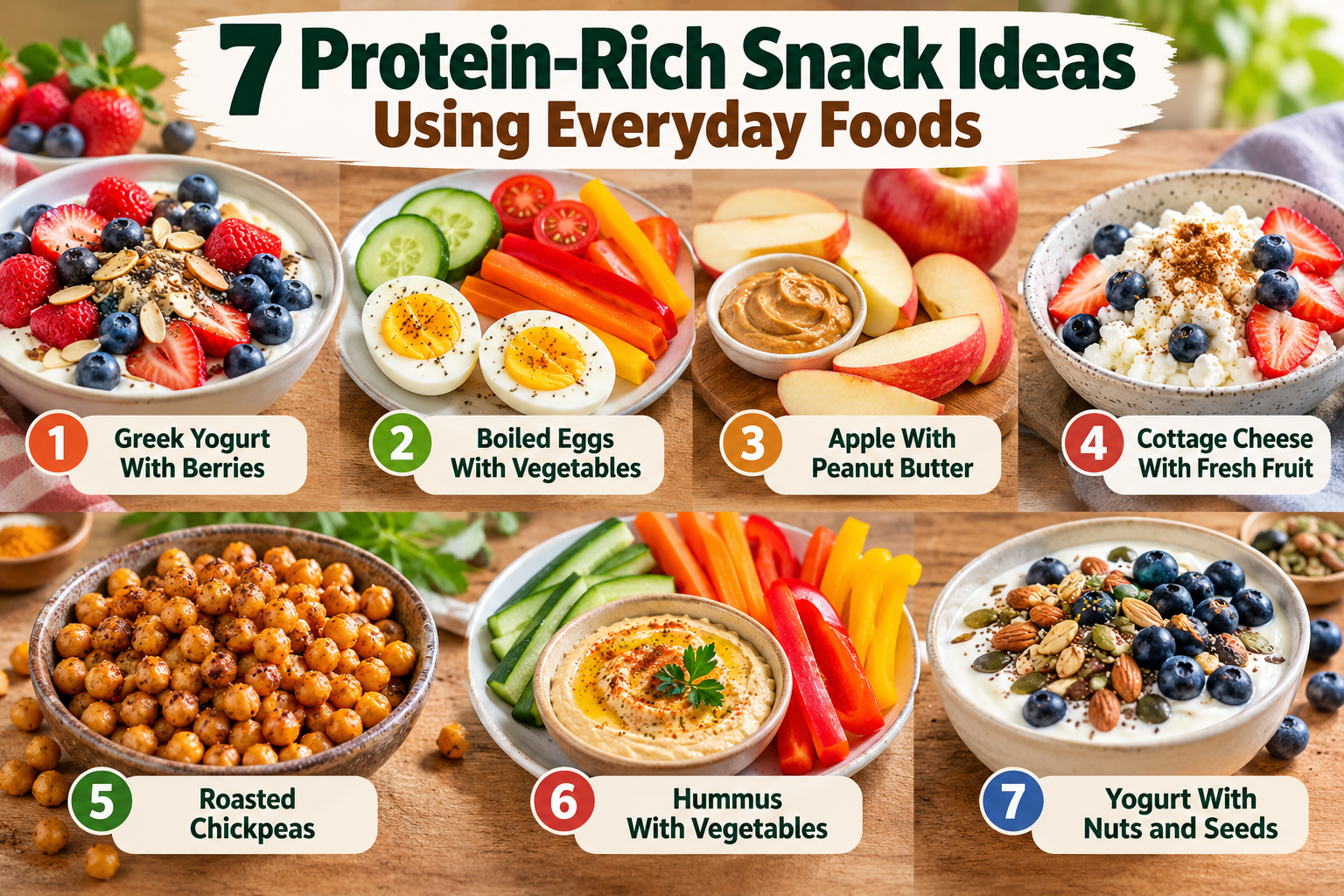
When hunger strikes between meals, it is easy to reach for cookies, chips, or other highly processed snacks. These foods may be convenient, but they do not always provide the protein, fiber, and nutrients needed to make a snack satisfying.
A better approach is to build snacks around simple everyday foods that naturally provide protein. You do not need expensive protein powders, specialty products, or complicated recipes. Foods such as eggs, yogurt, chickpeas, cottage cheese, nuts, seeds, and peanut butter can be combined to make practical snacks.
Protein is an important nutrient for maintaining muscle and supporting normal body functions. Including a protein source in a snack can also make it more satisfying than choosing a snack based mainly on refined carbohydrates.
Below are seven protein-rich snack ideas with exact serving sizes and simple preparation instructions.
Table of Contents
What Makes Protein-Rich Snack Ideas Healthy?
There is no single serving size that defines a protein-rich snack for everyone. Individual protein requirements vary based on factors such as age, body size, activity level, and overall diet.
A practical approach is to include a recognizable protein source in your snack and combine it with another nutrient-rich food. For example, plain Greek yogurt can be paired with berries, while hummus can be served with fresh vegetables.
Protein-rich everyday foods include eggs, dairy products, beans, peas, lentils, nuts, seeds, and soy foods. Many also provide fiber, vitamins, minerals, or healthy fats.
The goal is not simply to consume as much protein as possible. A balanced snack should fit your overall diet and provide useful nutrition in an appropriate portion.
1. Greek Yogurt With Berries
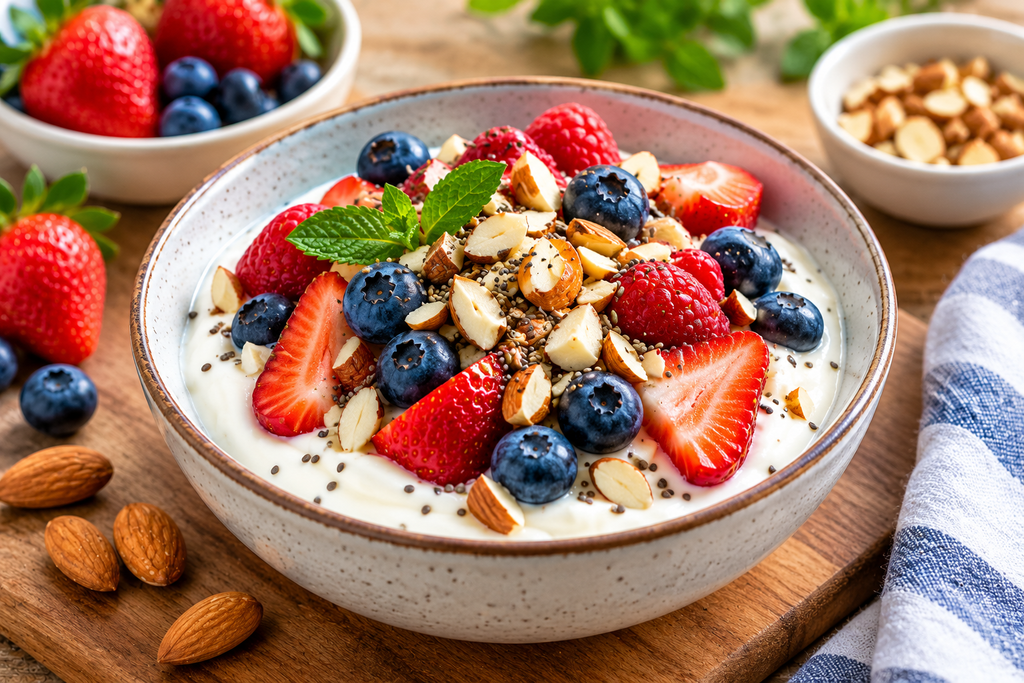
Greek yogurt is one of the easiest high-protein snack options because it requires almost no preparation. Choose plain Greek yogurt and add fresh or frozen berries for natural sweetness and flavor.
Serving size
- ¾ cup (170 g) plain Greek yogurt
- ½ cup (75 g) fresh or frozen berries
- 1 tablespoon (10 g) chopped almonds or pumpkin seeds
Preparation
- Add ¾ cup of Greek yogurt to a bowl.
- Wash fresh berries, or allow frozen berries to thaw slightly.
- Add ½ cup of berries to the yogurt.
- Sprinkle 1 tablespoon of chopped almonds or pumpkin seeds on top.
- Serve immediately.
You can use strawberries, blueberries, raspberries, or blackberries. If you prefer a sweeter taste, fruit can provide sweetness without requiring a large amount of added sugar.
Check the nutrition label when choosing yogurt because protein content varies between products. Plain varieties also make it easier to control added sugar.
2. Boiled Eggs With Fresh Vegetables
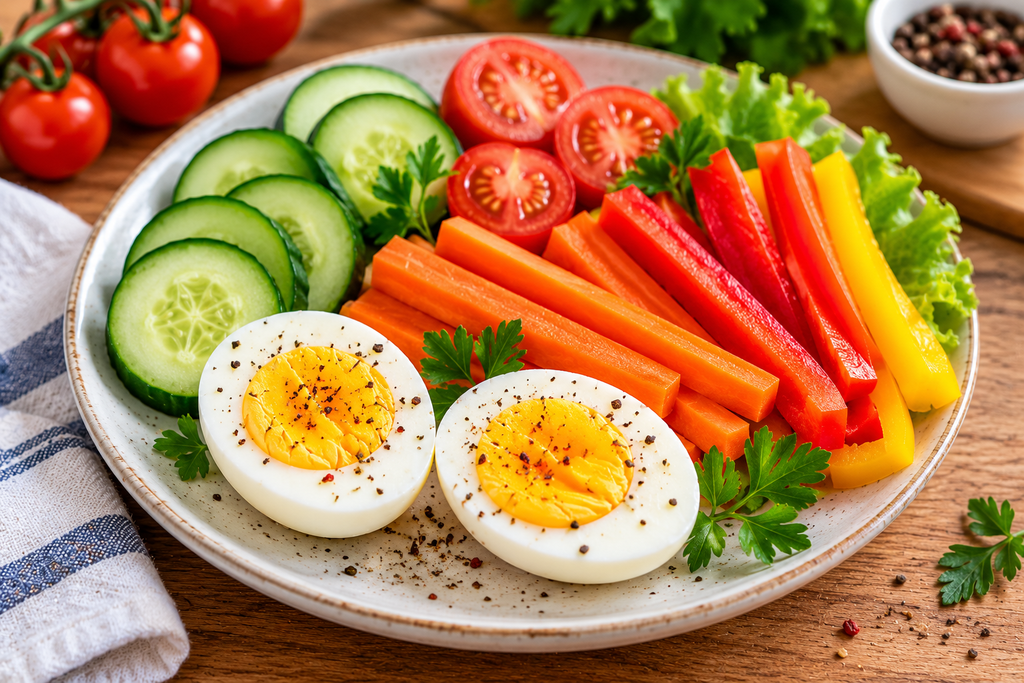
Eggs are a convenient everyday source of protein. Hard-boiled eggs can be prepared ahead of time, making them useful for busy mornings or afternoons.FDA — How to Understand and Use the Nutrition Facts Label
Serving size
- 2 large eggs
- ½ cup (60 g) sliced cucumber
- ½ cup (75 g) sliced tomato
- ½ cup (75 g) sliced bell pepper
- Black pepper or dried herbs, optional
Preparation
- Place two large eggs in a saucepan and cover them with water.
- Bring the water to a boil.
- Once boiling, cook the eggs for about 10–12 minutes.
- Transfer the eggs to cold water and allow them to cool.
- Peel the eggs and slice them in half.
- Wash and slice the cucumber, tomato, and bell pepper.
- Place everything on a plate and season the vegetables with black pepper or herbs if desired.
You can prepare several boiled eggs in advance and refrigerate them for convenient use. Keep cooked eggs refrigerated and follow recommended food-safety practices.
The vegetables add volume, water, fiber, and micronutrients while keeping the snack simple.
3. Apple With Peanut Butter
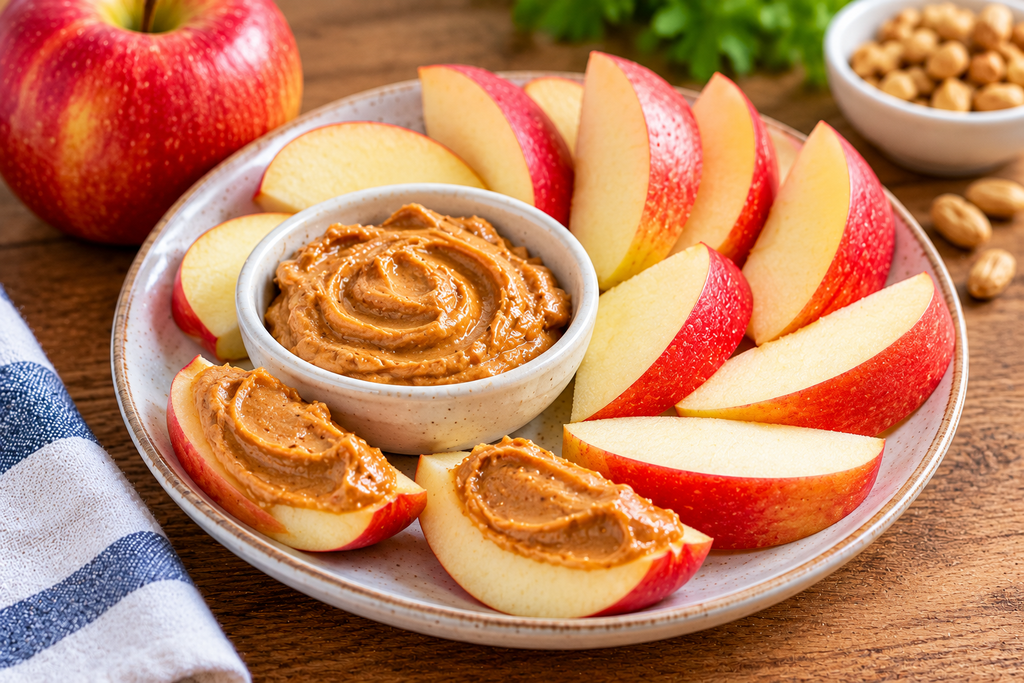
An apple with peanut butter combines fruit with protein and unsaturated fat. It requires only a few minutes to prepare and is suitable when you want something sweet and satisfying.
Serving size
- 1 medium apple (about 180 g)
- 1 tablespoon (16 g) natural peanut butter
Preparation
- Wash the apple thoroughly.
- Cut it into 8–10 slices.
- Place the slices on a plate.
- Measure 1 tablespoon of peanut butter.
- Spread a small amount over each apple slice or use the peanut butter as a dip.
Check the ingredient list when buying peanut butter. A simple product made primarily from peanuts can be an easy choice. Some varieties contain added sugar or substantial amounts of sodium.
Peanut butter is also relatively energy-dense, so measuring the portion is useful. Using a tablespoon instead of eating directly from the jar can help keep the serving consistent.
4. Cottage Cheese With Fresh Fruit
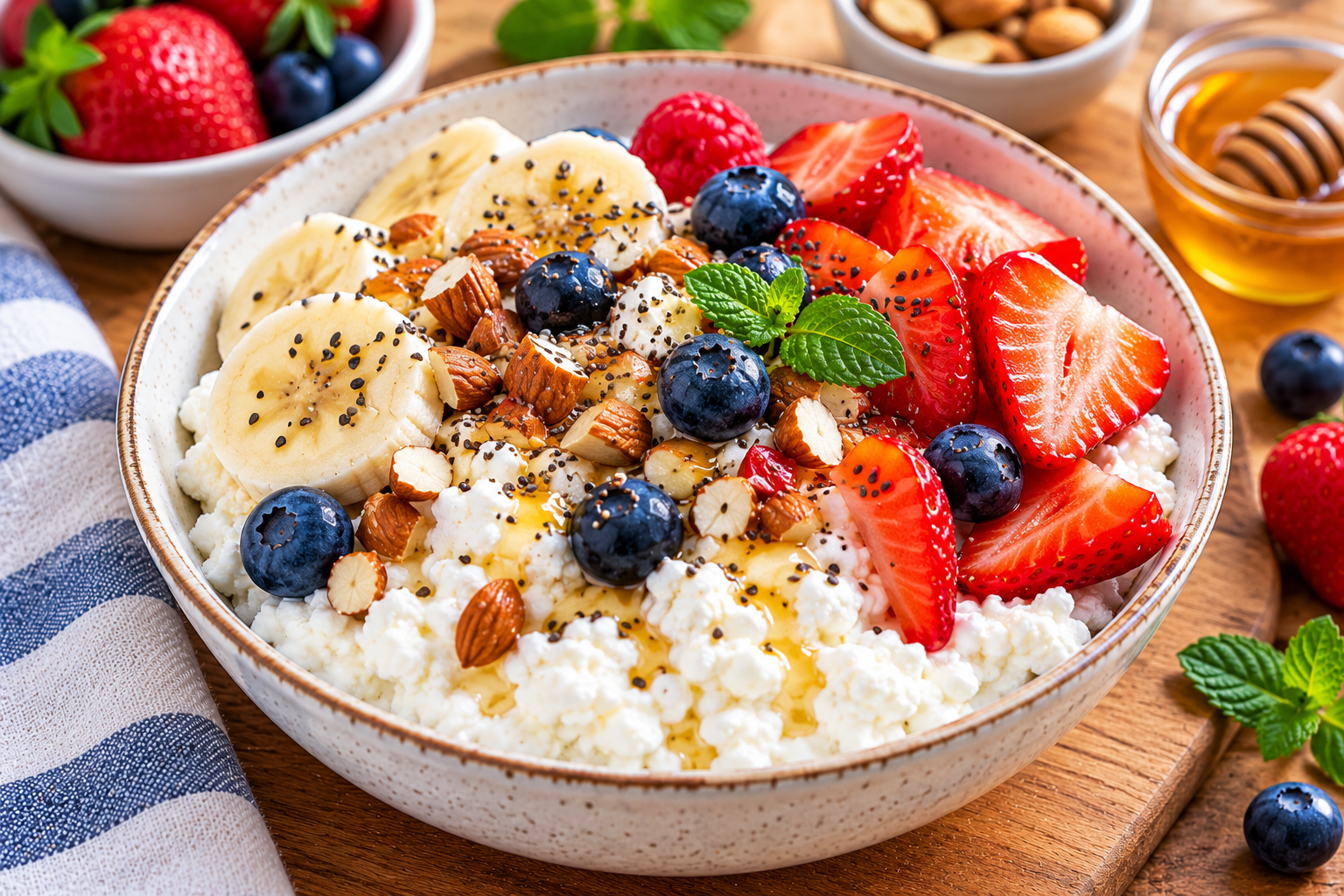
Cottage cheese provides protein and can be paired with either sweet or savory ingredients. For a quick snack, fresh fruit works particularly well.
Serving size
- ½ cup (110–115 g) cottage cheese
- ½ cup (75 g) sliced strawberries or other fresh fruit
- ¼ teaspoon cinnamon, optional
Preparation
- Place ½ cup of cottage cheese in a small bowl.
- Wash and slice the fruit.
- Add ½ cup of fruit to the cottage cheese.
- Sprinkle with cinnamon if desired.
- Mix lightly and serve.
You can replace strawberries with peaches, berries, melon, or chopped apple.
For a savory version, replace the fruit with ½ cup of chopped cucumber and tomato and add black pepper or fresh herbs.
Cottage cheese products vary in sodium content, so check the nutrition label if you are monitoring sodium intake.
5. Roasted Chickpeas
Roasted chickpeas are a useful alternative when you want a crunchy snack. Chickpeas provide plant-based protein and fiber and can be seasoned in many different ways.
Serving size
- ½ cup (about 80–85 g) cooked chickpeas
- 1 teaspoon (5 ml) olive oil
- ¼ teaspoon paprika
- ¼ teaspoon ground cumin
- ⅛ teaspoon garlic powder
- A small pinch of salt, optional
Preparation
- Preheat the oven to 400°F (200°C).
- Drain and rinse the chickpeas if using canned chickpeas.
- Pat them thoroughly dry with a clean towel. Removing excess moisture helps them become crisp.
- Place the chickpeas in a bowl.
- Add 1 teaspoon of olive oil, paprika, cumin, garlic powder, and a small amount of salt.
- Toss until the chickpeas are evenly coated.
- Spread them in a single layer on a baking sheet.
- Roast for approximately 25–35 minutes, shaking the pan once or twice during cooking.
- Allow them to cool slightly before eating.
Cooking times can vary between ovens, so check the chickpeas toward the end of cooking.
You can change the seasoning with black pepper, chili powder, dried herbs, or a small amount of lemon zest.
6. Hummus With Fresh Vegetables
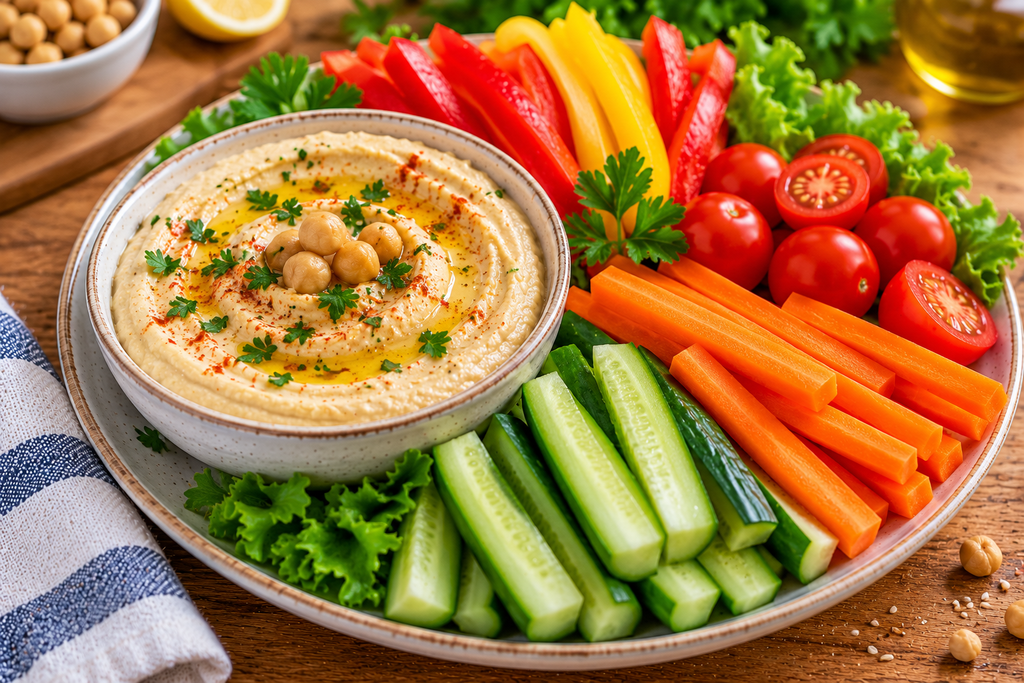
Hummus is traditionally made from chickpeas, tahini, lemon juice, oil, and seasonings. Pairing it with vegetables creates a convenient snack with protein, fiber, and other nutrients.
Serving size
- ¼ cup (about 60 g) hummus
- ½ cup (60 g) carrot sticks
- ½ cup (75 g) cucumber sticks
- ½ cup (75 g) bell pepper strips
Preparation
- Wash all vegetables thoroughly.
- Peel the carrot and cut it into thin sticks.
- Slice the cucumber into sticks.
- Remove the seeds and inner membrane from the bell pepper and cut it into strips.
- Place ¼ cup of hummus in a small bowl.
- Arrange the vegetables around the hummus and serve.
If using store-bought hummus, compare nutrition labels, as sodium and added oil can vary by brand.
For homemade hummus, blend cooked chickpeas with tahini, lemon juice, garlic, and a small amount of olive oil until smooth. Add water gradually if you need a thinner consistency.
7. Yogurt With Nuts and Seeds
Plain yogurt combined with nuts or seeds is another simple way to create a more substantial snack. The yogurt provides protein, while nuts and seeds contribute protein, unsaturated fats, and other nutrients.
Serving size
- ¾ cup (170 g) plain yogurt
- 1 tablespoon (10 g) chopped almonds
- 1 tablespoon (10 g) pumpkin seeds
- ½ cup (75 g) fresh berries, optional
Preparation
- Add ¾ cup of plain yogurt to a bowl.
- Chop the almonds into smaller pieces if necessary.
- Add 1 tablespoon of almonds and 1 tablespoon of pumpkin seeds.
- Add ½ cup of berries if you want additional sweetness and fiber.
- Stir lightly and serve.
Because nuts and seeds are energy-dense, measuring the portion is useful. A small serving can add flavor and nutrition without making the snack unnecessarily large.
You can substitute walnuts, sunflower seeds, chia seeds, or other nuts and seeds according to your preferences.
How to Choose Better Protein-Rich Snacks
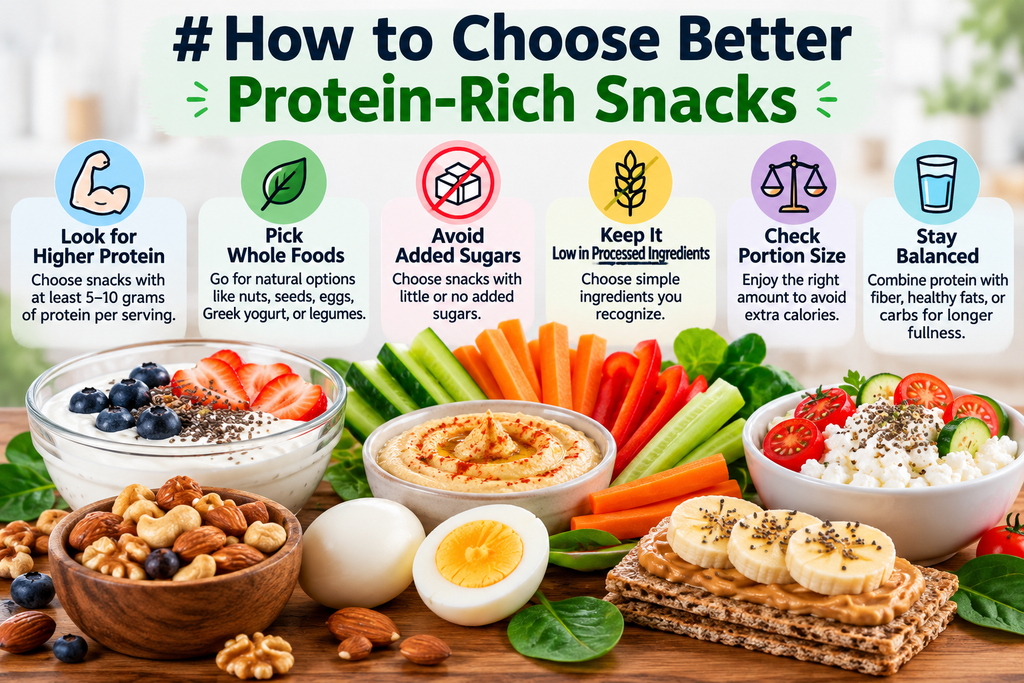
A nutritious snack does not need a long ingredient list. Before choosing one, consider these five factors.
1. Include a Protein Source
Choose foods such as yogurt, eggs, cottage cheese, chickpeas, hummus, nuts, seeds, or peanut butter.
2. Add Fruit or Vegetables
Fruit and vegetables can provide fiber, vitamins, minerals, and water. They also add color and variety to snacks.
3. Check Added Sugar
Some flavored yogurts, nut butters, snack bars, and packaged foods contain significant amounts of added sugar. Comparing nutrition labels can help you identify options that better fit your needs.
4. Pay Attention to Portions
Healthy foods still contain calories. This is especially relevant for nuts, seeds, nut butters, cheese, and oils. Measuring portions can make it easier to keep snacks appropriate for your overall diet.
5. Choose Foods You Can Actually Maintain
The best snack is not necessarily the one with the longest list of nutritional benefits. It also needs to fit your budget, schedule, taste preferences, and cooking habits.
How to Prepare Protein-Rich Snacks Ahead of Time
A little preparation can make nutritious snacks much easier to choose during busy days.
For example, boil six eggs at once, wash vegetables after grocery shopping, and divide nuts or seeds into individual portions.
You can also prepare a batch of roasted chickpeas and store them appropriately once completely cooled. Keep yogurt, cottage cheese, eggs, and cut vegetables refrigerated.
Another practical strategy is to prepare two or three snack combinations for the week rather than trying to make something different every day.
For example, you could prepare:
- Monday: Greek yogurt and berries
- Tuesday: Boiled eggs and vegetables
- Wednesday: Apple and peanut butter
- Thursday: Cottage cheese and fruit
- Friday: Hummus and vegetables
Having ready-to-eat choices reduces the need to make a food decision when you are already hungry.
Are Protein-Rich Snacks Good for Healthy Weight Management?
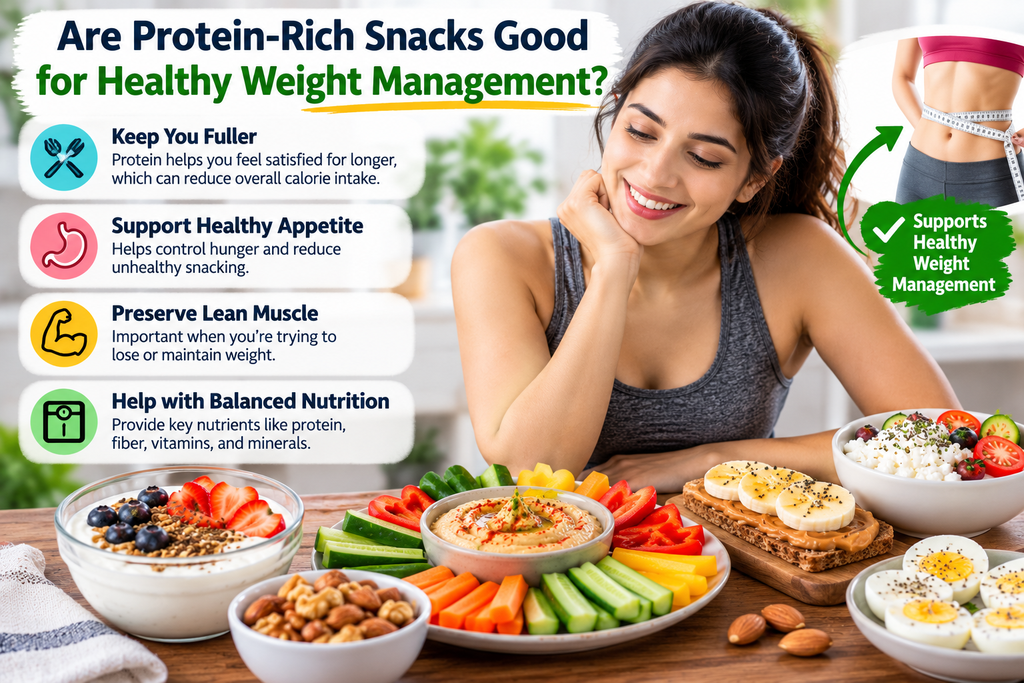
Protein-rich snacks can fit into a healthy weight-management routine, but eating more protein does not automatically lead to weight loss.
Overall food intake, portion sizes, physical activity, sleep, eating patterns, and individual needs all play a role.
For example, replacing a highly processed snack with Greek yogurt and berries may provide more protein and other nutrients. However, adding large portions of nuts, peanut butter, cheese, or other energy-dense foods on top of your usual intake can increase total calorie consumption.
The practical goal is to use protein-rich foods as part of a balanced eating pattern rather than treating protein as a shortcut for weight loss.
People with medical conditions or specific dietary requirements should discuss significant dietary changes with an appropriately qualified healthcare professional.
7 Easy Protein-Rich Snack Combinations
For quick reference, here are the seven combinations covered in this article:
| Snack | Serving |
|---|---|
| Greek yogurt + berries | ¾ cup yogurt + ½ cup berries |
| Boiled eggs + vegetables | 2 eggs + 1½ cups vegetables |
| Apple + peanut butter | 1 apple + 1 tbsp peanut butter |
| Cottage cheese + fruit | ½ cup cottage cheese + ½ cup fruit |
| Roasted chickpeas | ½ cup cooked chickpeas |
| Hummus + vegetables | ¼ cup hummus + 1½ cups vegetables |
| Yogurt + nuts and seeds | ¾ cup yogurt + 2 tbsp nuts/seeds |
These portions are practical starting points rather than universal prescriptions. Individual energy and protein requirements differ.
Frequently Asked Questions
How much protein should a snack contain?
There is no universal protein requirement for every snack. Individual needs depend on factors such as age, body size, activity level, and overall diet. Including a recognizable protein food is a practical way to make a snack more balanced.
Are boiled eggs a good protein-rich snack?
Yes. Two large boiled eggs provide a convenient protein-containing snack and can be paired with vegetables such as cucumber, tomatoes, or bell peppers.
Can protein-rich snacks help with weight management?
They can be part of a healthy weight-management eating pattern, but they do not guarantee weight loss. Total food intake, portion sizes, physical activity, and other lifestyle factors also matter.
Are nuts suitable for protein-rich snacks?
Yes. Nuts provide protein and unsaturated fats along with other nutrients. Because they are energy-dense, measuring a serving can be useful.
What is an easy plant-based protein snack?
Roasted chickpeas and hummus with vegetables are two straightforward choices. Nuts, seeds, beans, lentils, and soy foods can also contribute plant-based protein.
Can I prepare these snacks in advance?
Several can be prepared ahead of time. Boiled eggs, washed vegetables, portioned nuts, and roasted chickpeas can be prepared in advance. Refrigerate perishable foods such as eggs, yogurt, cottage cheese, and cut vegetables and use them within appropriate food-safety time limits.
Final Thoughts
Protein-rich snacks do not need to be expensive, complicated, or based on supplements. Everyday foods such as eggs, yogurt, cottage cheese, chickpeas, hummus, peanut butter, nuts, and seeds can be combined with fruits and vegetables to create practical snacks.
The key is to choose appropriate portions and combine protein with other nutritious foods. Preparing a few options in advance can also make it easier to choose a balanced snack when hunger arrives.
Whether you prefer something sweet, like Greek yogurt with berries, or something savory, like hummus with vegetables, these seven options offer a simple starting point for building a more balanced snack routine.
Hummus with fresh carrots, cucumber, bell peppers, tomatoes, and lettuce
