
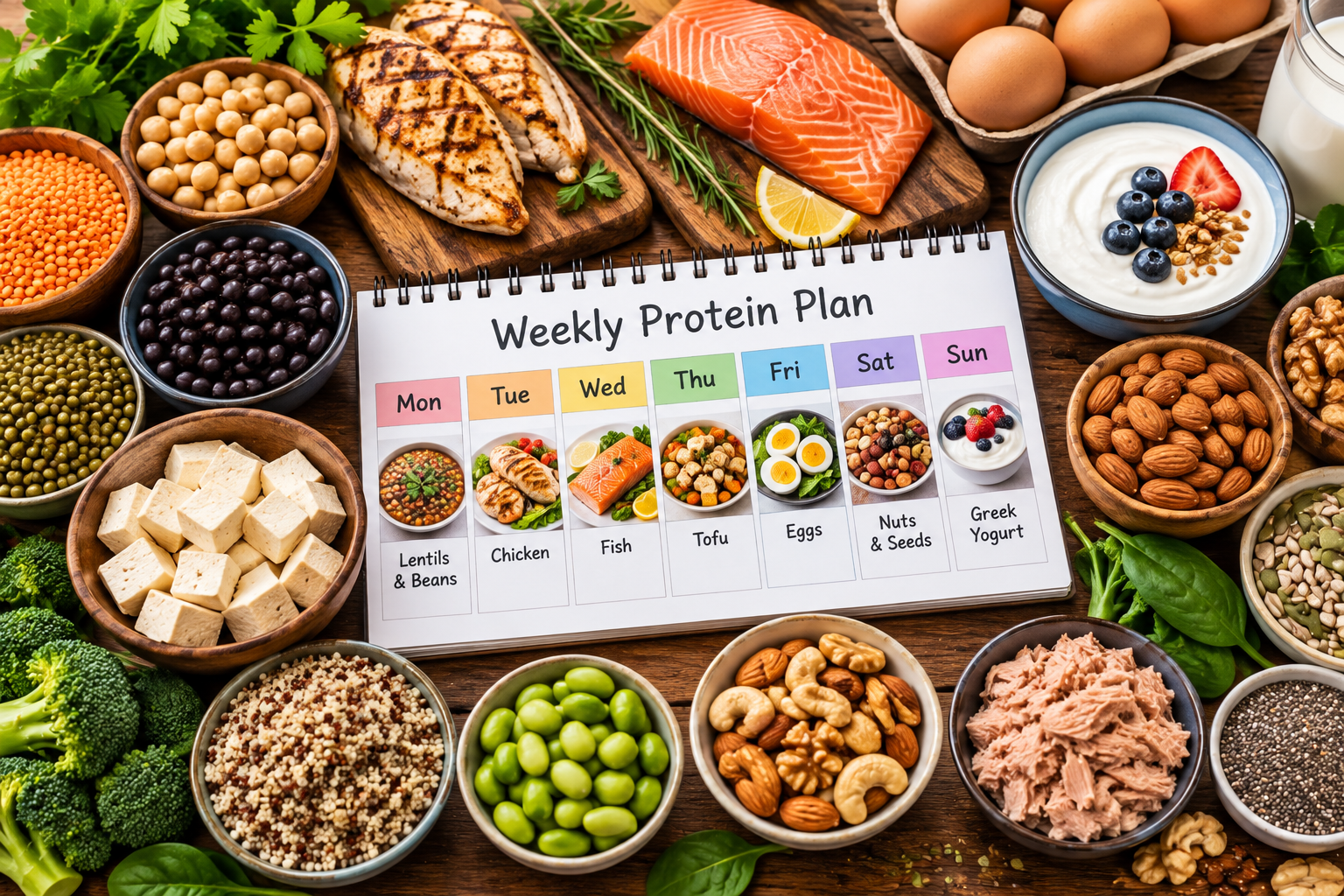
Protein is an important part of everyday meals, but getting it does not have to mean eating the same foods every day. A simple way to make meals more interesting is to vary protein sources throughout the week. Instead of relying on one or two foods, you can rotate legumes, eggs, dairy foods, fish, poultry, nuts, seeds, tofu, and other protein-rich options according to your preferences.
Different protein foods also come with different combinations of nutrients. Beans, peas, and lentils can provide protein and fiber, while nuts and seeds provide protein along with unsaturated fats. Fish provides protein and can also supply omega-3 fatty acids, while eggs and dairy foods offer other useful nutrients. USDA MyPlate and Harvard’s nutrition guidance both encourage eating a variety of protein foods rather than depending on one category alone. Learning to protein sources throughout the week can make everyday meals more interesting and flexible.
Table of Contents
Why It Helps to Vary Protein Sources
Eating a variety of foods can make a healthy eating pattern easier to maintain. When you vary protein sources , you can include foods with different tastes, textures, and nutrient profiles throughout the week.
For example, lentils may work well in a curry or soup, while eggs can be useful at breakfast. Chicken can become part of a lunch salad, tofu can be added to a stir-fry, and fish can be served with vegetables and whole grains for dinner.
Variety can also help prevent meals from becoming repetitive. When food feels different from one day to the next, it may be easier to continue a balanced eating routine over time.
USDA MyPlate lists seafood, meat, poultry, eggs, beans, peas, lentils, nuts, seeds, and soy products among protein foods. It also notes that different protein choices provide different nutrients. Harvard Nutrition Source
Understand the Main Types of Protein Sources
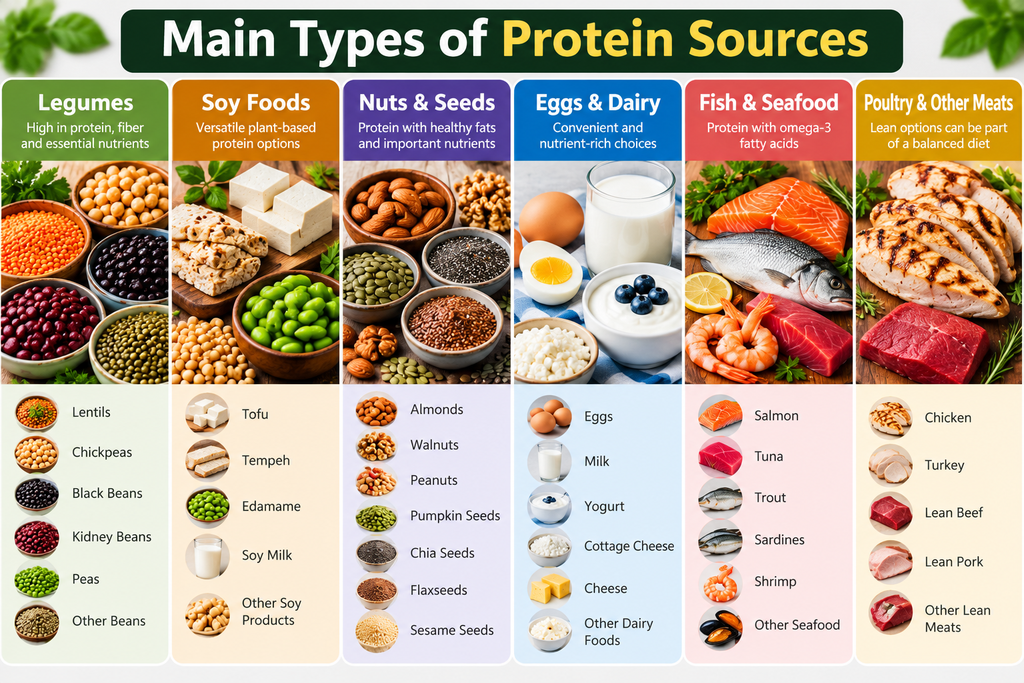
Before planning your week, it helps to know the different categories of protein foods.
Legumes include lentils, chickpeas, black beans, kidney beans, peas, and other beans. They can be added to soups, salads, curries, wraps, rice dishes, and bowls.
Soy foods include tofu, tempeh, edamame, and other soy products. These foods can be used in stir-fries, salads, sandwiches, bowls, and many cooked dishes.
Nuts and seeds include almonds, walnuts, peanuts, pumpkin seeds, chia seeds, flaxseeds, and sesame seeds. They are easy to add to oatmeal, yogurt, salads, smoothies, or snacks.
Eggs and dairy foods can provide convenient protein options for breakfast or meals. Depending on your dietary preferences, this group can include eggs, yogurt, milk, cottage cheese, or other dairy foods.
Fish and seafood provide protein and can add variety to a weekly meal plan. Some seafood options also provide omega-3 fatty acids.
Poultry and other meats can also be included. When choosing meat and poultry, USDA guidance recommends favoring lean or lower-fat options and limiting processed meat.
How to Vary Protein Sources Throughout the Week
You do not need a complicated meal plan to vary protein sources. A simple weekly rotation can be enough. One practical way to vary protein sources is to choose different foods on different days.
For example, Monday could feature lentils. Tuesday might include eggs. Wednesday could be a tofu or chickpea meal. Thursday could feature chicken, while Friday could include fish. Saturday might be a bean-based meal, and Sunday could include yogurt, nuts, seeds, or another preferred protein source.
The goal is not to make every day completely different. You can repeat foods while still creating variety. For instance, lentils could appear twice during the week, but in different meals such as lentil soup and lentil curry.
A useful approach is to think in terms of categories rather than exact recipes. Choose several protein groups at the beginning of the week, then use them in different combinations.
Build a Simple Weekly Protein Rotation
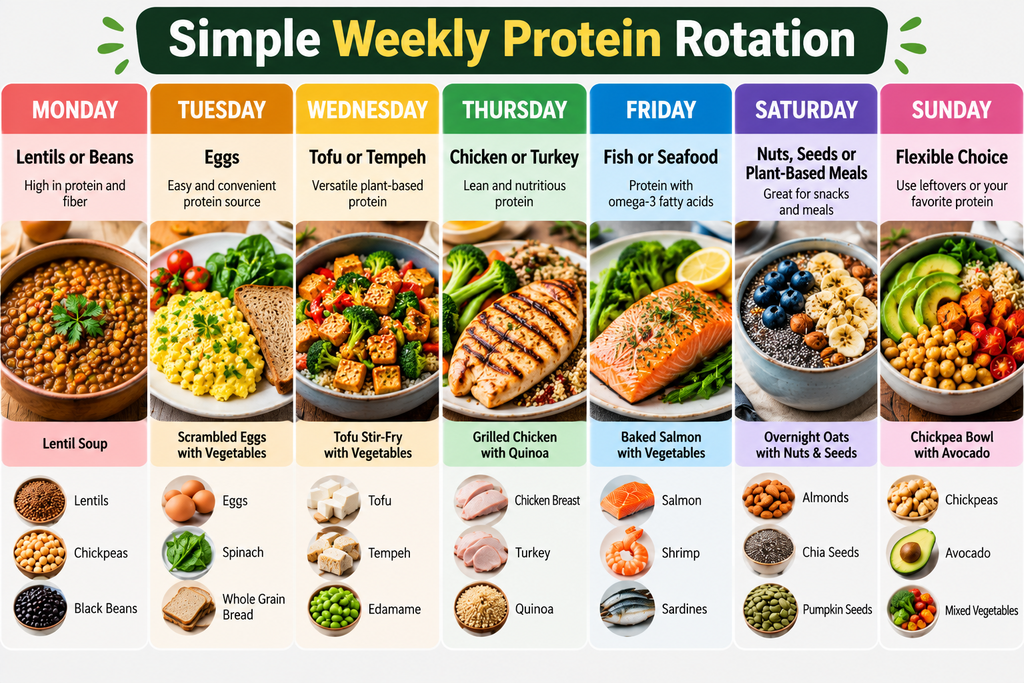
A weekly protein rotation can be as simple as choosing five to seven main options.
Monday: Lentils or Beans
Start the week with lentils, chickpeas, or beans. These foods can be used in soups, stews, curries, salads, and grain bowls. Harvard identifies legumes as useful plant-based protein sources, and they can also contribute dietary fiber.
Tuesday: Eggs
Eggs can make breakfast or lunch easier. Try boiled eggs with whole-grain toast, eggs with vegetables, or chopped eggs added to a salad.
Wednesday: Tofu or Tempeh
Tofu and tempeh can bring a different texture to meals. Try tofu with vegetables and brown rice, or tempeh in a sandwich or grain bowl.
Thursday: Chicken or Turkey
Lean poultry can be used in wraps, salads, soups, sandwiches, or simple dinner plates. Using different herbs and spices can make the same protein feel like a different meal.
Friday: Fish or Seafood
Fish can add another protein option to your week. Salmon, trout, sardines, shrimp, and other seafood can be prepared in different ways and served with vegetables and whole grains. USDA specifically recommends including a variety of seafood choices.
Saturday: Nuts, Seeds, or Plant-Based Meals
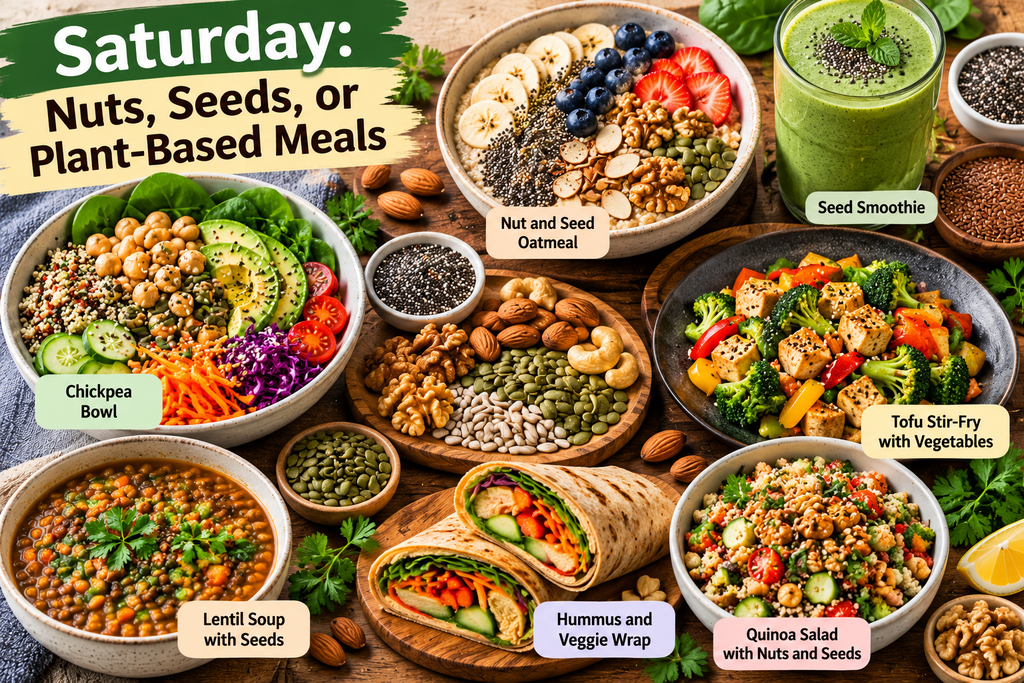
Use nuts and seeds as part of meals rather than thinking of them only as snacks. Sprinkle seeds over oatmeal, yogurt, or salads, or add nuts to a grain bowl.
Sunday: Flexible Choice
Sunday can be a day for leftovers or one of your favorite protein foods. This makes the plan easier to follow and reduces the need for unnecessary cooking.
Combine Protein Foods With Other Healthy Foods
Protein does not need to be eaten by itself. One of the easiest ways to create a balanced meal is to pair a protein food with vegetables, fruit when appropriate, and whole grains or another nutritious carbohydrate source.
Harvard’s Healthy Eating Plate suggests making about half the plate vegetables and fruits, one-quarter whole grains, and one-quarter healthy protein sources such as fish, poultry, beans, and nuts.
For example, instead of serving chicken alone, pair it with roasted vegetables and brown rice. Instead of eating beans by themselves, add them to a bowl with vegetables and quinoa. Tofu can be paired with mixed vegetables and whole-grain rice.
This approach keeps the focus on the overall meal rather than one individual ingredient.
Focus on Quality as Well as Variety
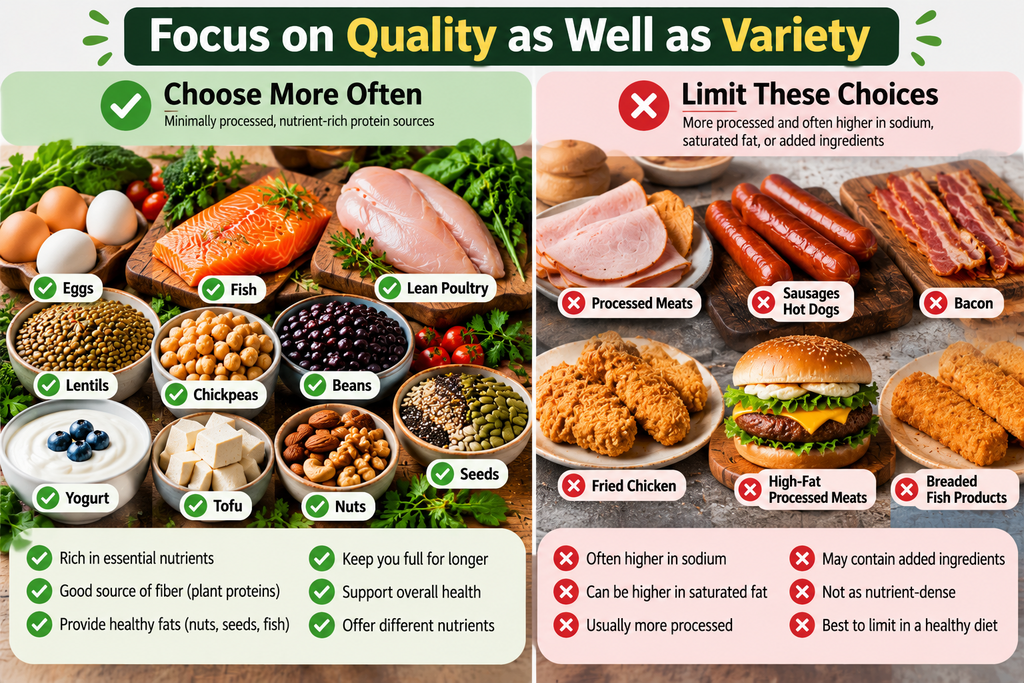
Variety is useful, but the quality of the protein food still matters. Not every food marketed as “high protein” is automatically a healthy everyday choice.
When possible, choose minimally processed protein foods such as beans, lentils, eggs, fish, nuts, seeds, tofu, plain yogurt, and lean poultry. Harvard recommends emphasizing healthy protein sources such as fish, poultry, beans, nuts, and other plant-based options while limiting processed meats.
Processed meats such as some sausages, bacon, and deli meats can contain more sodium and saturated fat than many less-processed choices. USDA also advises limiting foods high in saturated fat and selecting leaner meat and poultry options.
This does not mean every meal has to be perfect. The bigger goal is to make nutrient-dense choices more often.
Vary Protein Sources Without Making Meals Complicated
Healthy eating does not have to involve preparing a completely new recipe every day. You can save time by preparing basic ingredients in advance.
For example, cook a batch of lentils or beans and use them in several meals. Keep boiled eggs ready for quick breakfasts or lunches. Wash and portion vegetables so they can be added to meals easily. Nuts and seeds can also be stored for quick additions to oatmeal, yogurt, or salads.
You can also use leftovers strategically. Grilled chicken from dinner can become a lunch wrap the next day. Cooked beans can be added to a salad, while leftover roasted fish can be served with vegetables and grains.
The key is to vary protein sources while keeping preparation practical.
What About Plant-Based Protein?
People following vegetarian or vegan diets can also create plenty of variety. Beans, peas, lentils, soy foods, nuts, seeds, and whole grains can all contribute protein to meals.
Harvard recommends getting protein from a range of plant foods and mixing up sources across the diet. USDA also lists beans, peas, lentils, nuts, seeds, and soy products as vegetarian protein choices.
A plant-based week could include lentil curry on Monday, chickpea salad on Tuesday, tofu stir-fry on Wednesday, bean chili on Thursday, edamame bowls on Friday, nut-and-seed oatmeal on Saturday, and a mixed-bean meal on Sunday.
The important part is variety and overall dietary balance rather than trying to find one “perfect” plant protein.
Common Mistakes When Choosing Protein Foods
One common mistake is eating the same protein source every day simply because it is convenient. Repeating favorite foods is not necessarily a problem, but adding other options can make the diet more varied.
Another mistake is assuming that more protein is always better. Individual protein needs vary based on factors such as age, body size, physical activity, and other circumstances. A healthy eating pattern should consider the entire diet rather than focusing only on protein.
A third mistake is overlooking the rest of the food on the plate. A protein source works best as part of an overall meal that includes vegetables, nutritious carbohydrates, and other foods that fit your dietary needs.
Frequently Asked Questions
How often should I change my protein sources?
There is no single rule requiring you to change protein at every meal. A practical approach is to include several different protein foods across the week.
Can I eat the same protein source more than once a week?
Yes. Variety does not mean avoiding repetition. You can eat lentils, eggs, chicken, tofu, or another favorite food more than once while still including other protein sources.
What are some easy plant-based protein sources?
Beans, chickpeas, lentils, tofu, tempeh, edamame, nuts, seeds, and peanuts are examples of plant-based protein foods.
Are fish and seafood good options for variety?
Fish and seafood can add variety to a weekly eating pattern and provide protein. Some types of seafood also provide omega-3 fatty acids.
Do I need to combine different proteins at every meal?
For most healthy people, it is not necessary to carefully combine complementary plant proteins at every single meal. Eating a varied diet over the course of the day can provide a range of amino acids and nutrients.
What is the easiest way to plan protein for the week?
Choose several protein categories before the week begins. For example, select one or two legumes, one soy food, eggs or dairy, one poultry option, one seafood option, and some nuts or seeds. Then build simple meals around them.
Final Thoughts
Learning to vary protein sources throughout the week does not require an expensive diet or a complicated meal schedule. The simplest strategy is to rotate different protein foods while building meals around vegetables, whole grains, and other nutritious ingredients.
Lentils, beans, chickpeas, tofu, eggs, yogurt, fish, poultry, nuts, and seeds can all have a place in a varied eating pattern, depending on your dietary preferences and needs.
Instead of asking which single protein food is the healthiest, focus on variety throughout the week. A flexible rotation can make everyday meals more interesting, practical, and easier to maintain.