

Daily habits are small, simple actions that can make your daily routine easier without requiring major lifestyle changes.Daily habits can make your routine easier by helping you stay organized, focused, and consistent throughout the day. Instead of making dramatic lifestyle changes all at once, starting with 10 simple daily habits can be a more practical and manageable approach. Small actions that require little time or effort can gradually become part of your routine when you repeat them consistently.
The ideas below are designed for ordinary busy days. You do not need special equipment, expensive apps, or a perfect schedule. Choose one or two daily habits that fit your lifestyle, practice them consistently, and adjust them based on what actually works for you.
Why Daily Habits Can Make Your Routine Easier
Simple daily habits can make everyday routines feel more manageable. Repeating small actions consistently may help you stay organized, reduce unnecessary stress, improve focus, and make better use of your time. The goal is not to create a perfect routine, but to build realistic habits that are easier to maintain over time. These simple daily habits are easier to maintain when you connect them to routines you already follow.
Table of Contents
1. Start Your Day Without Checking Your Phone
One of the simplest daily habits you can build is giving yourself the first 10 to 15 minutes of the morning without social media, email, or news. Instead of reaching for notifications as soon as you wake up, choose one calm offline action such as drinking water, stretching, opening the curtains, or writing down your top priority for the day.
If you use your phone as an alarm, place it a little farther from your bed and avoid opening unnecessary apps until your short morning routine is complete. The goal is not to avoid technology, but to create a more intentional start to the day before outside demands begin competing for your attention.
2. Drink a Glass of Water After Waking Up
Making water part of your morning routine is another simple habit that requires very little planning. Keep a glass or reusable bottle somewhere visible and easy to reach, such as your bedside table or kitchen counter.
If you often forget, prepare it the night before so there is one less decision to make in the morning. Small actions like this are easier to repeat because they fit naturally into routines you already follow.
The most useful daily habits are usually not complicated. They are small, realistic actions that can be repeated without requiring major changes to your schedule. By improving one behavior at a time, you can gradually create a routine that feels more organized, manageable, and consistent.
3. Move Your Body for Five Minutes
Choose one simple movement you can do almost anywhere for five minutes. Walk around your home, stretch your shoulders and legs, climb a few stairs, or do a short mobility routine. Keep the activity easy enough that you can repeat it on busy days instead of turning it into a full workout. If mornings are hectic, attach the habit to something you already do, such as moving for five minutes after breakfast or before starting work. The goal is consistency, not intensity. The CDC notes that adults who sit less and do any amount of moderate- or vigorous-intensity physical activity can gain some health benefits.
CDC – Adult Physical Activity Guidelines
4. Choose One Important Task for the Day
Before you start checking messages or jumping between small tasks, choose one result that would make the day feel productive. Keep it specific and realistic, such as finishing a report, booking an appointment, or completing one household job. Write it somewhere visible and try to work on it before lower-priority tasks take over. If the task feels too large, define the smallest useful step you can finish that day.

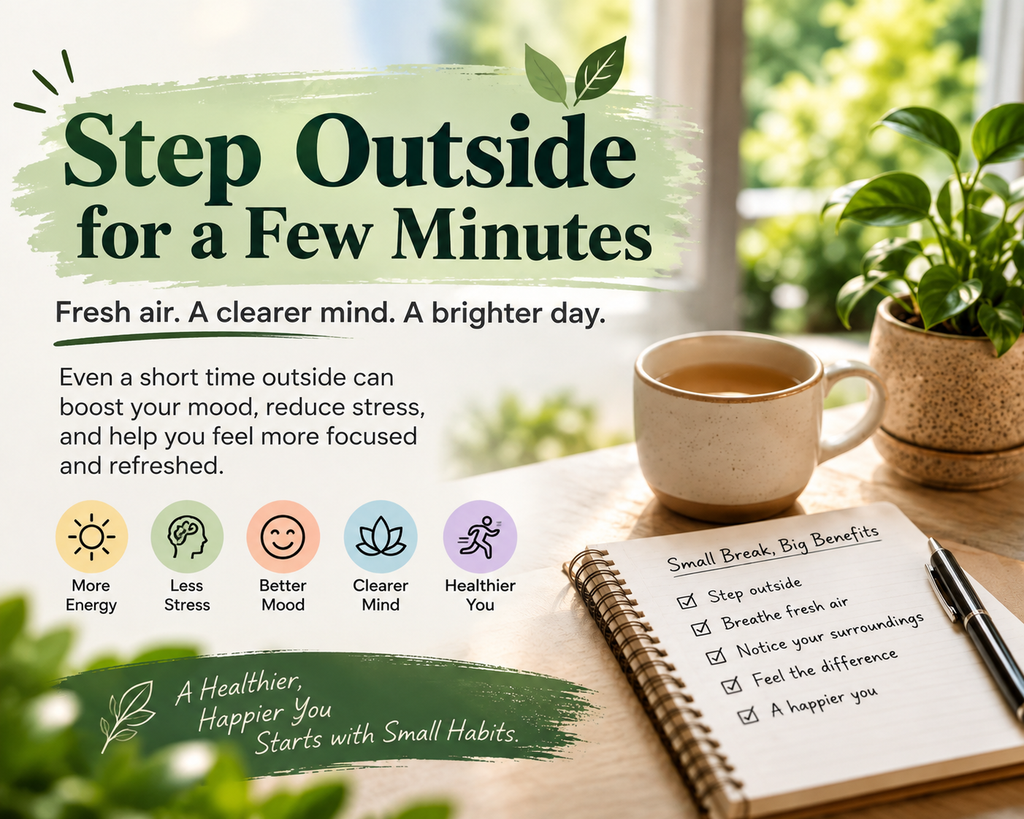
5.“Step Outside for a Few Minutes”
Choose a short outdoor break that fits naturally into your day. You could walk to the end of your street, sit on a balcony, step into a yard, or spend a few minutes near an open window if going outside is not practical. Leave your phone in your pocket and use the time to notice what is around you instead of scrolling. Attach the break to something you already do, such as after lunch or between work sessions, so it becomes easier to remember.
6. Tidy One Small Space Every Day
Pick one small area that can be reset in about five minutes, such as a desk corner, one drawer, your bedside table, or part of the kitchen counter. Remove obvious trash, return misplaced items, and stop when the short timer ends. Do not turn it into a full-room cleaning session. Keeping the task deliberately small makes it easier to repeat and prevents a minor habit from becoming another overwhelming chore.
7. Focus on One Thing at a Time
Choose one task and give it a short block of uninterrupted attention, even if it is only 15 to 20 minutes. Close unnecessary tabs, silence non-urgent notifications, and keep only the materials you need in front of you. If another task comes to mind, write it down instead of switching immediately. When the short focus block ends, decide whether to continue or move to the next priority. This makes the habit practical even on busy days.
8. Eat One Meal Without a Screen
Choose one meal each day when your phone, television, and laptop stay away from the table. Put your phone somewhere out of reach before you sit down, rather than relying on willpower once notifications start appearing. Use the meal as a short pause from digital input and pay attention to your food or the people you are eating with. If a full meal feels difficult at first, start with the first 10 minutes and build from there.

9. Write Down One Good Thing From Your Day
Before going to bed, write down one specific thing from the day that went well or felt meaningful. It could be finishing a task, having a useful conversation, enjoying a quiet moment, or handling a difficult situation better than expected. Keep the note to one or two sentences so the habit stays easy to repeat. Store these notes in the same notebook or phone note each night so you can look back at them over time.
10. Create a Short Screen-Free Bedtime Routine
Set a short screen-free window before bed, even if it is only 15 minutes. Put your phone on charge away from the bed and choose one simple offline activity, such as reading a few pages, preparing clothes for tomorrow, stretching, or writing a short note about the day. Keep the routine small enough that you can repeat it most nights. If 15 minutes feels unrealistic at first, start with five minutes and build from there.For more ideas, read our guide to simple evening habits to reduce stress and sleep better.

How Simple Micro Habits Can Create Meaningful Change
Do not try to adopt all 10 habits at once. Choose one or two that solve a real problem in your current routine and make them easy to repeat. For example, keep a water bottle visible, place your phone away from the bed, or set a five-minute timer for tidying. After a habit starts feeling automatic, decide whether another small change would actually help. The aim is not to build a perfect routine, but to create a few useful behaviors that still work on busy or imperfect days.The best daily habits are the ones that feel realistic enough to repeat consistently.
Frequently Asked Questions About Daily Habits
1. What are daily habits?
Daily habits are small actions or routines that you repeat regularly. They can include simple things such as planning your day, drinking water, taking short breaks, organizing your workspace, or limiting unnecessary screen time.
2. Why are daily habits important?
Daily habits can make everyday routines more organized and manageable. Small, consistent actions may help you save time, reduce unnecessary stress, and stay focused on important tasks.
3. How many daily habits should I start with?
It is usually easier to begin with one or two simple habits. Once they become part of your routine, you can gradually add more instead of trying to change everything at once.
4. How long does it take to build a daily habit?
There is no fixed number of days that works for everyone. The time needed depends on the habit, your routine, and how consistently you practice it.
5. What are some simple daily habits for busy people?
Useful examples include preparing a short to-do list, drinking water regularly, taking brief movement breaks, keeping frequently used items organized, and setting specific times to check your phone.
6. How can I make daily habits easier to maintain?
Choose habits that are small and realistic, connect them to routines you already follow, and make them easy to repeat. Tracking progress can also help you stay consistent.
7. Should I change all my daily habits at once?
No. Changing several routines at the same time can be difficult to maintain. Start with the habit that would make the biggest practical difference in your day and build from there.
8. What should I do if I miss a day?
Simply continue the habit the next day. One missed day does not mean you need to restart everything; long-term consistency matters more than being perfect every day.
For more ideas, read our guide to simple evening habits to reduce stress and sleep better.