
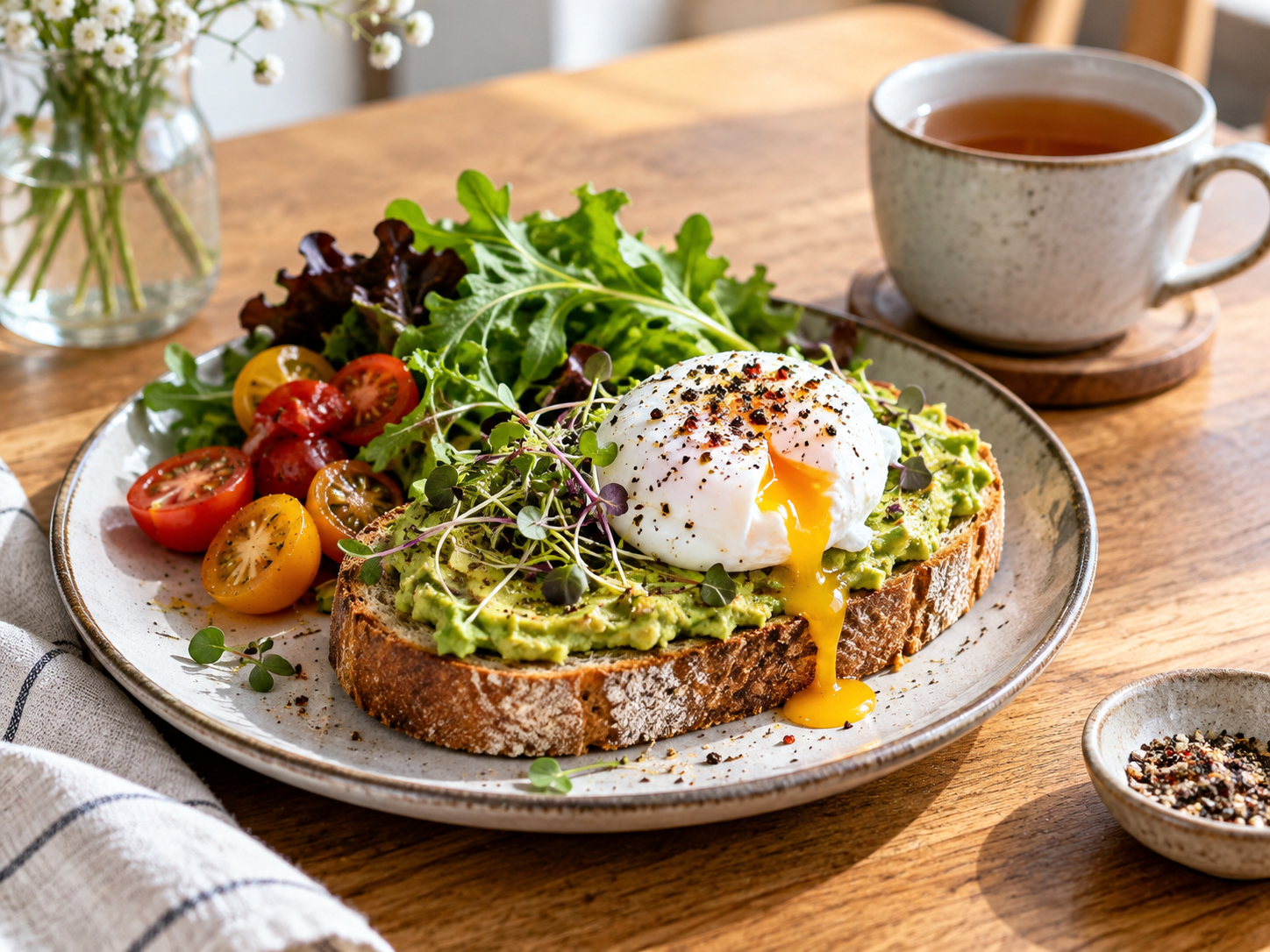
Healthy eating does not have to mean following a strict diet or giving up every food you enjoy. Small, realistic changes can make everyday meals more balanced and easier to maintain.
Instead of trying to change everything at once, focus on a few healthy eating habits that fit naturally into your routine. Simple choices can help you build a more organized and balanced approach to food.
Table of Contents
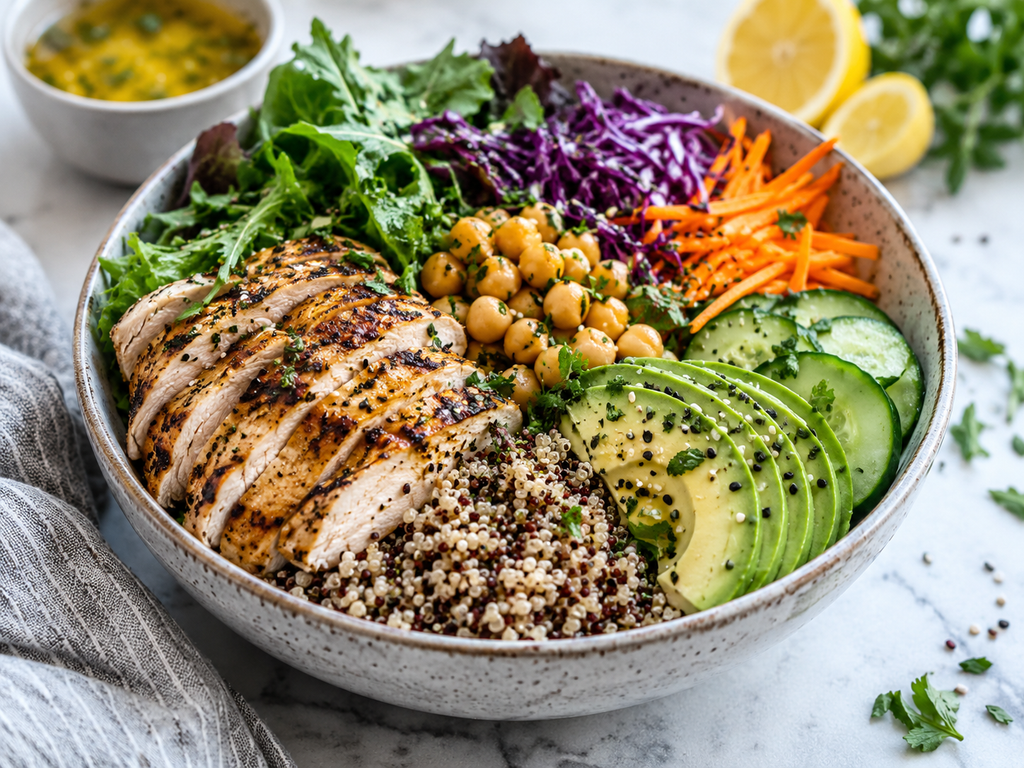
Healthy eating habits with a balanced meal of vegetables and whole foods
1. Add More Vegetables to Everyday Meals
Vegetables can be an easy way to add variety to your meals. You do not need to completely change what you already eat.
Try adding tomatoes, cucumbers, carrots, spinach, peppers, or other vegetables to sandwiches, rice dishes, salads, or cooked meals.
Start with vegetables you already enjoy and gradually experiment with new options.
2. Keep Fresh Fruit Easily Available
Fruit can be a convenient option when you want something quick between meals.
Keep bananas, apples, oranges, berries, or other seasonal fruits somewhere easy to see and reach. Washing or preparing fruit ahead of time can make it easier to choose when you are busy.
You can also add fruit to yogurt, oatmeal, or other simple breakfasts.

Healthy eating habits with salmon, broccoli, and sweet potatoes
3. Choose Whole Foods More Often
Not every meal needs to be homemade from scratch, but choosing less heavily processed foods more often can help create a balanced routine.
Foods such as vegetables, fruits, beans, lentils, eggs, yogurt, oats, nuts, rice, and whole grains can be used in many simple meals.
The goal is not to avoid every packaged food. Instead, try to make whole or minimally processed foods a regular part of your everyday choices.
For more guidance on building a balanced eating routine, see the USDA MyPlate recommendations.
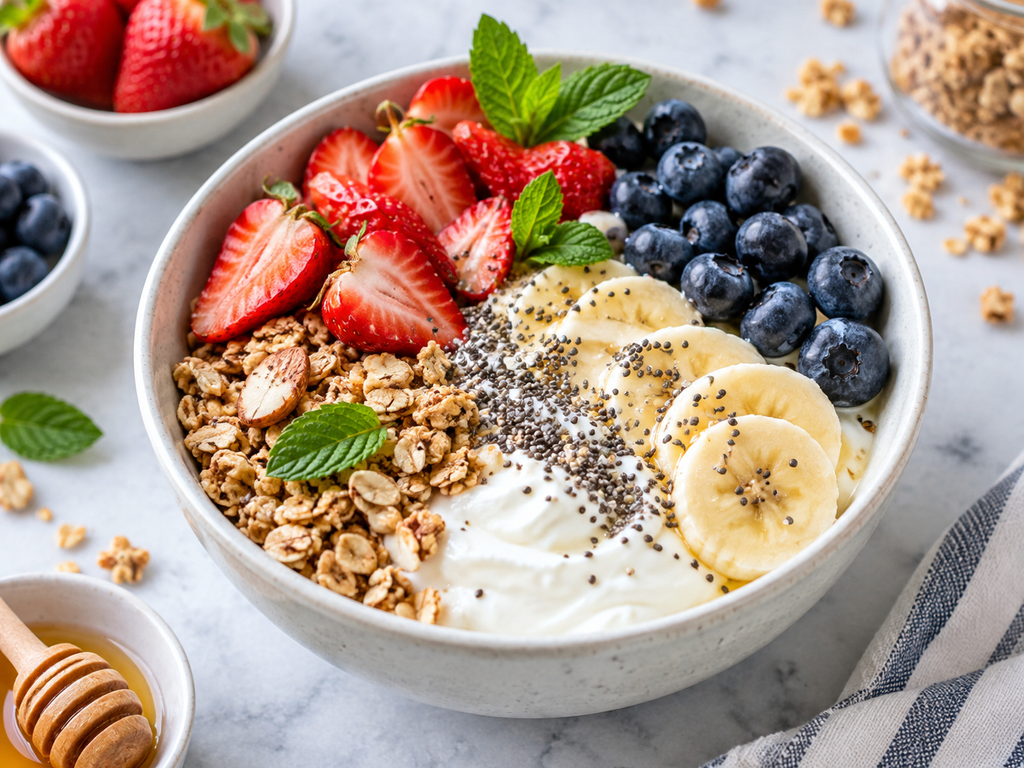
Healthy eating habits with yogurt, berries, banana, and granola
4. Include a Source of Protein With Meals
Protein can come from many different foods.
Depending on your preferences, meals may include eggs, fish, chicken, beans, lentils, yogurt, tofu, nuts, or other protein-rich foods.
Think about building meals around a combination of protein, vegetables or fruit, and a carbohydrate source rather than focusing on only one type of food.
5. Make Water Your Regular Drink
Keeping water nearby can make it easier to drink throughout the day.
Carry a reusable bottle when you work, travel, exercise, or spend time outside. You do not need to follow an extreme water target because individual needs can vary.
Making water your regular drink and keeping it easily available is a simple habit that can fit into almost any routine.
6. Plan a Few Meals Before the Week Begins
Deciding what to eat when you are already hungry or busy can make meals more stressful.
Spend a few minutes planning several simple meals before the week begins. You can prepare vegetables, cook grains, organize snacks, or make a basic shopping list.
Meal planning does not need to cover every meal. Even planning a few options can save time and make everyday choices easier.
7. Eat Slowly and Pay Attention to Your Meal
Phones, television, and work can easily distract you while eating.
When possible, give yourself a few minutes to eat without constantly looking at a screen. Slow down, notice your food, and enjoy the meal instead of rushing through it.
You do not need to practice this perfectly at every meal. Start with one meal a day and see if it helps make eating feel calmer and more intentional.
Healthy Eating Habits Can Start With Small Changes
A healthier eating routine does not need to be complicated. Start with one or two changes that feel realistic for your lifestyle.
Add more vegetables, keep fruit nearby, include different protein sources, drink water regularly, and prepare a few meals ahead of time.
The most useful healthy eating habits are usually the ones you can continue consistently. Small everyday choices can gradually help you build a more balanced relationship with food.
Conclusion
Healthy eating habits do not have to be complicated or restrictive. Small choices, such as eating more vegetables and fruit, including protein with meals, drinking water regularly, planning simple meals, and eating more mindfully, can make everyday eating feel easier and more balanced.
The goal is not perfection. Start with one or two habits that fit your lifestyle and build gradually. The best healthy eating habits are the ones you can follow consistently over time.
Frequently Asked Questions
1. What are some simple healthy eating habits for beginners?
Start with small changes such as adding vegetables to meals, keeping fruit nearby, drinking water regularly, and planning a few simple meals in advance.
2. Do I need to follow a strict diet to eat healthier?
No. A healthier eating routine can include a variety of foods. The focus should be on balance, variety, and habits that are realistic for you.
3. How can I make healthy eating easier when I am busy?
Keep simple foods available, prepare a few ingredients ahead of time, make a short shopping list, and choose meals that are easy to repeat.
4. Is it better to avoid all processed foods?
Not necessarily. You do not need to remove every packaged food. Try to include whole or minimally processed foods more often while keeping your overall diet balanced.
5. How can I eat more mindfully?
When possible, reduce distractions such as phones or television, eat more slowly, and pay attention to your hunger, fullness, and enjoyment of the meal.
6. What is the most important healthy eating habit?
The most useful habit is one you can maintain consistently. Small realistic improvements are usually easier to continue than extreme changes.
You may also like: 7 Simple Fitness Habits for Women to Feel Stronger and More Energetic