
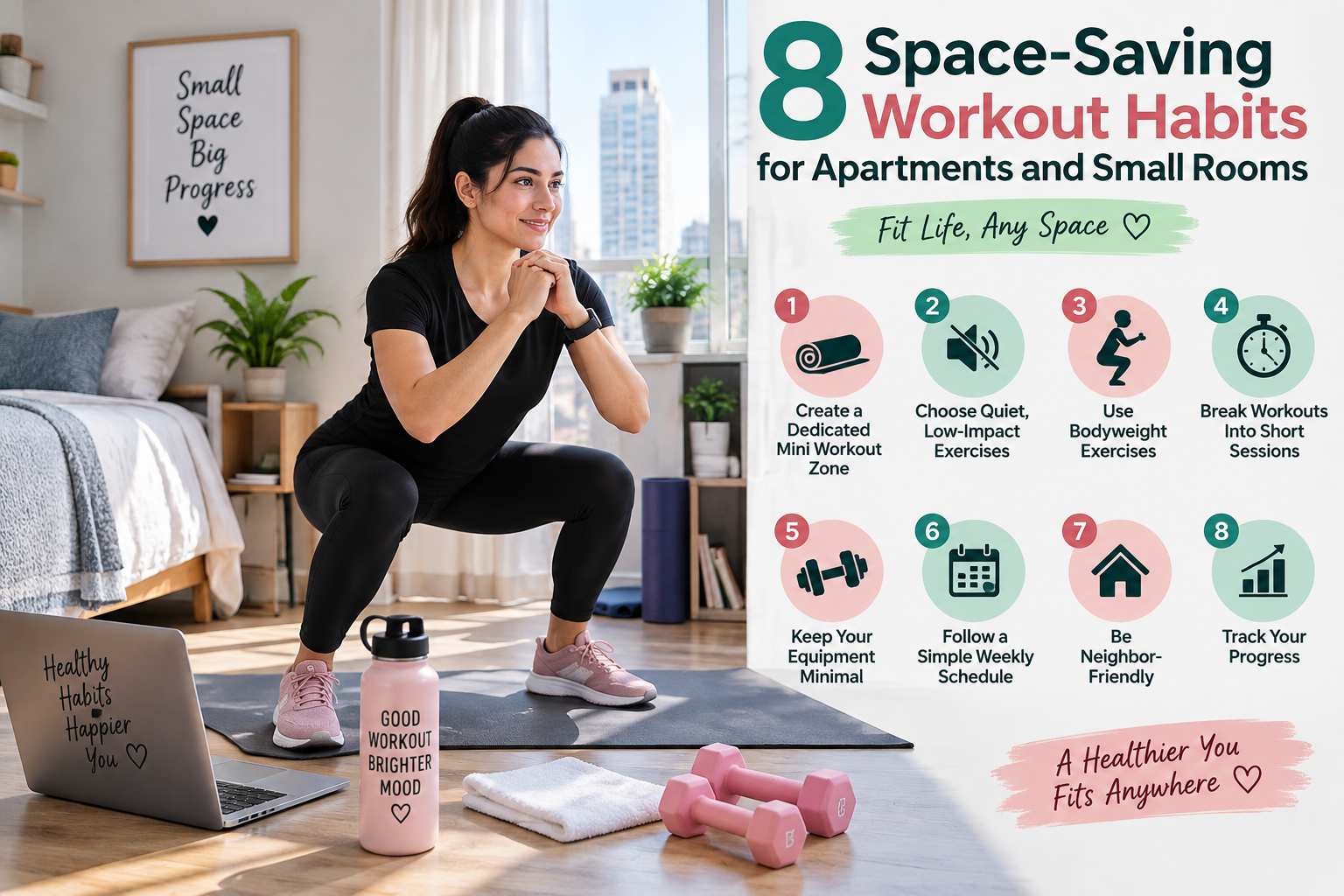
A space-saving workout can help you stay active even when you live in a small apartment or have limited room for exercise. You don’t need a large home gym or expensive equipment. With a few simple movements, a clear workout area, and a consistent routine, you can exercise comfortably without taking up much space.
The key is to choose movements that require little space, create minimal noise, and fit naturally into your daily schedule.
According to the CDC, adults should aim for at least 150 minutes of moderate-intensity aerobic activity per week, along with muscle-strengthening activities on two or more days. Shorter activity sessions can contribute toward these goals.
Here are eight practical workout habits designed for apartments and small rooms.
Table of Contents
1. 1. Create a Dedicated Space-Saving Workout Zone
You do not need a separate home gym to exercise.
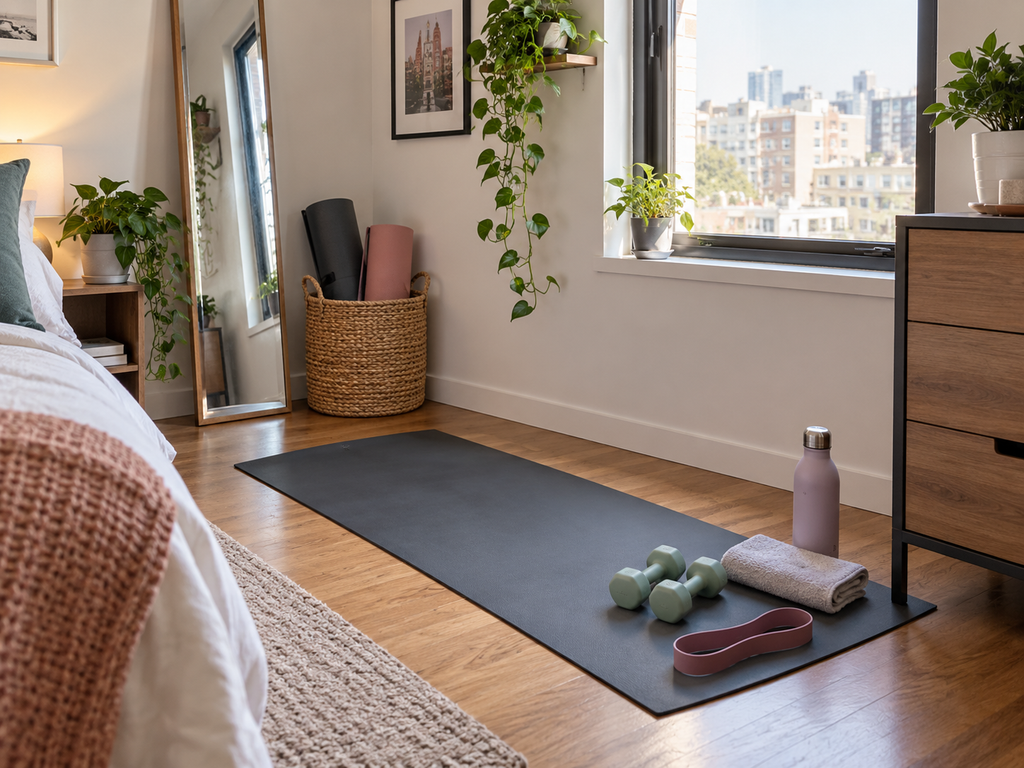
Choose a small section of your bedroom or living room where you can comfortably stand, extend your arms, and perform simple movements.
Before starting:
- Move small objects and loose rugs out of the way.
- Make sure you can move without hitting furniture.
- Keep your exercise mat nearby.
- Check that the floor is dry and stable.
A useful habit is to return to the same workout spot each day. Having a consistent location removes some of the preparation involved in getting started.
Small-space tip: Choose standing exercises when you do not have enough room for floor-based movements.
2. Choose Quiet, Low-Impact Exercises

Jumping jacks, burpees, and running in place can create considerable noise in an apartment.
Instead, choose movements that keep at least one foot on the floor.
Try these options:
- Standing marches
- Side steps
- Controlled knee raises
- Standing heel raises
For a simple cardio session, alternate between marching and side steps for one minute each.
Repeat the sequence as your fitness allows.
Move at a comfortable pace before gradually increasing your speed. Low-impact does not automatically mean low-intensity; how hard you work depends on your pace and effort.
Apartment tip: Avoid jumping or stomping, particularly when exercising above another apartment.
3. Use Bodyweight Exercises Instead of Bulky Equipment

Large exercise machines can be expensive and difficult to store.
Bodyweight exercises use your own body as resistance, making them convenient for limited spaces.
Three exercises to consider are:
Wall push-ups
Stand facing a sturdy wall and place your palms against it at approximately shoulder height.
Bend your elbows to bring your chest toward the wall, then push back to the starting position.
Controlled squats
Stand with your feet comfortably apart.
Bend your knees and hips as though sitting down, keeping your movement controlled and within a comfortable range.
Return to standing.
Standing calf raises
Stand near a stable support if needed.
Raise your heels slowly, pause briefly, and lower them.
Begin with a manageable number of repetitions rather than forcing yourself through a difficult set.
Bodyweight training can contribute to muscle-strengthening activity, but a balanced program should eventually address all major muscle groups.
https://www.sup.org/books/politics/walking-out?utm_source=chatgpt.com
4. Break Workouts Into Short Sessions
You do not need to complete your entire workout in a single session.
If your apartment is also your workplace, try scheduling short movement breaks between other activities.
For example:
| Time | Activity |
|---|---|
| Morning | 5-minute standing routine |
| Afternoon | 5-minute movement break |
| Evening | 10-minute workout |
These sessions add up to 20 minutes of activity.
However, not every minute of gentle stretching or movement automatically counts as moderate-intensity aerobic exercise. According to the CDC, adults should aim for at least 150 minutes of moderate-intensity physical activity per week and include muscle-strengthening exercises on two or more days.
The CDC explains that moderate-intensity activity increases breathing and heart rate. A practical indicator is that you can talk but cannot sing comfortably while exercising. Want to add more daily movement? Explore our beginner-friendly walking routine to build a consistent exercise habit.
Start with shorter sessions and increase your activity gradually.
5. Keep Your Workout Equipment Minimal

Buying several pieces of fitness equipment can quickly make a small apartment feel cluttered.
Start with what you already have. A space-saving workout becomes easier to maintain when you keep your equipment simple and store it neatly after each session.
Useful optional items include a compact exercise mat, a resistance band, and a pair of light dumbbells.
However, equipment is not essential for beginning a home workout.
A mat can provide a more comfortable surface for certain floor exercises, while resistance bands can offer additional strength-training options.
The American Heart Association includes resistance bands and handheld weights among the simple equipment options for exercising at home.
https://www.the-girl-who-ate-everything.com/walking-tacos/?utm_source=chatgpt.com
Storage habit: Put equipment away immediately after each workout so your exercise area remains available for everyday activities.
6. Follow a Simple Weekly Exercise Schedule
Random workouts can make it difficult to maintain a balanced routine.
A short weekly plan gives your exercise sessions a clear purpose.
Here is an example for beginners:
| Day | Workout |
|---|---|
| Monday | Bodyweight strength |
| Tuesday | Low-impact cardio |
| Wednesday | Gentle mobility or recovery |
| Thursday | Bodyweight strength |
| Friday | Low-impact cardio |
| Saturday | Walking or another enjoyable activity |
| Sunday | Rest or light movement |
Adjust the session length and intensity according to your current fitness level.
This is a starting schedule, not a complete guarantee that you will meet the weekly activity guidelines. Track your moderate-intensity aerobic minutes separately and work toward the recommended amount.
The Move Your Way Activity Planner can help you organize aerobic and strength-training activities.
7. Make Your Workout Neighbor-Friendly
Apartment workouts require a little more consideration than exercising in a detached house.
Hard landings, dropped weights, and moving furniture can disturb people living nearby.
To reduce unnecessary noise:
- Replace jumping movements with controlled steps.
- Lower your feet gently.
- Avoid dropping weights.
- Choose a suitable workout time.
- Use a stable exercise surface.
A mat may make some movements more comfortable, but it will not necessarily prevent impact noise from traveling through a building.
Check your apartment’s rules if you plan to use heavy equipment.
A quieter routine is easier to maintain when you do not need to worry about disturbing other residents.
8. Track Your Progress Without Obsessing Over Calories

Tracking your workouts helps you understand whether your routine is becoming more consistent.
You do not need an expensive smartwatch or a complicated tracking app.
Use a notebook or your phone to record:
- Workout duration
- Exercise completed
- Sets and repetitions
- How difficult the session felt
For example, you might start with one set of eight comfortable wall push-ups and gradually increase your repetitions as the exercise becomes easier.
Do not increase your workout difficulty simply to reach an arbitrary daily target.
Consistency, appropriate progression, and recovery are more useful than chasing a calorie number that may not reflect your individual needs.
A Simple 12-Minute Small-Room Workout
This sample routine uses minimal floor space and requires no jumping.
Beginner example
12-minute apartment workout
Adjust the pace, range of motion, and rest according to your ability.
Routine progress
0 / 6
Gentle marching and shoulder movementsWarm-up
2 minutes
Standing marches Cardio
2 minutes
Controlled squats Strength
2 minutes
Wall push-upsStrength
2 minutes
Side steps Cardio
2 minutes
Slow walking and gentle stretchingCool-down
2 minutes Reset routine
This routine is an introductory example. Take additional breaks whenever needed.
If you are new to exercise, start with fewer minutes or repetitions and gradually build your capacity.
People with heart conditions, recent injuries, significant balance problems, or other medical limitations should seek individualized exercise guidance. Stop exercising if you experience chest pain, faintness, or unusual shortness of breath.
Frequently Asked Questions
Can I exercise effectively in a small apartment?
Yes. A small apartment can accommodate bodyweight training, low-impact movement, and certain resistance exercises. The important factors are choosing appropriate movements, exercising consistently, and maintaining a safe workout area.
What exercises should I avoid in an upstairs apartment?
If noise is a concern, replace jumping, heavy landings, and dropped weights with controlled movements. Building construction and apartment rules vary, so choose exercises that suit your circumstances.
Do I need equipment for a small-space workout?
No. Wall push-ups, controlled squats, calf raises, and standing movement routines require little or no equipment. Optional resistance bands or dumbbells can add variety.
Is a 10-minute workout enough?
Ten minutes can be a useful starting point and contribute to your weekly activity total when performed at an appropriate intensity. Adults should gradually work toward the recommended combination of aerobic activity and muscle strengthening.
Conclusion
A space-saving workout can help you build a consistent exercise routine without needing a large home gym. By choosing quiet movements, using minimal equipment, and following a realistic schedule, you can stay active even in a small apartment.
Choosing quiet movements, keeping equipment simple, organizing your workout area, and following a realistic schedule can make exercise easier to fit into everyday life.
Start with a manageable routine and gradually increase your activity as your strength and endurance improve.
How to Build a Daily Walking Routine for Healthy Weight Management