
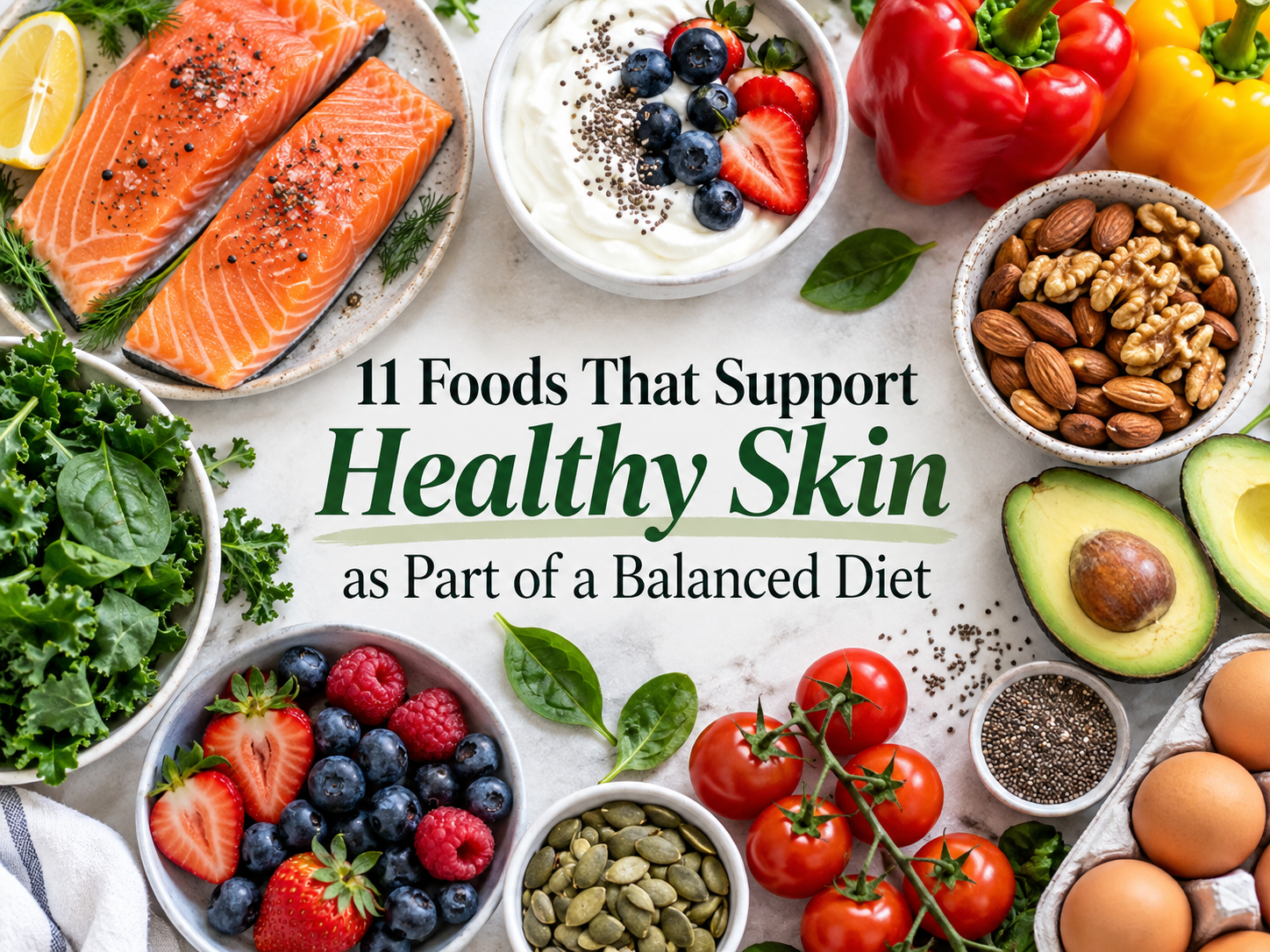
Foods that support healthy skin can be part of a simple, balanced diet. Fish, eggs, berries, nuts, and vegetables provide nutrients that help maintain normal skin function. However, no single food guarantees clear or youthful-looking skin. Overall eating habits, sun protection, sleep, and other lifestyle factors also matter.
This guide focuses on everyday foods that can fit into a practical eating routine. The goal is not to chase a beauty trend or follow a restrictive diet. It is to build meals that provide protein, healthy fats, vitamins, minerals, and colorful plant foods over time.
Table of Contents
1. Fatty Fish
Salmon, sardines, trout, and similar fish provide protein and omega-3 fats. Protein supplies amino acids used throughout the body, while omega-3 fats can be part of an overall heart-healthy eating pattern.
If you enjoy fish, try adding it to one or two meals during the week with vegetables and a whole-grain or starchy side.

2. Eggs
Eggs are a convenient source of protein and several micronutrients. They can be useful at breakfast, in sandwiches, or in quick meals when you want an easy protein source.
Pair eggs with vegetables, fruit, or whole-grain toast to build a more balanced meal.
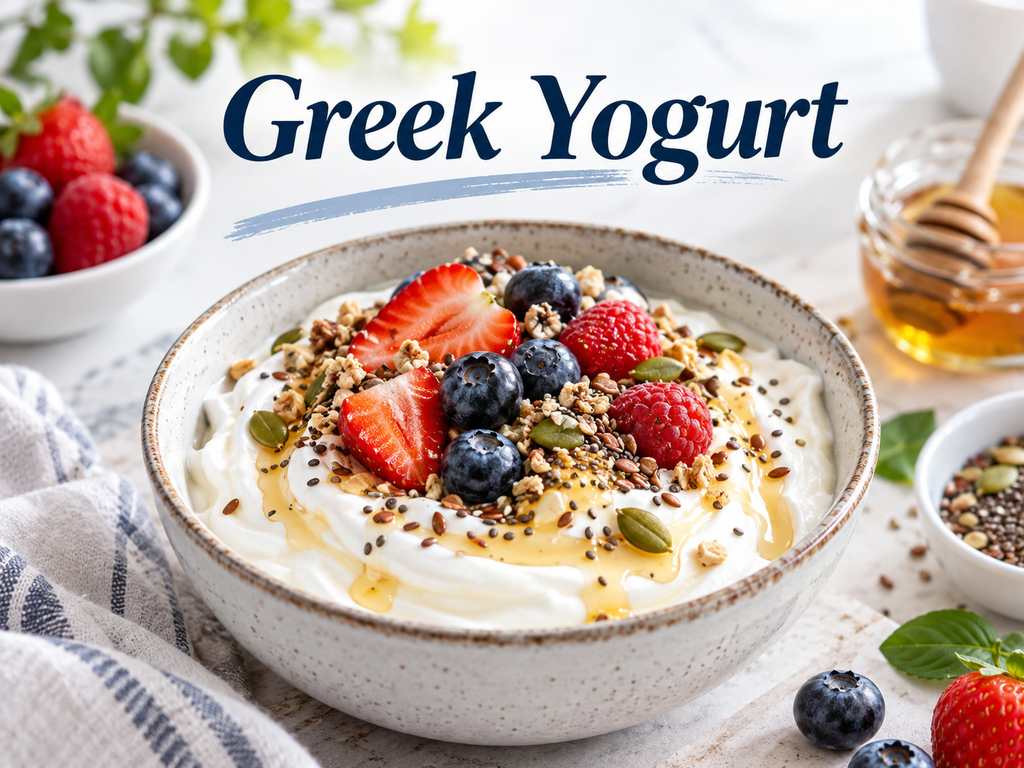
3. Greek Yogurt
Plain Greek yogurt provides protein and can be combined with berries, oats, nuts, or seeds. Choose unsweetened or lower-sugar options when possible, then add fruit for sweetness.
4. Berries
Strawberries, blueberries, raspberries, and blackberries contain vitamin C and a variety of plant compounds. Vitamin C is involved in normal collagen formation, making vitamin C-rich foods a useful part of a balanced diet. Vitamin C helps the body produce collagen. For more information about its functions and food sources, read the NIH Vitamin C fact sheet.
5. Citrus Fruits
Oranges, grapefruit, mandarins, lemons, and limes are well-known sources of vitamin C. You do not need large amounts at once. Including vitamin C-rich fruit regularly can help you meet your overall nutrient needs.
6. Bell Peppers
Red, yellow, and orange bell peppers are another easy way to add vitamin C and color to meals. Use them raw in salads, add them to eggs, or cook them with beans, chicken, tofu, or rice. Vitamin C helps the body produce collagen. For more information about its functions and food sources, read the NIH Vitamin C fact sheet.

7. Tomatoes
Tomatoes provide vitamin C and carotenoid plant compounds. Fresh tomatoes, canned tomatoes, and tomato-based sauces can all fit into a healthy eating pattern.
8. Avocado
Avocado provides unsaturated fats, fiber, and several vitamins and minerals. A small portion can add texture and satisfaction to toast, salads, wraps, and grain bowls.
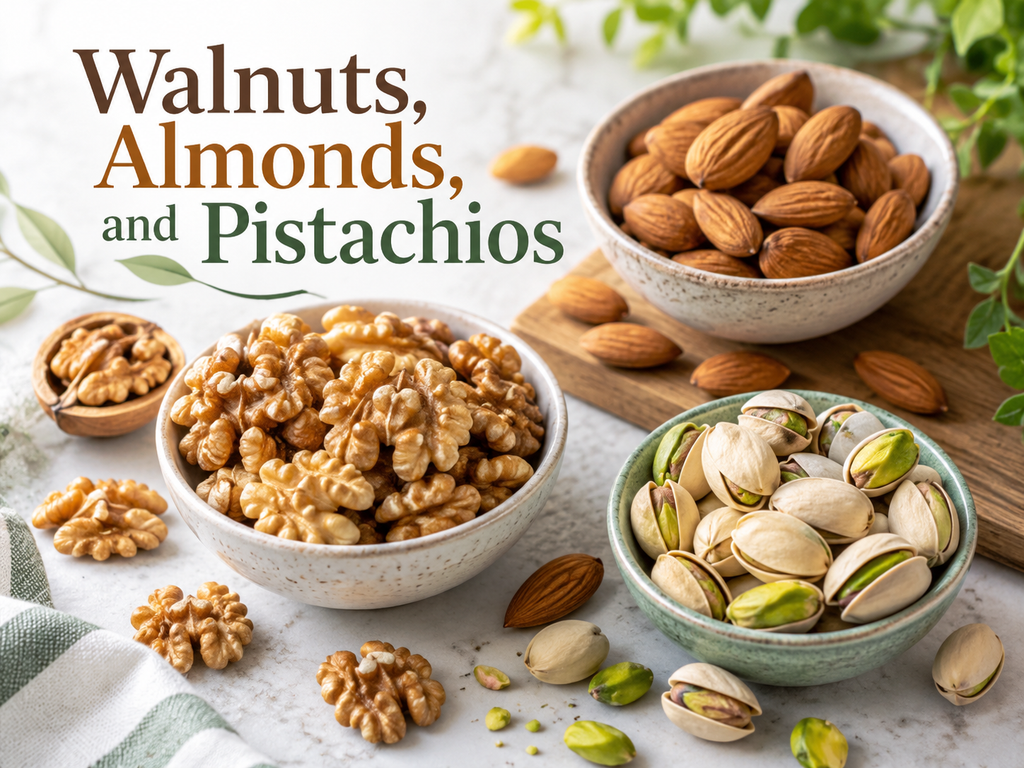
9. Walnuts, Almonds, and Pistachios
Nuts provide healthy fats, plant protein, fiber, and minerals. They are also easy to keep on hand for snacks. Because nuts are energy-dense, a small handful is often enough for a snack or meal topping.
10. Seeds
Chia, flax, sunflower, pumpkin, and sesame seeds can add healthy fats, protein, fiber, and minerals to meals. Sprinkle them over yogurt, oatmeal, salads, or vegetables.
11. Beans and Lentils
Beans and lentils provide plant protein, fiber, iron, and other nutrients. They are inexpensive, versatile, and useful in soups, salads, curries, tacos, and grain bowls.
How Foods That Support Healthy Skin Fit Into a Balanced Diet
A skin-supportive eating pattern is less about one superfood and more about consistency. Aim to include a protein source, colorful produce, whole grains or other minimally processed carbohydrates, and healthy fats across the day.
You may also like our guide to simple healthy eating habits for building a more balanced everyday routine.
What Food Cannot Do
Nutrition can support overall health, but food cannot replace sunscreen, medical treatment, or professional care for persistent skin problems. If you have a rash, wound, severe acne, or another ongoing skin concern, speak with a qualified healthcare professional.
Frequently Asked Questions
What is the best food for healthy skin?
There is no single best food. A varied diet that provides protein, fruits, vegetables, healthy fats, whole grains, beans, nuts, and seeds is more useful than relying on one ingredient.
Do I need collagen supplements for healthy skin?
Not necessarily. Your body makes collagen using amino acids and vitamin C. Whether a supplement is useful depends on your diet, goals, health status, and professional advice.
How quickly will food change my skin?
Skin appearance is influenced by many factors, so there is no guaranteed timeline. Focus on long-term eating habits rather than expecting one food to create a fast visible change.
Final Thoughts
Healthy skin starts with overall health habits rather than a single ingredient. Build meals around variety, include enough protein, eat colorful fruits and vegetables, choose healthy fats, and keep expectations realistic.
This article is for general educational purposes and is not a substitute for medical advice. These foods that support healthy skin are everyday options you can combine in different meals. Focus on variety and consistency rather than expecting visible results from one ingredient.