
Walking is one of the simplest ways to become more active because it does not require expensive equipment, a gym membership, or complicated planning. A daily walking routine can support cardiovascular health, mood, sleep, mobility, and healthy weight management. The key is to start at a level that feels realistic and build gradually.
If you are new to exercise, the goal is not to walk as far or as fast as possible on day one. The goal is to create a routine you can repeat. Consistency matters more than a perfect pace, step count, or calorie estimate.
Table of Contents
Why Walking Can Support Healthy Weight Management
Walking uses energy, helps you spend less time sitting, and can make regular movement part of your day. It may also improve fitness and make it easier to be active in other ways. For weight management, walking works best alongside balanced eating, adequate sleep, and other healthy habits.
A daily walking routine is easier to maintain when you begin with a realistic amount of time and increase it gradually.
Official guidance from the National Institute of Diabetes and Digestive and Kidney Diseases notes that adults can work toward at least 150 minutes of moderate-intensity aerobic activity each week, such as brisk walking. People who are inactive can begin with shorter periods and build up gradually.
1. Start With a Baseline You Can Actually Maintain
Before setting a big goal, notice what you already do. If you currently walk very little, a 10-minute daily walk may be a better starting point than aiming for 10,000 steps immediately.
For the first few days, choose one easy time slot. It could be after breakfast, during lunch, after work, or after dinner. Keep the route simple and familiar. Your first goal is to prove to yourself that the walk can fit into your normal day.
A beginner might start with 5 to 10 minutes on five days of the week. Someone who is already active might begin with 20 to 30 minutes. There is no universal starting point.
2. Use Time Instead of Step Count at First
Step counters can be useful, but they can also make beginners feel that a walk “does not count” unless a large number appears on the screen. Time is often easier.
Try setting a timer for 10 or 15 minutes and walking at a comfortable pace. Over time, add two to five minutes when the current duration feels easy. This gradual approach can reduce soreness and make the habit easier to maintain.
If you enjoy tracking steps, use them as information rather than a pass-or-fail target. Your average may naturally increase as walking becomes part of your routine.
3. Make One Walk Brisk Enough to Raise Your Breathing
A comfortable stroll is useful, especially if it replaces sitting. For additional fitness benefits, include some walking at a moderate intensity when appropriate for you.
A simple “talk test” can help. At a moderate pace, you should usually be able to talk in short sentences, but singing would feel difficult. You do not need to walk this way for the entire session. Beginners can alternate a few minutes of brisk walking with easier walking.
For example, walk comfortably for five minutes, briskly for three minutes, then comfortably for another five minutes. As your fitness improves, you can extend the brisk sections.
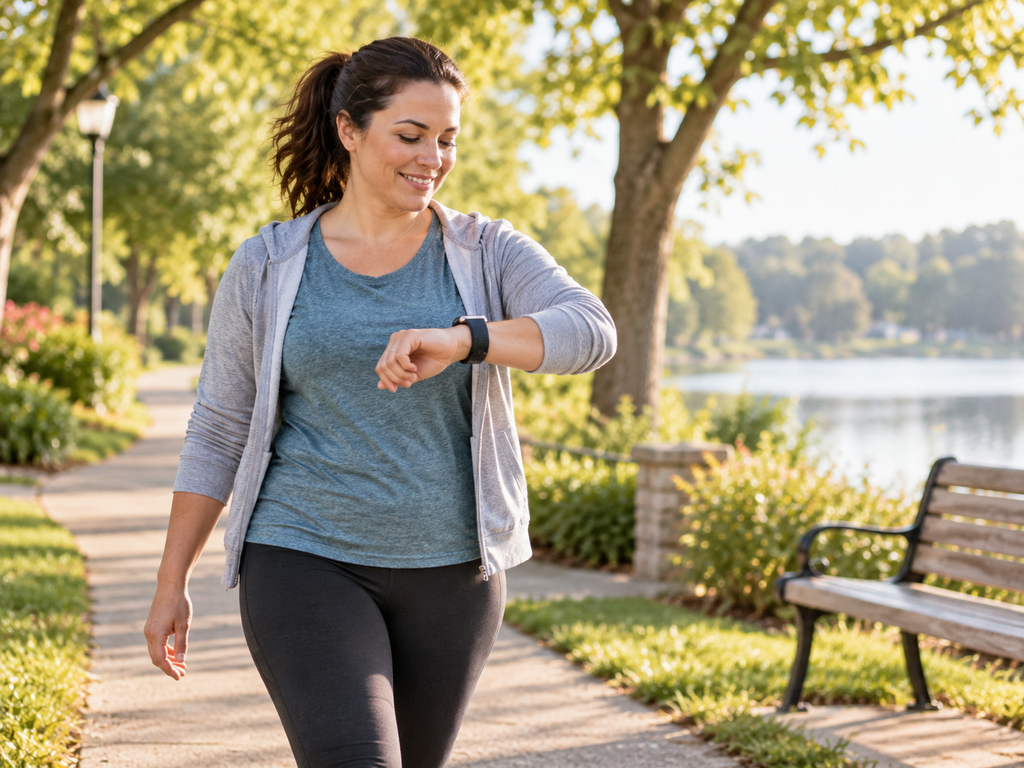
Person using time instead of step count during a beginner walking routine.
4. Attach Walking to Something You Already Do
Habits are easier to remember when they are connected to an existing routine. Instead of saying, “I will walk sometime today,” choose a clear trigger.
- Walk for 10 minutes after lunch.
- Walk around the block after dropping children at school.
- Walk while listening to a favorite podcast after work.
- Walk indoors after your morning coffee.
- Take a short walk after dinner before sitting down for the evening.
This approach is similar to habit stacking: one familiar action becomes the reminder for the new action. You can also connect walking with the daily habits you already use to make your routine easier.
5. Use Short Walks on Busy Days
A walking routine does not have to be one long session. Three 10-minute walks can be easier to fit into a busy day than one 30-minute walk.
A daily walking routine can still work on busy days when you break your walk into shorter sessions.
Short walks can be added before work, during lunch, while waiting for an appointment, or after meals. If weather is poor, you can walk indoors in a hallway, shopping center, workplace, or even around your home.
The best routine is flexible enough to survive busy days. If your plan only works when the day goes perfectly, it will be difficult to maintain.
CDC physical activity guidelines for adults

6. Add Hills, Stairs, or Faster Intervals Gradually
Once regular walking feels comfortable, you can make some sessions slightly more challenging. Hills, stairs, or short faster intervals can increase the effort without requiring a completely different workout.
Start small. Add one gentle hill to your usual route, or walk faster for 30 to 60 seconds a few times during the session. Return to your normal pace between intervals.
You do not need to make every walk hard. Easy walks remain useful. A mix of comfortable and slightly more challenging sessions is often more sustainable than trying to push hard every day.
7. Pair Walking With Strength Training
Walking is excellent aerobic activity, but strength training adds another important piece. Exercises that work major muscle groups can help maintain strength and function as you age.
A beginner routine might include chair squats, wall push-ups, glute bridges, resistance-band rows, and light dumbbell exercises. Two short strength sessions each week can complement a walking routine.
If you have pain, balance problems, heart disease, uncontrolled blood pressure, or another medical condition, ask a qualified health professional what type and amount of activity is appropriate for you.
8. Wear Comfortable Shoes and Pay Attention to Your Body
You do not need expensive shoes, but your footwear should feel comfortable, secure, and suitable for the surface you use. Avoid suddenly increasing distance if your feet, knees, hips, or back are painful.
Mild muscle tiredness can be normal when you start moving more. Sharp pain, chest pain, severe shortness of breath, fainting, or unusual dizziness are not signs to push through. Stop and seek medical advice if you experience concerning symptoms.
Hydration also matters, especially in hot weather. For longer walks, choose safer times of day and routes with shade when possible.
A Simple 4-Week Beginner Walking Plan
- Week 1: Walk 10 minutes on five days at a comfortable pace.
- Week 2: Walk 15 minutes on five days. Make a few minutes slightly brisker.
- Week 3: Walk 20 minutes on five days and add one gentle hill or several short faster intervals.
- Week 4: Walk 25 to 30 minutes on five days if you feel comfortable.
This plan is only an example. If a week feels too difficult, repeat it. If you are already active, you may progress faster. The goal is not to follow a calendar perfectly; it is to build a routine that fits your body and schedule.
How to Stay Motivated Without Obsessing Over Numbers
Motivation changes from day to day, so do not rely on motivation alone. Make walking easier by preparing in advance. Keep shoes near the door, choose a safe route, set a reminder, or arrange to walk with a friend.
Track behaviors rather than only body weight. You might mark each completed walk on a calendar or write down minutes walked per week. Watching a streak of consistent activity can be more encouraging than checking the scale every day.
You can also choose goals that have nothing to do with weight, such as walking farther without getting tired, improving your mood after work, or exploring a new park.
Walking and Food Choices Work Better Together
Walking can support weight management, but it cannot fully compensate for an eating pattern that consistently provides more energy than your body needs. You do not need an extreme diet. Focus on balanced meals, reasonable portions, vegetables, fruit, whole grains, protein foods, and fewer sugary drinks.
A useful strategy is to avoid using a walk as permission to “earn” or “burn off” food. Exercise and eating are both parts of health, not punishments or rewards.
Common Walking Mistakes to Avoid
- Doing too much too soon can lead to soreness and make you quit.
- Only walking when the weather is perfect makes the routine fragile.
- Treating 10,000 steps as a mandatory rule can create unnecessary pressure.
- Ignoring strength training leaves out an important part of fitness.
- Expecting fast belly-fat loss from walking alone can create unrealistic expectations.
Instead, focus on what you can repeat for months. Gradual progress usually creates a stronger habit than an aggressive plan that lasts one week.
For evidence-based activity guidance, see the NIDDK guide to staying active at any size.
Frequently Asked Questions
How long should I walk each day for weight management?
There is no single amount that works for everyone. Beginners can start with 5 to 10 minutes and gradually work toward longer sessions. General activity guidelines suggest working toward at least 150 minutes of moderate activity per week for health.
Is walking every day okay?
For many healthy adults, daily walking at a comfortable intensity is reasonable. You can vary the duration and pace. If you develop persistent pain or unusual symptoms, reduce activity and seek professional advice.
Is morning or evening walking better?
The best time is the time you can maintain consistently. Some people prefer morning walks because the day is less likely to interfere. Others enjoy evening walks as a way to unwind.
Do I need 10,000 steps a day?
No. Ten thousand steps is not a universal requirement. Increasing activity from your current baseline can be useful even if you do not reach that number.
Can walking help reduce belly fat?
Walking may support overall fat loss and healthy weight management when combined with balanced eating and other healthy habits. It cannot target fat from the belly specifically.
Final Thoughts
A daily walking routine does not need to be complicated. Start with a short walk you can repeat, connect it to an existing habit, build the duration gradually, and add brisker sections when you are ready. Combine walking with balanced eating, adequate sleep, and strength training for a more complete approach to health.
The most useful walking plan is not the hardest one. It is the one you can still follow on ordinary, busy days.
This article is for general educational purposes and is not a substitute for personalized medical advice.