
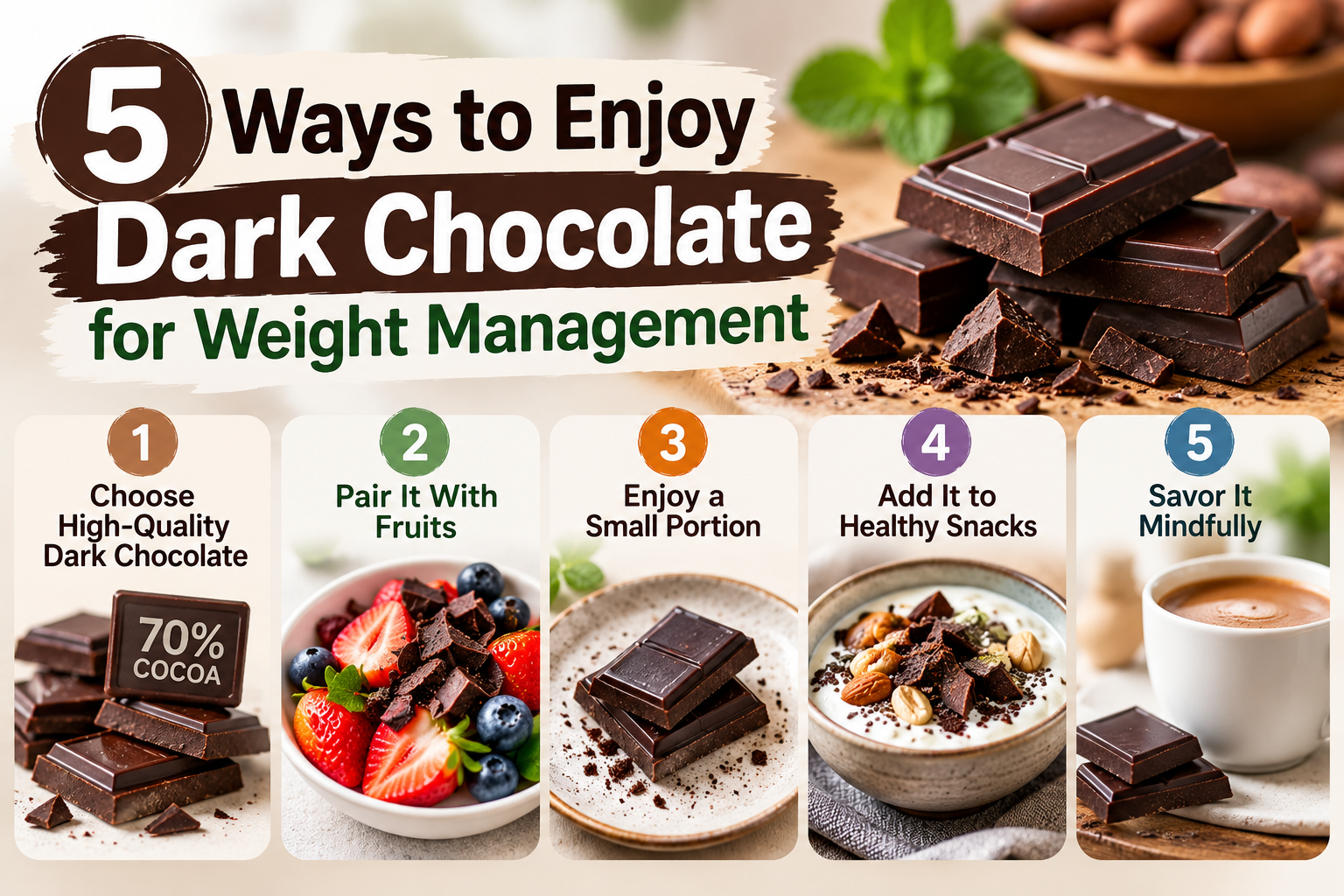
Dark chocolate is often described as a healthier alternative to other sweets, but can it really fit into a weight management plan? The answer is yes, provided you pay attention to portion sizes, ingredients, and your overall eating habits.
For people who enjoy chocolate, completely avoiding it may not be necessary to maintain a balanced diet. A small portion of dark chocolate can satisfy a sweet craving while allowing room for other nutritious foods. However, dark chocolate is not a weight-loss treatment, and eating it regularly does not automatically lead to fat loss.
Understanding how dark chocolate fits into your daily calorie intake can help you make informed food choices without following unnecessarily restrictive eating rules.
In this guide, you will learn about the potential benefits of dark chocolate, its nutritional content, appropriate portions, and practical ways to enjoy it as part of a healthy lifestyle.
Table of Contents
What Is Dark Chocolate?
Dark chocolate is made from cocoa solids, cocoa butter, and usually some added sugar. Unlike milk chocolate, it generally contains a higher percentage of cocoa and less milk, although recipes vary between brands.
Chocolate labelled 70% cocoa contains approximately 70% cocoa-derived ingredients, with the remaining percentage consisting of ingredients such as sugar and, depending on the product, other components. A higher cocoa percentage does not automatically mean that a product is low in calories.
Dark chocolate also contains minerals such as iron, magnesium, and copper, along with plant compounds known as flavanols. These compounds have attracted scientific interest because of their potential effects on blood vessel function.
According to the Harvard T.H. Chan School of Public Health, dark chocolate can provide cocoa flavanols, but its nutritional value depends on its ingredients and processing.
For weight management, the important distinction is that dark chocolate can be included in a balanced diet without being treated as a special fat-burning food.
Can Dark Chocolate Fit Into a Weight Management Plan?
Yes, dark chocolate can fit into a weight management plan when you enjoy it in moderation and account for its calories within your overall eating pattern.
Body weight is influenced by multiple factors, including total energy intake, physical activity, sleep, genetics, medications, and health conditions. No single food determines whether you gain or lose weight.
Dark chocolate is relatively energy-dense because it contains cocoa butter and other fats. One ounce, or approximately 28 grams, may provide around 150–170 calories, depending on the product.
Eating a large amount of chocolate in addition to your usual meals can increase your overall calorie intake. By contrast, enjoying a small portion occasionally or incorporating it into a planned snack may fit comfortably into your routine.
The goal is not to label chocolate as either good or bad. Instead, focus on the quantity you eat, how frequently you eat it, and whether your overall diet provides the nutrients your body needs.
Potential Benefits of Dark Chocolate
Dark chocolate has some nutritional qualities that make it different from many highly refined sweets. However, these potential benefits should not be confused with proven weight-loss effects.
1. It Contains Cocoa Flavanols

Cocoa contains plant compounds called flavanols, which have been studied for their possible effects on blood vessel function and circulation.
Some research suggests that cocoa flavanols may support certain cardiovascular health markers. However, flavanol content varies widely depending on the cocoa beans, manufacturing methods, and processing techniques.
Commercial chocolate is not a reliable way to obtain a specific flavanol dose because the amount is not always stated on the label.
Therefore, choose dark chocolate because you enjoy it, rather than relying on it as a treatment for weight or health problems.
2. It Can Help Satisfy a Sweet Craving
A small piece of dark chocolate can provide a rich chocolate flavour, which some people may find satisfying.
If you enjoy chocolate, allowing yourself a planned portion may be more practical than following strict rules that make favourite foods completely off-limits. However, individual responses vary, and chocolate does not reliably reduce hunger in everyone.
Pay attention to your own eating habits. If a small portion satisfies you, there may be no reason to eat more. If chocolate tends to trigger unplanned snacking, portioning it in advance may be helpful.
3. It Can Be Part of a Flexible Eating Pattern

A sustainable eating plan should provide adequate nutrients while remaining realistic enough to follow over time.
Vegetables, fruits, whole grains, beans, lentils, nuts, seeds, and suitable protein sources should make up the foundation of everyday meals. Small portions of enjoyable foods, including dark chocolate, can fit alongside these foods.
A flexible approach may be easier to maintain than an unnecessarily restrictive plan. Nevertheless, including chocolate is optional; you do not need to eat it to follow a healthy diet.
How Much Dark Chocolate Should You Eat?
There is no universal portion that guarantees weight loss or provides the same health benefits for everyone.
A practical starting point is approximately 10–20 grams, depending on your calorie needs and preferences. This is a suggested portion for mindful eating, not a medical recommendation or a proven weight-loss dose.
For example, a 10-gram portion of dark chocolate containing roughly 150–170 calories per 28 grams would provide approximately 55–60 calories. Check the product label because actual values differ.
Use these tips to manage portions:
- Break a chocolate bar into small squares before eating.
- Put your chosen portion on a plate instead of eating directly from a large package.
- Eat slowly and pay attention to taste and satisfaction.
- Consider your overall food intake rather than focusing only on chocolate.
- Adjust the portion according to your needs and how frequently you eat other sweets.
You do not have to eat dark chocolate every day. An occasional portion can also fit into a balanced lifestyle.
How to Choose Dark Chocolate for Weight Management
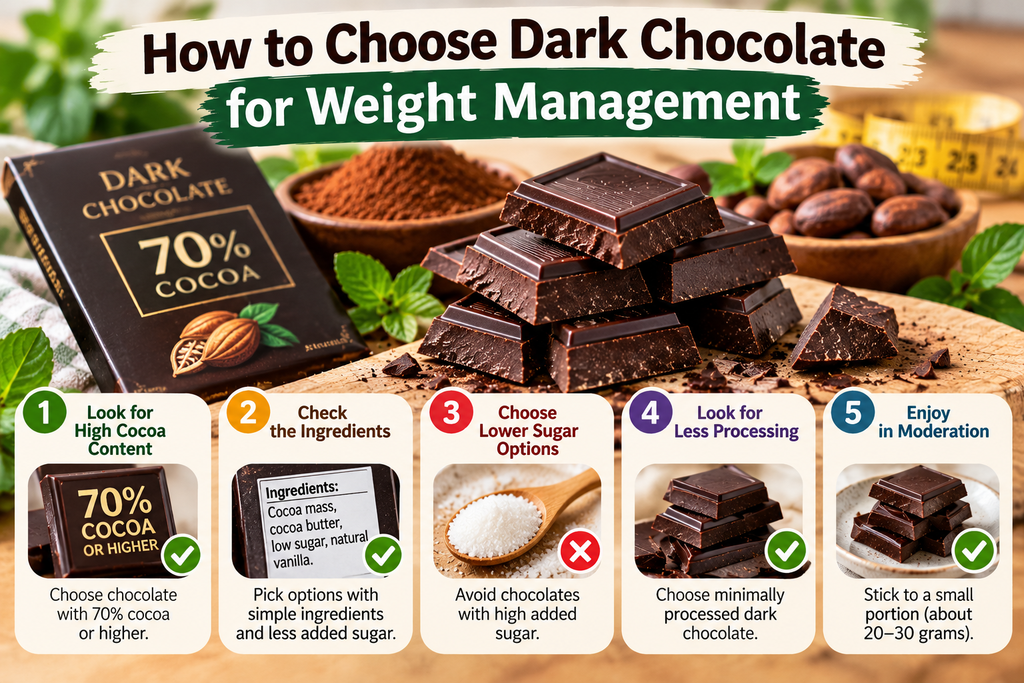
Not every dark chocolate product has the same nutritional profile. Reading the label can help you compare options.
Choose a Cocoa Percentage You Enjoy
Dark chocolate containing 70% cocoa or more is a common option because it often contains more cocoa solids and less sugar than some lower-cocoa varieties.
However, this is not guaranteed for every product. Compare the nutrition information rather than relying on the percentage alone.
Check Added Sugar
Dark chocolate still contains sugar in many cases. Compare products and consider choosing one with less added sugar if that suits your preferences and dietary needs.
A higher cocoa percentage does not mean that the product contains no sugar.
Compare Calories and Serving Sizes
Look at calories per serving and check how much the manufacturer defines as one serving. A small serving on the label may be considerably smaller than the amount you usually eat.
Comparing products using the same weight, such as per 100 grams, can make nutritional differences easier to understand.
Avoid Assuming Expensive Means Healthier
Premium, organic, or specially marketed chocolate is not automatically better for weight management. Price and marketing claims do not replace the nutrition label.
Choose a product that fits your budget, tastes good to you, and can be enjoyed in a reasonable portion.
Healthy Ways to Enjoy Dark Chocolate
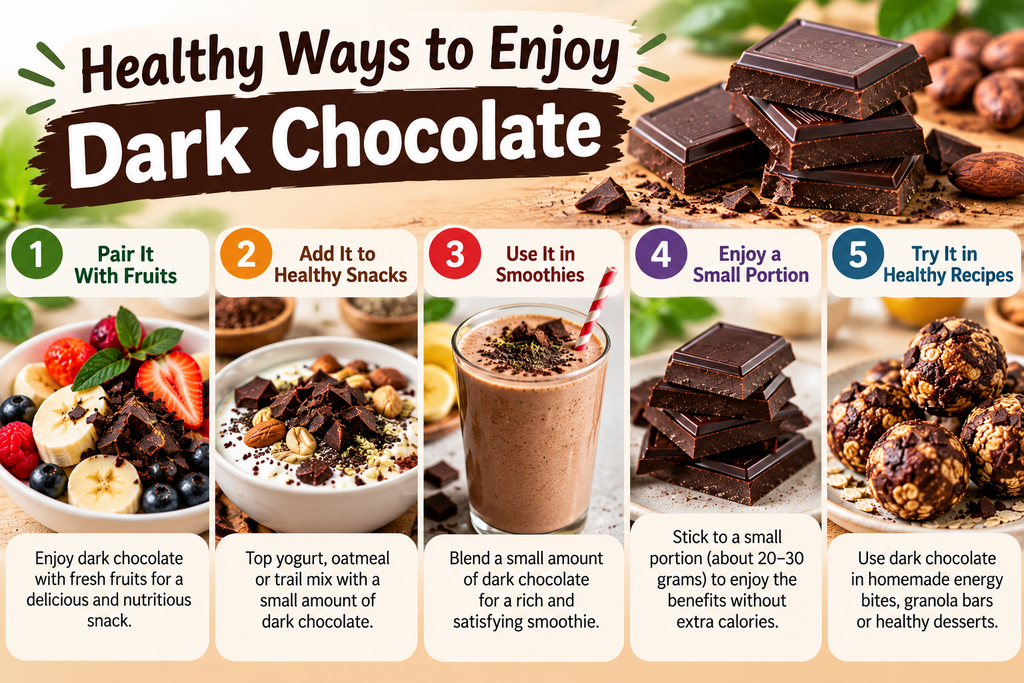
You can enjoy dark chocolate on its own or combine a small amount with nutritious foods. The following ideas can help you incorporate it without making chocolate the main part of a meal.
Add a Little Dark Chocolate to Oatmeal
Prepare oatmeal with milk or a suitable alternative, then add a small amount of finely chopped dark chocolate. Include fruit, such as banana or berries, for extra flavour and fibre.
Remember that toppings contribute calories too, so use portions that suit your needs.
Pair Dark Chocolate With Fresh Fruit
Strawberries, orange segments, and apple slices can pair well with dark chocolate. Enjoy a small chocolate portion alongside fruit for a simple dessert.
Whole fruit provides fibre, water, and various vitamins, making it a useful part of a balanced diet.
Combine It With Plain Yogurt
Add a small amount of grated dark chocolate to plain yogurt and fresh fruit. This creates a dessert with protein from the yogurt and flavour from the chocolate.
Check the label if you use flavoured yogurt, as some varieties contain considerable added sugar.
Enjoy a Small Piece After a Meal
If you prefer chocolate after lunch or dinner, decide on your portion before you start eating. Enjoying it deliberately may help you avoid repeatedly returning to the package.
There is no special time of day when dark chocolate burns more fat. The overall eating pattern matters more than the timing of this treat.
Common Mistakes to Avoid
Eating Too Much Because It Is Dark Chocolate
Dark chocolate can still contribute substantial calories. Choosing a product with a high cocoa percentage does not make unlimited portions suitable for weight management.
Replacing Nutritious Meals With Chocolate
Chocolate does not provide the same range of nutrients as balanced meals containing vegetables, fruits, whole grains, and protein-rich foods.
Use it as an optional treat rather than a substitute for regular meals.
Believing Chocolate Directly Burns Body Fat
There is insufficient evidence to recommend ordinary dark chocolate as a weight-loss treatment. Some studies investigate cocoa compounds and health markers, but this does not prove that eating chocolate causes meaningful fat loss.
Ignoring the Rest of Your Lifestyle
Weight management involves more than choosing individual foods. Regular physical activity, sufficient sleep, consistent eating habits, and realistic goals can all contribute to long-term health.
If you want to improve your eating habits, focus on changes you can maintain instead of searching for one food that promises rapid results.
A Simple Example of a Balanced Day
Dark chocolate can be included in an ordinary day of balanced meals. For example:
- Breakfast: Oatmeal with milk, fruit, and a few nuts.
- Lunch: Lentils or beans with whole-grain roti and vegetables.
- Snack: Plain yogurt or a piece of fruit.
- Dinner: Chicken, fish, tofu, or another suitable protein source with vegetables and rice.
- Optional dessert: A small portion of dark chocolate.
This is only an example, not a personalised meal plan. Appropriate portions depend on your individual energy needs, activity level, preferences, and health circumstances.
For more information on building a balanced eating pattern, visit USDA MyPlate.
Who Should Be Careful With Dark Chocolate?
Most people can enjoy chocolate as a food choice, but certain circumstances require extra attention.
Dark chocolate contains caffeine and theobromine, which may affect people who are sensitive to stimulants, especially when larger quantities are consumed. Eating chocolate close to bedtime may also disturb sleep in some individuals.
Chocolate can trigger symptoms in some people with reflux, and products may contain milk, nuts, or other allergens. Always check the ingredient label if you have a food allergy.
People managing diabetes should consider the carbohydrate and sugar content of the product and follow their individual dietary guidance. Anyone with a medical condition requiring a specific diet should consult a qualified healthcare professional if they are unsure how chocolate fits into their plan.
Frequently Asked Questions About Dark Chocolate and Weight Management
1. Can dark chocolate help with weight loss?
Dark chocolate does not directly cause weight loss. A small portion can fit into a balanced eating plan, but weight change depends on overall energy intake, physical activity, and other individual factors.
2. Is 70% dark chocolate good for weight management?
Dark chocolate containing 70% cocoa or more may contain less sugar than some lower-cocoa varieties. However, recipes vary, so compare calories, sugar, and serving sizes on the nutrition label.
3. How much dark chocolate can I eat while managing my weight?
A small portion of approximately 10–20 grams can be a practical starting point for mindful eating. The suitable amount depends on your overall diet, calorie needs, and personal preferences.
4. Is dark chocolate healthier than milk chocolate?
Dark chocolate generally contains more cocoa solids and may contain more cocoa flavanols. However, both types can contain substantial calories and saturated fat. Their nutritional differences depend on the specific products.
5. Can I eat dark chocolate every day?
Dark chocolate can be included regularly if the portion fits your overall eating pattern. Daily consumption is not necessary for good health, and eating larger quantities may add more calories than intended.
6. What is the best time to eat dark chocolate?
There is no proven best time to eat dark chocolate for weight loss. You can enjoy a small portion after a meal or as an occasional snack, depending on your preferences.
7. Does dark chocolate contain sugar?
Yes, many dark chocolate products contain added sugar. The amount depends on the recipe and cocoa percentage. Check the nutrition label to compare products.
8. Can I eat dark chocolate with fruit or yogurt?
Yes. A small amount of dark chocolate can be paired with fresh fruit or plain yogurt to make a simple dessert. Keep the portions appropriate for your individual needs.
9. Does dark chocolate burn belly fat?
No convincing evidence shows that eating ordinary dark chocolate specifically burns belly fat. Changes in body fat depend on overall energy balance, genetics, physical activity, and other factors.
10. Is dark chocolate suitable for everyone?
Not necessarily. People with certain food allergies, caffeine sensitivity, reflux symptoms, or specific dietary requirements may need to limit or avoid particular products. Check the ingredients and seek professional guidance when needed.
Conclusion
Dark chocolate can fit into a weight management plan when enjoyed in appropriate portions as part of a balanced diet. It contains cocoa flavanols and some minerals, but it also provides calories, fat, and often added sugar.
Choosing a product you enjoy, checking its nutrition label, and deciding on a reasonable serving can help you include chocolate without losing sight of your overall eating habits.
Most importantly, do not expect dark chocolate to cause weight loss on its own. Sustainable weight management depends on your overall diet, activity, sleep, and long-term habits.
You can enjoy a small piece of chocolate while continuing to prioritise nutritious foods and a flexible, realistic approach to healthy living.
8 Protein-Rich Foods for Simple Everyday Meals