
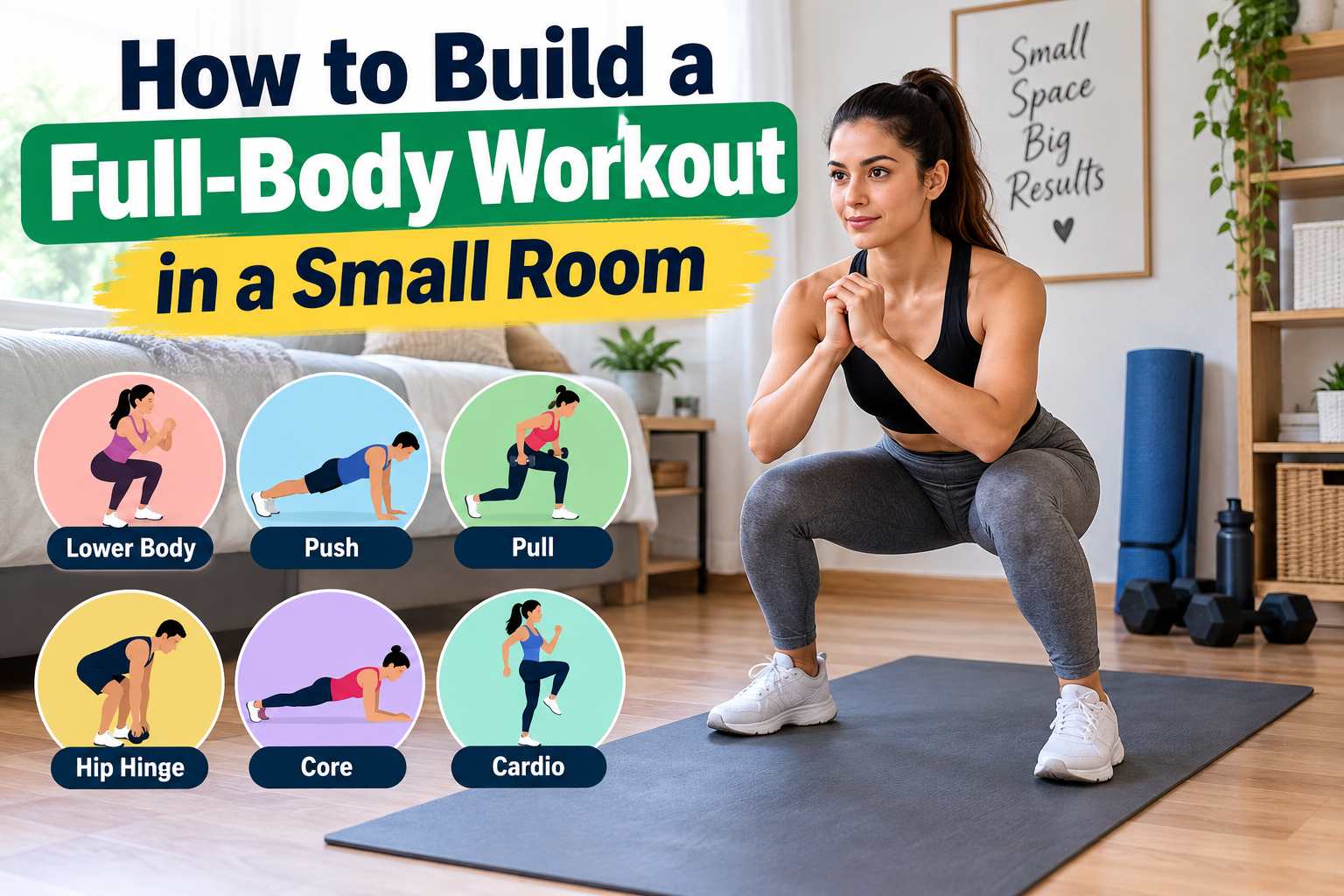
A full-body workout in a small room can be effective without a gym, treadmill, or large collection of equipment.
The key is to choose movements that use the same area efficiently and avoid exercises that require long running distances or large equipment.
Table of Contents
Start With a Safe Exercise Zone
Before exercising, move chairs, cables, rugs, and other objects that could become a trip hazard. You should have enough room to take one or two steps in each direction and raise your arms comfortably.
If you are using bands, weights, or a suspension trainer, check that all equipment and anchor points are secure.
Choose One Lower-Body Movement
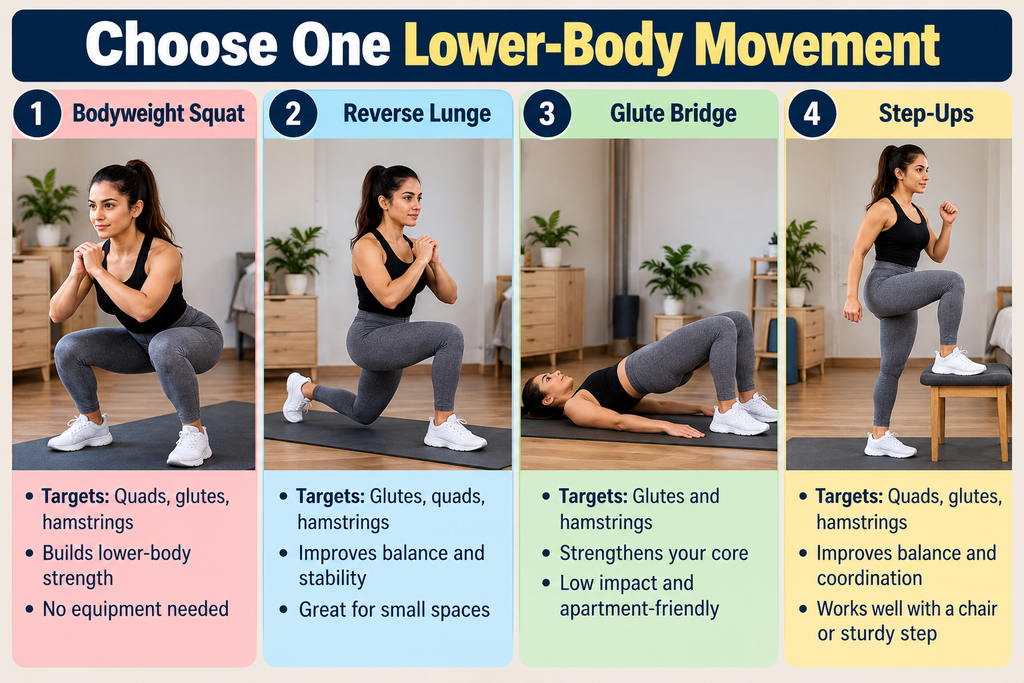
Squats, chair squats, reverse lunges, and glute bridges can all work in a small room. Beginners may find chair squats especially useful because the chair provides a clear target and added confidence.
Start with a range of motion that feels comfortable and focus on control rather than speed.
Add an Upper-Body Push
Wall push-ups, countertop push-ups, floor push-ups, or dumbbell presses can train pushing muscles without taking up much space.
If regular push-ups feel too difficult, use a wall or sturdy elevated surface and gradually progress as you become stronger.
Add an Upper-Body Pull
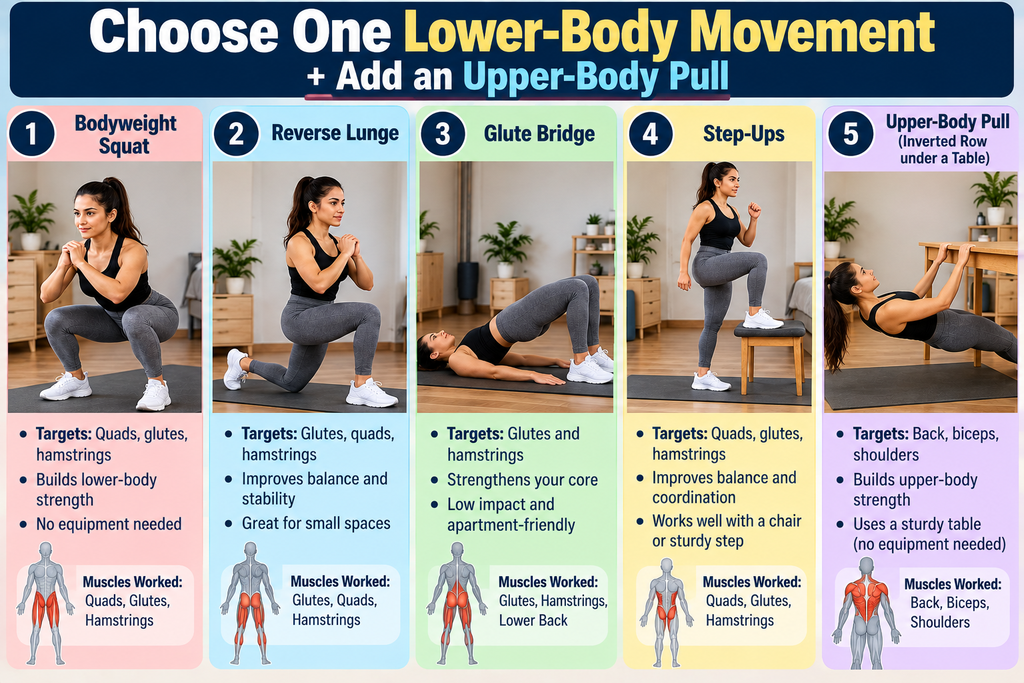
Pulling movements can be more difficult without equipment, so a resistance band or suspension trainer can be useful. Band rows and suspension rows are simple options when performed with a secure anchor.
If you use dumbbells, bent-over rows are another compact choice.
Include a Hip-Hinge Exercise
Hip-hinge movements train the back of the legs and hips. Examples include bodyweight good mornings, dumbbell deadlifts, and kettlebell deadlifts.
Keep the movement slow while learning the technique. The goal is to move from the hips rather than rounding the lower back.
Add a Core Exercise
Planks, dead bugs, bird dogs, and controlled marching exercises can strengthen the core without needing much room.
You do not need to perform long sets. Short periods with good form are more useful than holding a position after your technique begins to break down.
Finish With Simple Cardio
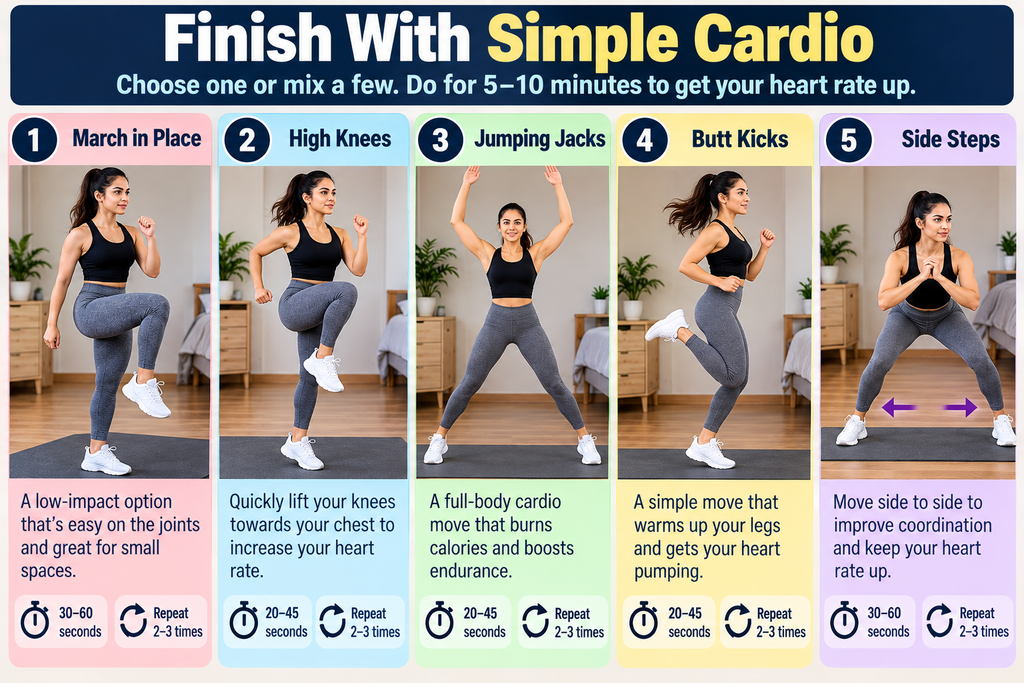
Small-space cardio can include marching in place, step-ups, low-impact shadow boxing, controlled mountain climbers, or repeated sit-to-stands.
If noise is a concern in an apartment, choose low-impact movements instead of jumping.
A Simple Beginner Circuit
- 10 chair squats
- 8 to 12 wall or countertop push-ups
- 10 resistance-band or dumbbell rows
- 10 controlled hip hinges or deadlifts
- 20 to 30 seconds of a core exercise
- 1 minute of marching in place
Rest as needed and repeat the circuit two or three times depending on your fitness level.
How Often Should You Do It?
Two or three full-body strength sessions per week can be a practical starting point for many adults, with walking or other moderate activity on additional days.
If you are completely new to exercise, begin with fewer sets and shorter sessions. Building consistency is more important than making the first workout difficult. Walking or other moderate activity on additional days. CDC physical activity guidelines
Use Compact Equipment Only When It Adds Value
A mat, resistance band, or pair of adjustable dumbbells can expand your exercise options, but you don’t need equipment for every movement.
Don’t buy large machines just because they promise a full-body workout. First decide whether you have the storage space and whether you will use the machine regularly.
Final Thoughts
A small room can still support a complete exercise routine. Focus on one leg movement, one push, one pull, one hip hinge, one core exercise, and a short cardio activity.
“A full-body workout in a small room can stay simple while still covering the major movement patterns.”
A simple routine that fits your home and schedule is more useful than an elaborate workout plan that is difficult to repeat.
Frequently Asked Questions
Can I get a full-body workout in a small room?
Yes. A small room can be enough for a full-body workout if you choose exercises that cover the major movement patterns, including squats, pushing, pulling, hip hinges, core exercises, and simple cardio.
What exercises are best for a small-room workout?
Bodyweight squats, wall or countertop push-ups, resistance-band or dumbbell rows, hip hinges, dead bugs, planks, and marching in place are practical choices because they require very little space.
Do I need equipment for a full-body workout in a small room?
No. You can start with bodyweight exercises. A resistance band, exercise mat, or pair of adjustable dumbbells can provide additional options without taking up much storage space.
How long should a small-room full-body workout take?
A beginner workout can take around 20 to 30 minutes, including a short warm-up and rest periods. The exact duration depends on your fitness level, exercise selection, and number of rounds.
How often should I do a full-body workout at home?
For many adults, two or more muscle-strengthening sessions per week can be a practical starting point. You can combine these workouts with walking or other forms of moderate physical activity on other days.
How can I make a small-room workout harder?
You can gradually increase repetitions, add resistance, use a more challenging exercise variation, slow down the movement, or add another round. Increasing difficulty does not require more floor space.
What if I live in an apartment and cannot make much noise?
Choose low-impact exercises such as marching in place, squats, glute bridges, controlled step-ups, wall push-ups, and low-impact shadow boxing. Avoid repeated jumping if noise could disturb people nearby.
Is a small-room workout suitable for beginners?
Yes, provided the exercises are appropriate for your current fitness level. Beginners should start with easier variations, controlled movements, and fewer rounds, then gradually increase the difficulty as they become more comfortable.
The Apartment Workout Machine Buying Guide.
How to Build a Daily Walking Routine for Healthy Weight Management