
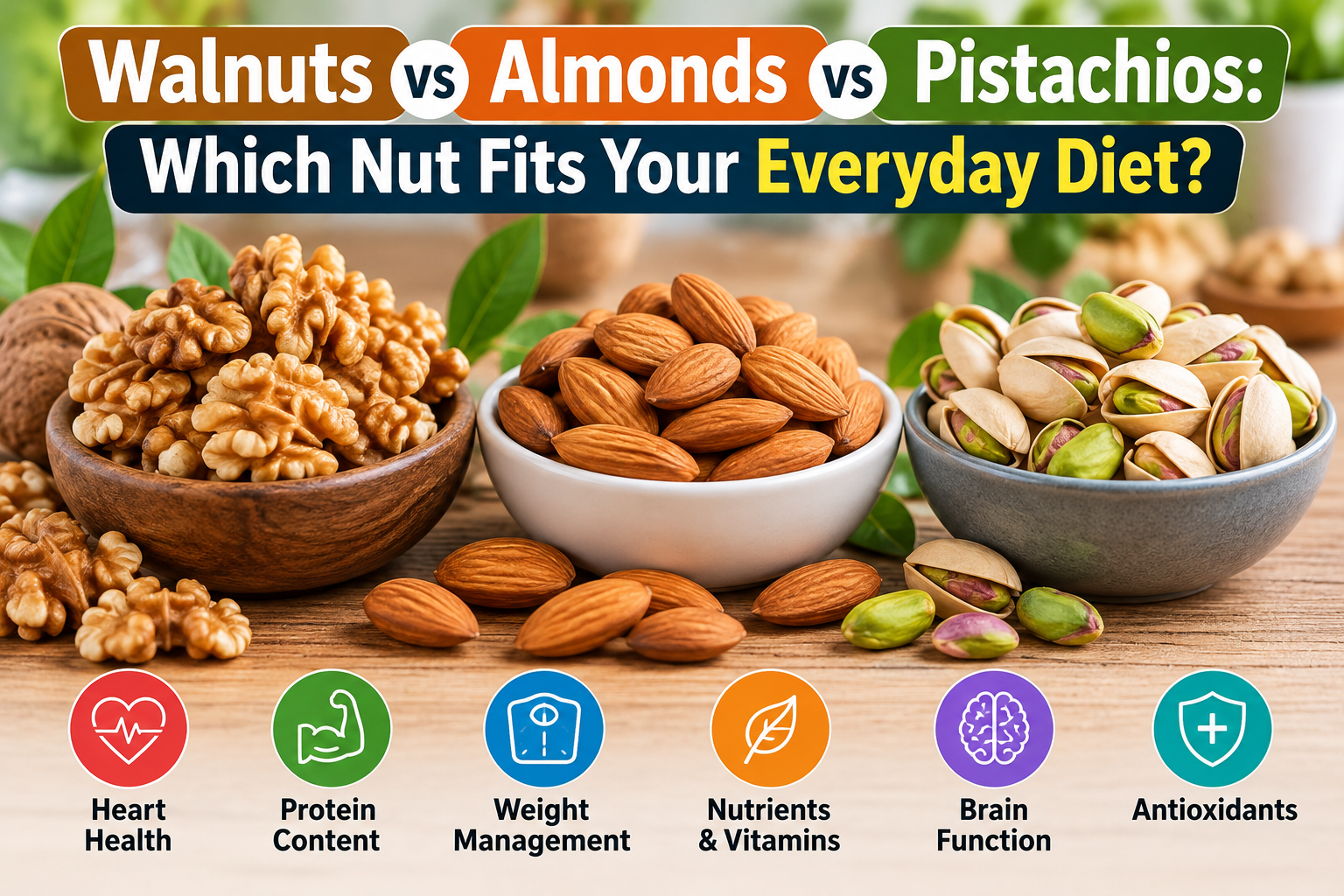
Walnuts, almonds, and pistachios are all nutrient-dense foods that can fit into a balanced eating pattern. Each provides healthy fats, plant protein, fiber, vitamins, and minerals, but their texture, flavor, and nutrient profile differ.
Instead of deciding which nut is “best,” it is more useful to understand how they differ and how each fits into your normal meals and snacks.
When comparing Walnuts vs Almonds vs Pistachios, it is helpful to look beyond calories alone. Protein, fiber, healthy fats, portion size, taste, and how easily each nut fits into your meals can all matter when choosing a nutritious snack.
Walnuts vs Almonds vs Pistachios can help you compare different nuts based on protein, nutrients, convenience, and how easily they fit into your everyday diet.
Table of Contents
Walnuts: A Soft, Rich Option for Meals and Snacks
Walnuts have a softer texture and a slightly earthy flavor. They are especially easy to add to oatmeal, yogurt, salads, homemade trail mix, and baked foods.
They are known for providing unsaturated fats and also contain plant-based omega-3 fat in the form of alpha-linolenic acid. That makes walnuts a useful option when you want more variety in the types of fats you eat.
A small handful can be enough because nuts are calorie-dense. Whole walnuts, chopped walnuts, or crushed walnuts can all work well depending on the meal.
Almonds: Crunchy, Convenient, and Easy to Carry
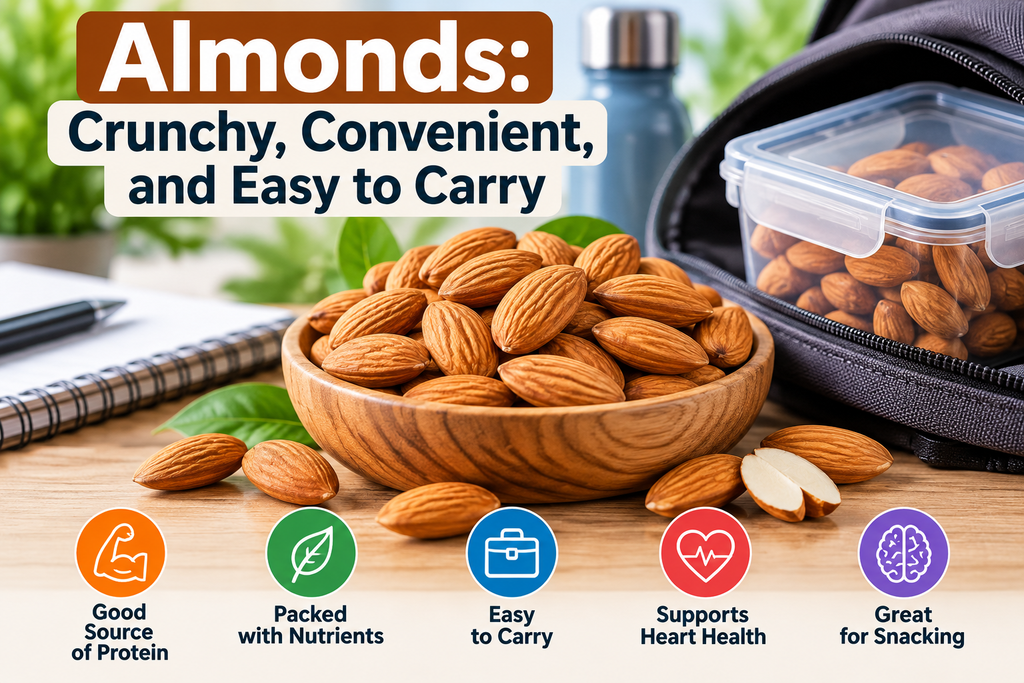
Almonds are one of the easiest nuts to use as a simple grab-and-go snack. They have a firm texture, mild flavor, and work well with fruit, yogurt, oats, salads, and vegetable dishes.
They provide plant protein, fiber, vitamin E, magnesium, and healthy fats. Because they are easy to portion and store, almonds can be a practical choice for work, travel, or busy days.
If you buy flavored almonds, check for added salt or sugar. Plain or lightly seasoned options can make it easier to keep the snack simple.
Pistachios: A Flavorful Nut That Encourages Slower Eating
Pistachios have a distinctive flavor and can be eaten on their own or added to meals. In-shell pistachios may naturally slow down snacking because you need to remove the shells as you eat.
They provide protein, fiber, healthy fats, potassium, and other micronutrients. They also work well with fruit, yogurt, grain bowls, salads, and savory dishes.
For everyday use, unsalted or lightly salted pistachios are a good choice if you want to keep sodium lower.
Walnuts vs Almonds vs Pistachios: Which Nut Has More Protein?
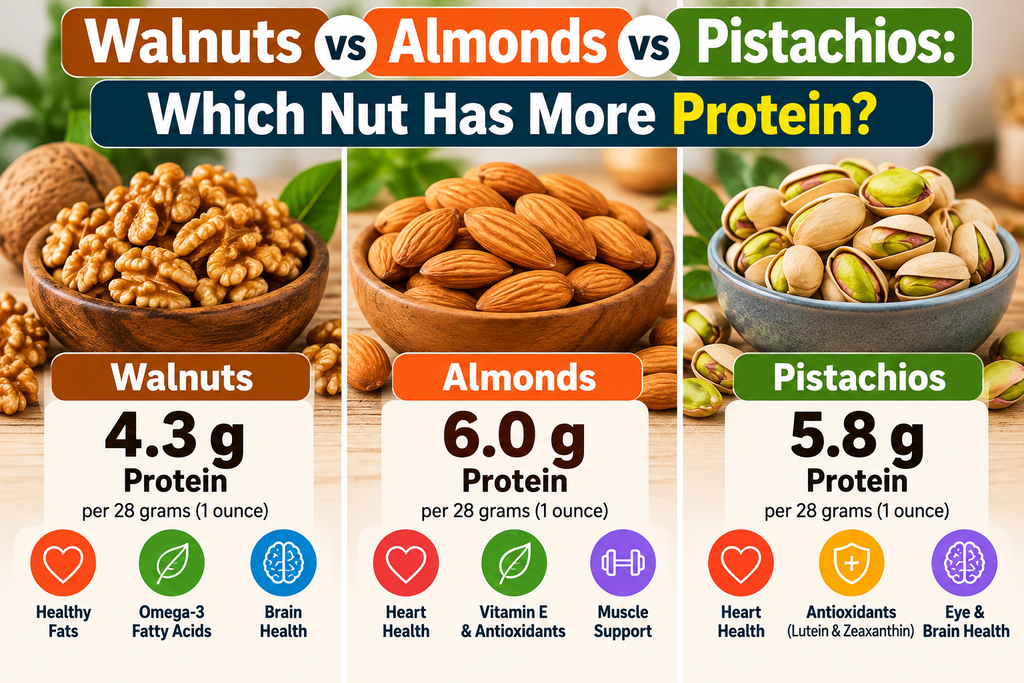
When comparing Walnuts vs Almonds vs Pistachios, protein content is one useful factor, but it is not the only thing to consider. All three provide some plant protein, although the exact amount depends on the serving size. Pistachios and almonds are often chosen when people want a snack that combines protein, fiber, and fat.
Walnuts still contribute protein, but their main strength is the variety of unsaturated fats they provide. There is no need to choose only one type. Rotating different nuts through the week can give you more variety in taste and nutrients.
Nuts for the Heart
Harvard Nutrition Source — Nuts for the Heart
Nuts such as walnuts, almonds, and pistachios can provide healthy fats, protein, fiber, and other nutrients. For more information, see the Harvard Nutrition Source guide to nuts and heart health.
Walnuts vs Almonds vs Pistachios for Weight Management
No single nut causes weight loss on its own. Nuts are energy-dense, so portion awareness matters. At the same time, their combination of fat, fiber, and protein can make a small serving satisfying.
A practical approach is to pair a modest portion of nuts with fruit, yogurt, or another whole food rather than eating directly from a large bag. Walnuts vs Almonds vs Pistachios can all fit into a balanced eating pattern when portions are appropriate.
For example, you might combine an apple with almonds, yogurt with walnuts, or berries with pistachios.
Simple Ways to Use Walnuts, Almonds, and Pistachios
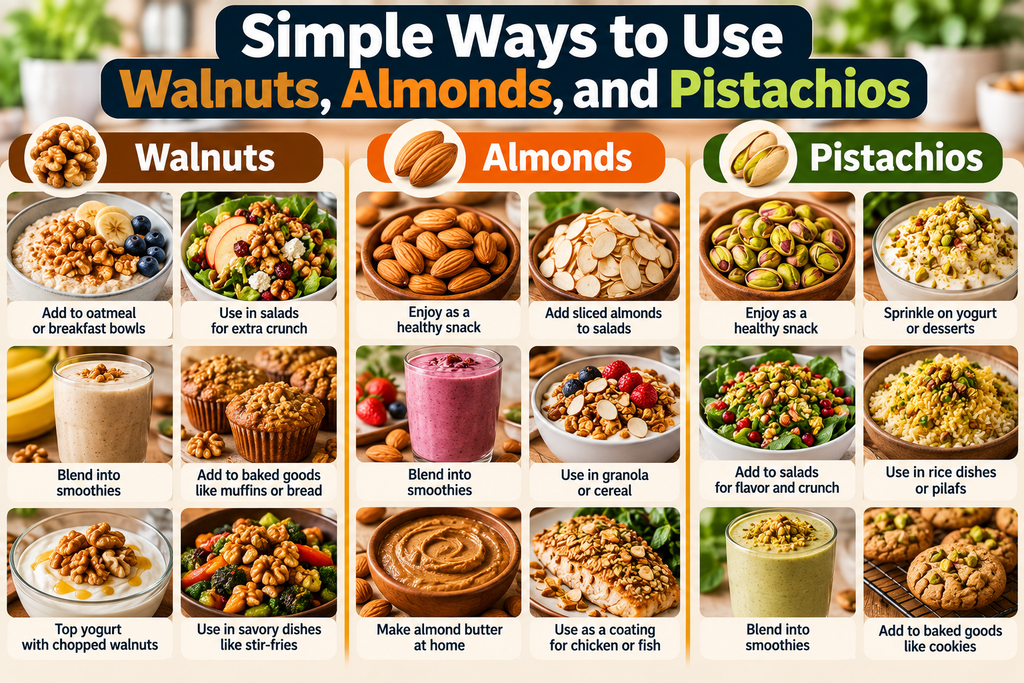
- Sprinkle chopped walnuts over oatmeal.
- Pair almonds with fresh fruit for a portable snack.
- Add pistachios to a salad or grain bowl.
- Mix all three into a homemade trail mix without added candy.
- Use crushed nuts as a topping for yogurt.
- Add chopped nuts to vegetables, rice, or roasted dishes for texture.
Whole Nuts Are Usually the Simplest Choice
Whole nuts without heavy coatings, added sugar, or excessive salt are usually the easiest way to keep the food close to its natural form. Nut butters can also fit into a balanced diet, but ingredient lists are worth checking.
If you enjoy roasted nuts, that is fine too. The bigger issue is often what has been added to them rather than whether they are roasted.
Who Needs to Be Careful With Nuts?
People with nut allergies need to avoid the specific nuts that trigger reactions and should follow professional medical guidance. Young children may also need age-appropriate forms because whole nuts can be a choking hazard.
If you have been told to limit certain nutrients or follow a specialized diet, your healthcare professional or dietitian can help you choose suitable portions.
FAQs
1. Are walnuts, almonds, or pistachios the healthiest nuts?
All three can fit into a healthy diet. Walnuts provide more plant-based omega-3 ALA, almonds are a convenient source of vitamin E and fiber, while pistachios provide protein, fiber, and other nutrients. The best choice depends on your dietary needs and preferences.
2. Which is better for protein: walnuts, almonds, or pistachios?
Almonds and pistachios generally provide more protein per serving than walnuts. They can be useful additions to meals or snacks when you want to increase protein intake.
3. Which nut has the most fiber?
Almonds are particularly rich in fiber, while pistachios and walnuts also contribute fiber. Choosing any of these nuts can help add fiber to an overall balanced eating pattern.
4. Are walnuts, almonds, and pistachios good for weight management?
Yes, they can be included in a weight-management diet. Nuts are energy-dense, so portion size matters. A small serving can add healthy fats, fiber, and protein while helping make meals or snacks more satisfying.
5. How many walnuts, almonds, or pistachios should I eat per day?
A common portion is about 1 ounce (28 grams) of nuts. The exact amount that fits your diet depends on your total calorie needs, other foods, and personal goals.
6. Should I choose raw or roasted nuts?
Both raw and dry-roasted nuts can work well. For everyday eating, choose options with little or no added salt, sugar, or unhealthy coatings. Check the ingredient list when buying flavored or packaged nuts.
7. Are pistachios lower in calories than almonds and walnuts?
The calorie difference between these nuts is relatively small, but exact values vary by serving size and preparation. Comparing equal portions is the best way to assess them.
8. Can I eat different nuts together?
Yes. Combining walnuts, almonds, and pistachios can give you a wider variety of nutrients and flavors. Keep the overall portion moderate, especially when eating them as a snack.
9. Which nut is best to eat every day?
There is no single nut that is best for everyone. Rotating walnuts, almonds, and pistachios can be a simple way to add variety to a balanced diet.
Final Thoughts
Walnuts, almonds, and pistachios can all be healthy additions to an everyday eating routine. Walnuts offer a soft texture and useful unsaturated fats, almonds are portable and crunchy, and pistachios add flavor and variety.
Walnuts, almonds, and pistachios can all be healthy additions to an everyday eating routine. Walnuts offer a soft texture and useful unsaturated fats; almonds are portable and crunchy; and pistachios add flavor and variety. The Walnuts vs Almonds vs Pistachios comparison shows that each nut can have a place in a varied and balanced diet.