
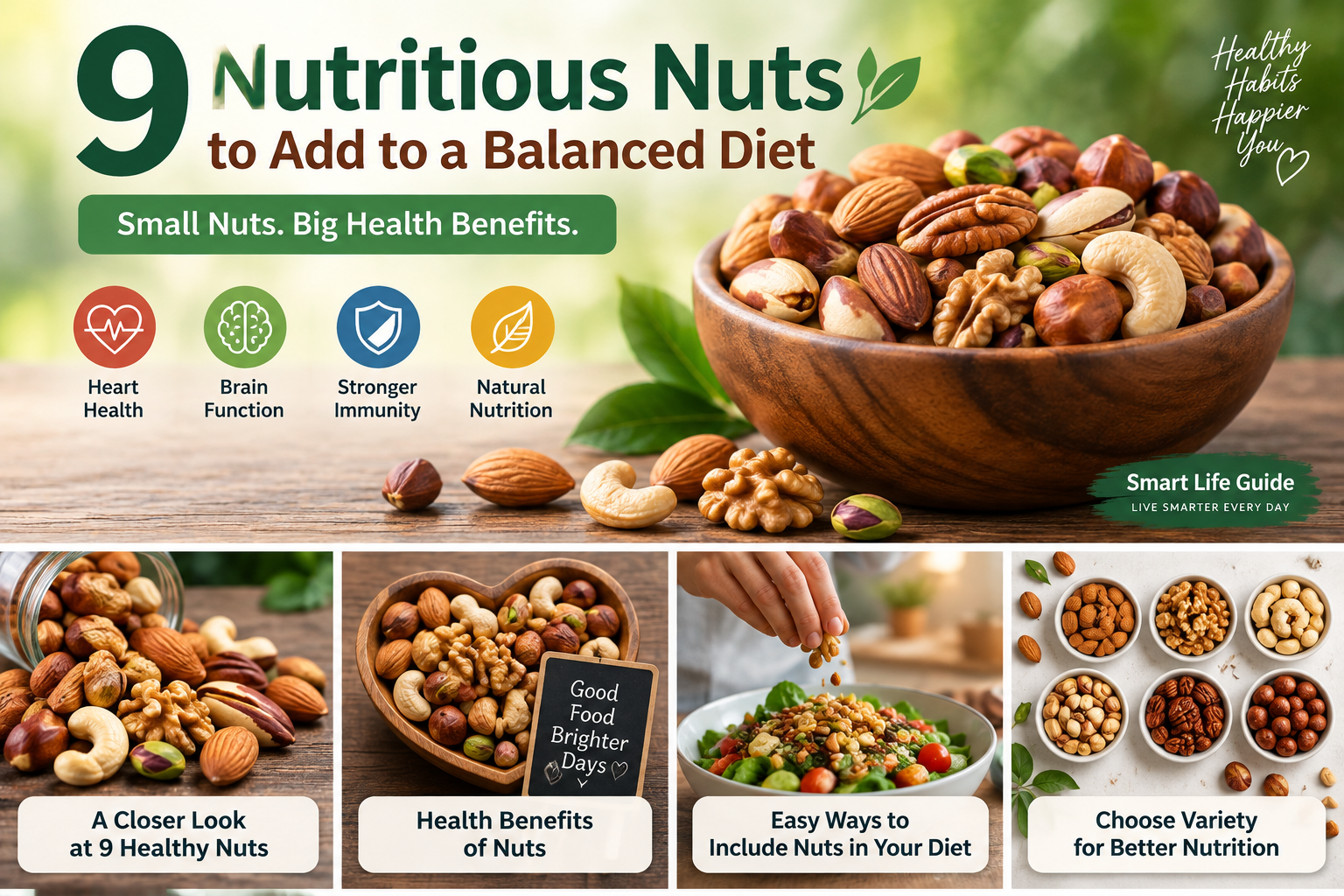
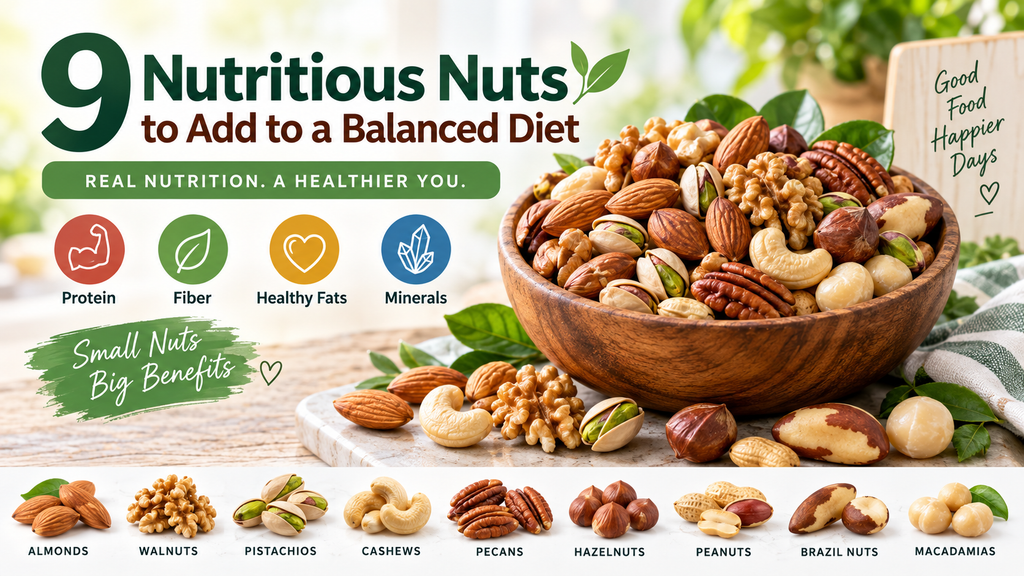
Nutritious nuts are small foods packed with protein, fiber, healthy fats, vitamins, and minerals. Many varieties provide fiber, protein, unsaturated fats, vitamins, minerals, and plant compounds. Because they are calorie-dense, the goal is not to eat unlimited amounts. A modest portion can fit comfortably into a balanced eating routine.
Different nuts have different nutrient profiles, so variety can be useful. Almonds, walnuts, pistachios, cashews, pecans, macadamia nuts, Brazil nuts, hazelnuts, and peanuts can all be included in a healthy diet depending on your preferences, budget, and any food allergies.
The American Heart Association notes that nuts can provide protein, fats, fiber, vitamins, minerals, and antioxidants, and recommends choosing options with little or no added salt or sugar. For more detail, see the American Heart Association guide to nuts.
Why Nuts Can Be a Useful Part of a Balanced Diet
Nuts can work well as a snack, breakfast topping, or ingredient in meals because they combine several nutrients in one food. Their unsaturated fats can be used in place of foods higher in saturated fat, while their protein and fiber can help make meals and snacks more satisfying.
They are not a magic food, and no single nut can replace an overall healthy eating pattern. The bigger picture still matters: vegetables, fruit, whole grains, protein foods, water, sleep, and regular movement all work together.
Table of Contents
1. Almonds
Almonds are a convenient option for snacks and meal toppings. They provide plant protein, fiber, vitamin E, magnesium, and unsaturated fats.
Try a small handful with fruit, chop them over oatmeal, or add sliced almonds to yogurt or salads. If you buy flavored almonds, check the label because sodium and added sugar can vary widely.
2. Walnuts
Walnuts stand out because they contain alpha-linolenic acid, a plant-based omega-3 fatty acid. They also provide protein, fiber, and minerals.
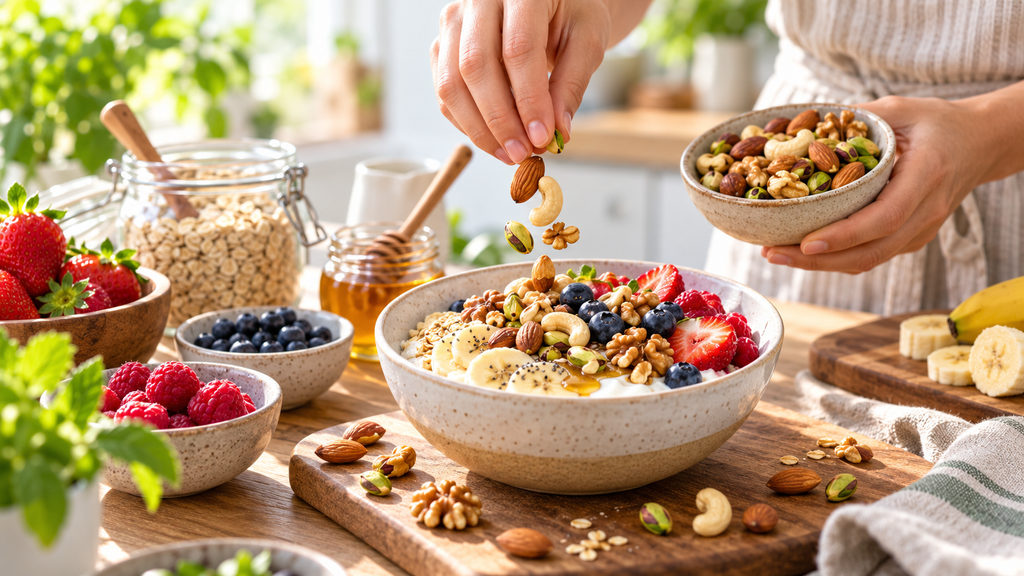
Walnuts work well in oatmeal, yogurt, salads, and simple homemade snack mixes. Their flavor is rich, so a small portion can add texture without needing a large amount.
3. Pistachios
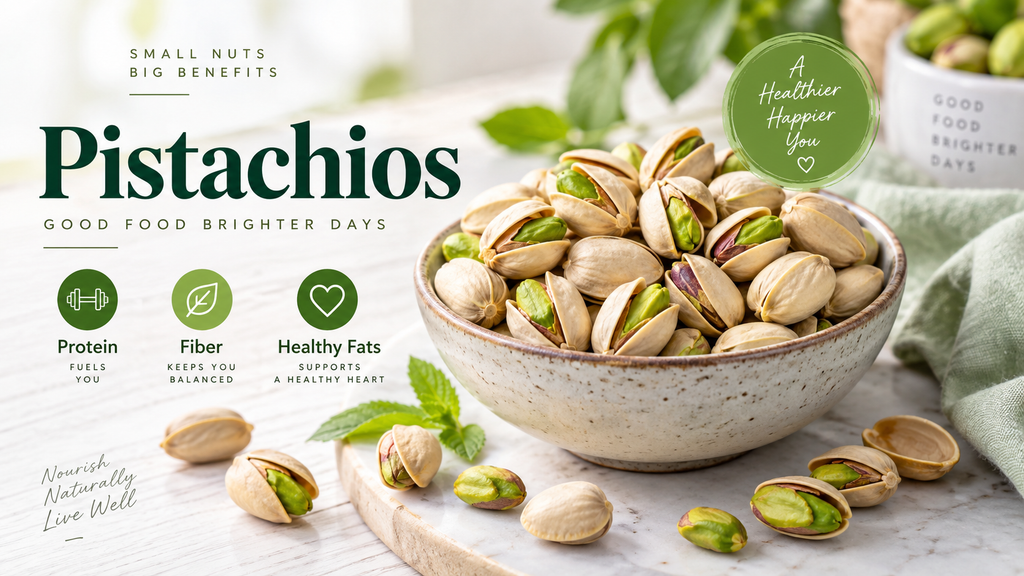
Pistachios provide protein, fiber, potassium, and unsaturated fats. In-shell pistachios can also naturally slow down snacking because you have to open each shell.
Choose unsalted or lightly salted versions when possible. They can be eaten alone or sprinkled over salads, grain bowls, and yogurt.
4. Cashews
Cashews have a softer texture and mild flavor. They provide unsaturated fats, protein, magnesium, copper, and other minerals.
Cashews can be used in stir-fries, salads, and snacks. Unsweetened cashew butter can also be paired with apple slices or whole-grain toast.
5. Pecans
Pecans are rich in unsaturated fats and also provide fiber and plant compounds. They are naturally flavorful, which makes them useful in both sweet and savory meals.
Try chopped pecans in oatmeal or on roasted vegetables. When buying candied pecans, remember that added sugar can change the overall nutrition profile.
6. Macadamia Nuts
Macadamia nuts are particularly high in monounsaturated fats. They are also calorie-dense, so a modest serving is usually enough.
Plain or dry-roasted macadamias can be used as an occasional snack or chopped into salads and grain dishes.
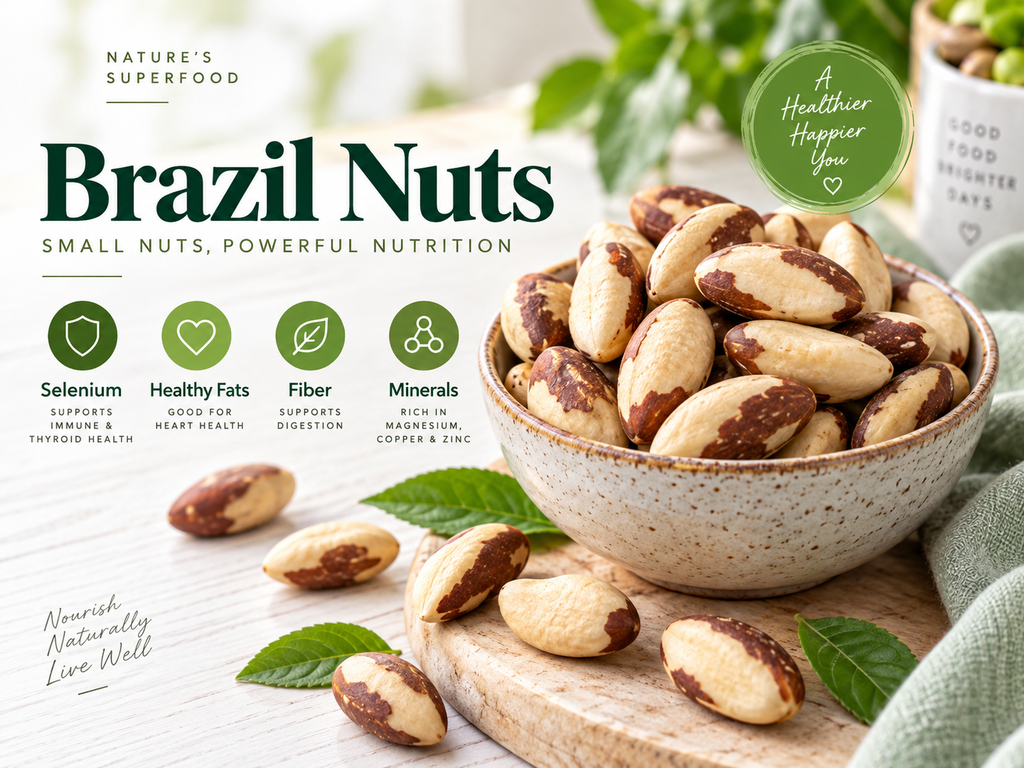
7. Brazil Nuts
Brazil nuts are well known for selenium, a mineral the body needs in small amounts. Because they are very concentrated in selenium, more is not necessarily better.
Rather than treating Brazil nuts like an unlimited snack, include them occasionally as part of a mixed variety of nuts. People with specific medical conditions or supplement use may want personalized advice from a qualified health professional.
8. Hazelnuts
Hazelnuts provide unsaturated fats, fiber, vitamin E, and minerals. They pair well with fruit, oats, and yogurt.
If you enjoy hazelnut spreads, read the ingredient list. Many commercial versions contain substantial added sugar, so whole hazelnuts or unsweetened nut butter are different choices nutritionally.
9. Peanuts
Peanuts are technically legumes, but they are commonly grouped with nuts because of their nutrition and the way they are eaten. They provide protein, fiber, unsaturated fats, niacin, and other nutrients.
Peanuts can be one of the more affordable options. Choose plain peanuts or peanut butter with little or no added sugar and sodium when possible.
How Much Is a Reasonable Portion?
Even nutritious nuts are calorie-dense, so portion size matters. The American Heart Association describes a small handful, about 1 ounce, as a common serving of whole nuts. You do not need to measure every serving perfectly, but having a rough idea can help you enjoy nuts without mindlessly eating from a large bag.
Another practical strategy is to place a portion in a bowl instead of eating directly from the package. Pairing nuts with fruit, vegetables, or plain yogurt can also make a snack feel more complete.
Choose Whole Nuts Without Added Salt or Sugar More Often
The simplest versions are often the easiest to fit into a balanced diet. Look for plain, raw, dry-roasted, unsalted, or lightly salted nuts. Sweet coatings, candy-style nuts, and heavily salted varieties can add a lot of sugar or sodium.
Nut butters can also fit into a healthy eating pattern. Compare labels and look for products with fewer added sugars and lower sodium. The USDA MyPlate system includes nuts and seeds within the Protein Foods Group; see the MyPlate Protein Foods guidance for general portion information.
Easy Ways to Add Nuts to Everyday Meals
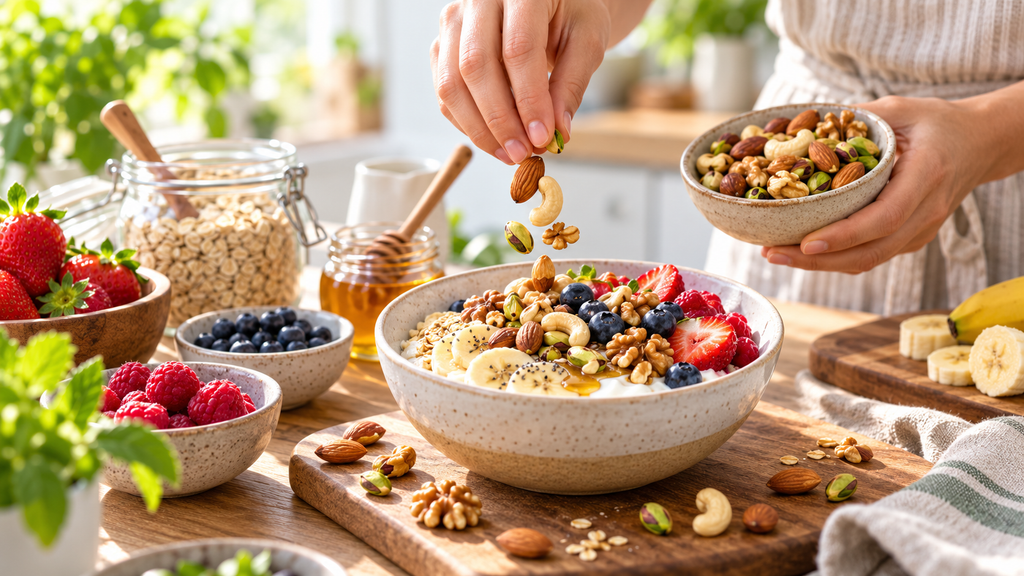
- Add chopped walnuts or almonds to oatmeal.
- Pair pistachios with a piece of fruit.
- Use peanut or almond butter on whole-grain toast.
- Sprinkle cashews over a vegetable stir-fry.
- Add pecans or hazelnuts to a salad.
- Mix a small amount of unsalted nuts with plain popcorn or unsweetened dried fruit.
If you are building a broader eating routine, you may also like our guide to simple healthy eating habits.
Frequently Asked Questions
Which nut is the healthiest?
There is no single healthiest nut for everyone. Different nuts provide different nutrients. Variety, portion size, and the rest of your diet matter more than trying to identify one perfect option.
Are roasted nuts healthy?
Dry-roasted nuts can fit into a balanced diet. Check the label for added oils, sodium, and sugar if that matters to your eating goals.
Can nuts be part of weight management?
Yes. Nuts are calorie-dense, so portions matter, but they can fit into a balanced weight-management pattern when eaten in reasonable amounts and paired with other nutrient-dense foods.
What if I have a nut allergy?
Avoid nuts that trigger your allergy and follow medical advice. Seeds or other protein foods may be alternatives depending on your individual needs.
Expert Advice: How Much Nuts Should You Eat?
The American Heart Association recommends choosing mostly unsalted nuts and notes that a typical serving is about a small handful, or 1 ounce. Nuts can provide protein, fiber, healthy fats, vitamins, minerals, and antioxidants as part of an overall balanced diet.American Heart Association – Nuts guidance
Brazil nuts are exceptionally rich in selenium. One nut may contain approximately 68–91 mcg. Eating several regularly, especially alongside selenium supplements, may cause excessive intake. Unlike other nuts, Brazil nuts should not be eaten by the handful. NIH – Selenium and Brazil nuts
Final Thoughts
Nutritious nuts can add flavor, texture, protein, fiber, healthy fats, vitamins, and minerals to everyday meals. The most practical approach is to choose mostly plain varieties, keep portions reasonable, and rotate different types instead of relying on one nut.
Nuts work best as one part of an overall balanced eating pattern rather than as a stand-alone solution for health or weight management.
This article is for general educational purposes and is not a substitute for personalized medical or nutrition advice.