
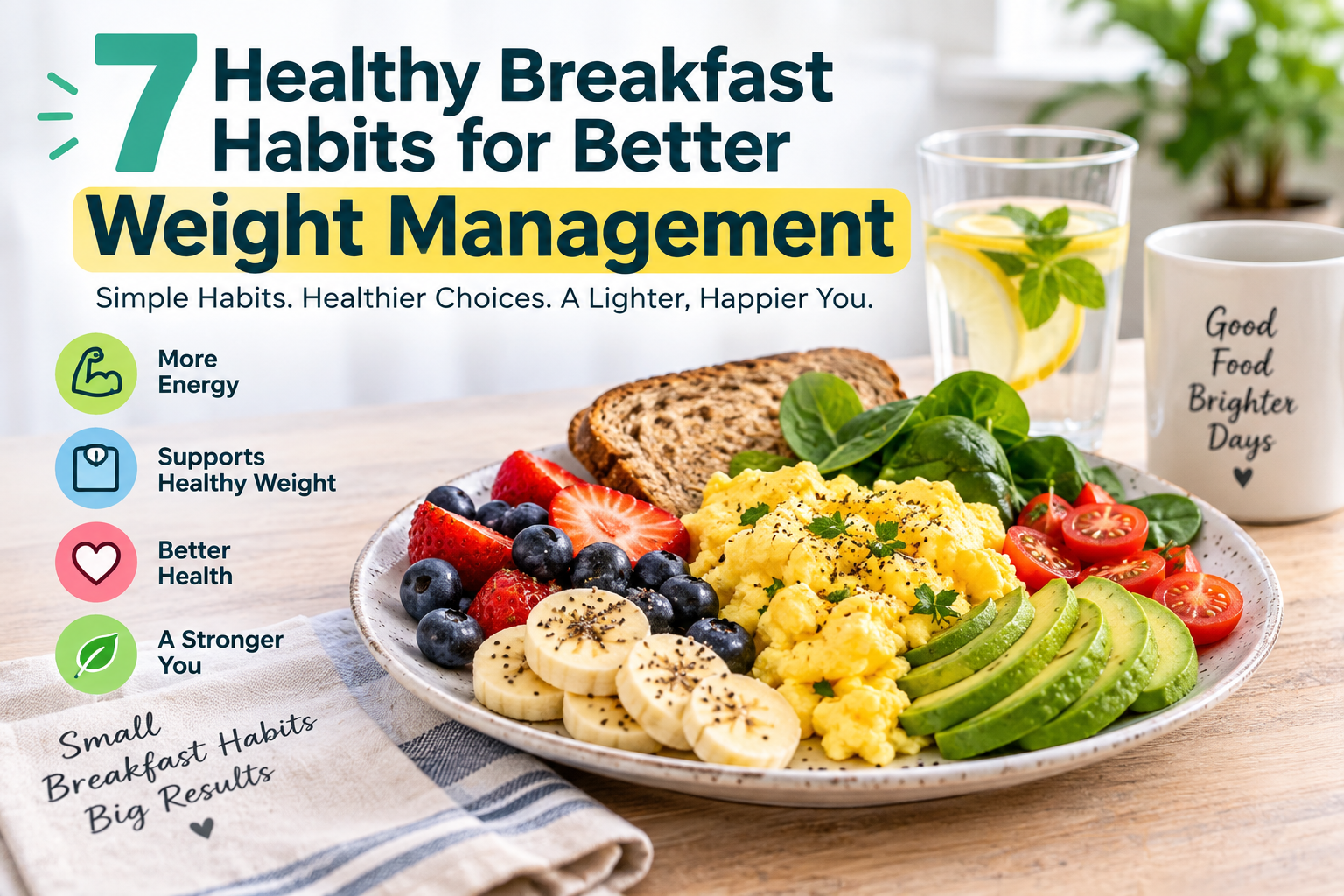
Healthy breakfast habits can make it easier to build a balanced eating pattern, but breakfast itself is not a requirement for weight loss. Some people enjoy eating soon after waking, while others prefer to eat later. What matters most is choosing a routine that fits your appetite, schedule, and overall eating pattern.
If you do eat breakfast, a few simple habits can help you include more protein, fiber, fruit or vegetables, and fewer heavily sweetened foods without turning breakfast into another strict diet rule.
Table of Contents
1. Include a Source of Protein
Protein can help make breakfast feel more satisfying and complete. Practical options include eggs, plain yogurt, milk, cottage cheese, nut butter, beans, tofu, or leftovers from another meal.
You do not need a special high-protein product or supplement. Start with foods you already enjoy and can prepare consistently. A balanced eating pattern can include a variety of protein foods such as eggs, beans, lentils, nuts, seeds, dairy, soy foods, poultry, seafood, and meat.
2. Add Fruit or Vegetables
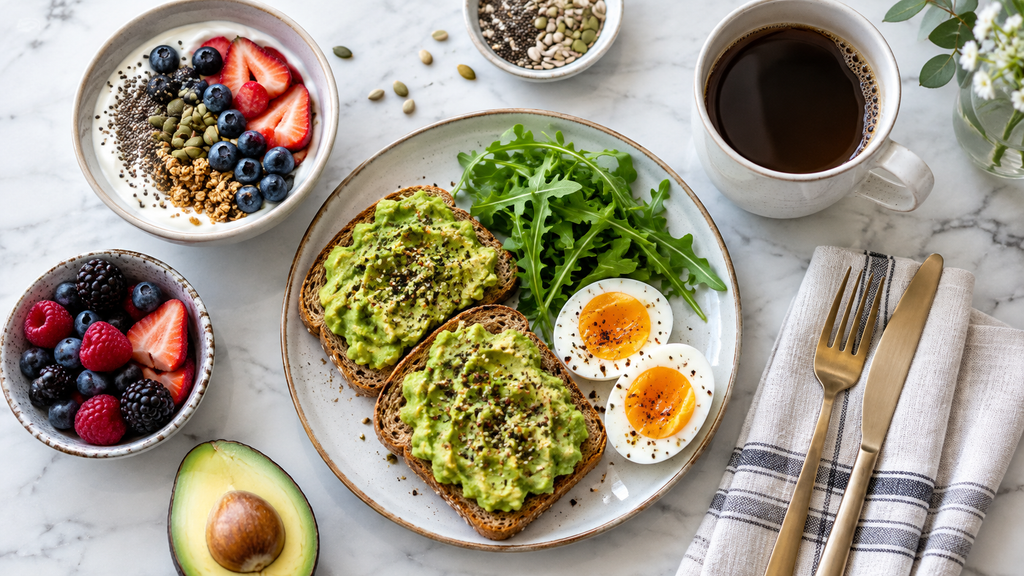
Breakfast is an easy opportunity to add produce to your day. Fruit works well with oatmeal, yogurt, whole-grain toast, or on its own.
Vegetables can be added to eggs, sandwiches, wraps, or leftovers. Frozen fruit and vegetables can also be practical when fresh options are expensive or unavailable. Choosing whole fruit more often than juice can also add useful fiber.
3. Choose Higher-Fiber Carbohydrates More Often
Oats, whole-grain bread, higher-fiber cereals, and other whole-grain foods generally provide more fiber than highly refined breakfast products.
You do not have to avoid white bread or other refined foods completely. The goal is to choose higher-fiber options more often when they fit your routine and preferences. Healthy breakfast habits work best when they are flexible enough to continue long term.
4. Watch Added Sugar in Breakfast Foods and Drinks
Some cereals, pastries, flavored yogurts, breakfast bars, and coffee drinks can contain a lot of added sugar. Too much added sugar can make it harder to maintain a balanced eating pattern.
Compare Nutrition Facts labels when useful and choose less-sweet versions more often. Fruit, cinnamon, or a small amount of nuts can add flavor without relying only on heavily sweetened products.
The CDC explains that the Nutrition Facts label can help you compare packaged foods and drinks, including their added-sugar content. See the CDC guide to the Nutrition Facts label.
5. Keep One Fast Breakfast Ready for Busy Mornings
A healthy routine becomes easier when you have a realistic backup option. Examples include overnight oats, plain yogurt with fruit, whole-grain toast with peanut butter, boiled eggs with fruit, or a simple smoothie.
Preparing one or two ingredients the night before can make it easier to follow healthy breakfast habits on busy mornings instead of relying only on convenience foods.
6. Do Not Force Breakfast if You Are Not Hungry
Healthy eating does not require everyone to eat at the same time. If you are not hungry first thing in the morning, you may prefer to eat later.
The important point is to avoid treating breakfast as a rigid rule. Weight management depends on the overall pattern of food choices, activity, sleep, and other habits rather than one required meal time.
7. Keep Portions Realistic
A balanced breakfast does not need to be very large. Choose enough food to feel satisfied while keeping the rest of your daily eating pattern in mind.
Portion needs vary with body size, activity, appetite, age, and the rest of the diet, so there is no single perfect breakfast portion for everyone. The CDC also notes that healthy weight management involves both adequate nutrition and attention to overall calorie needs.
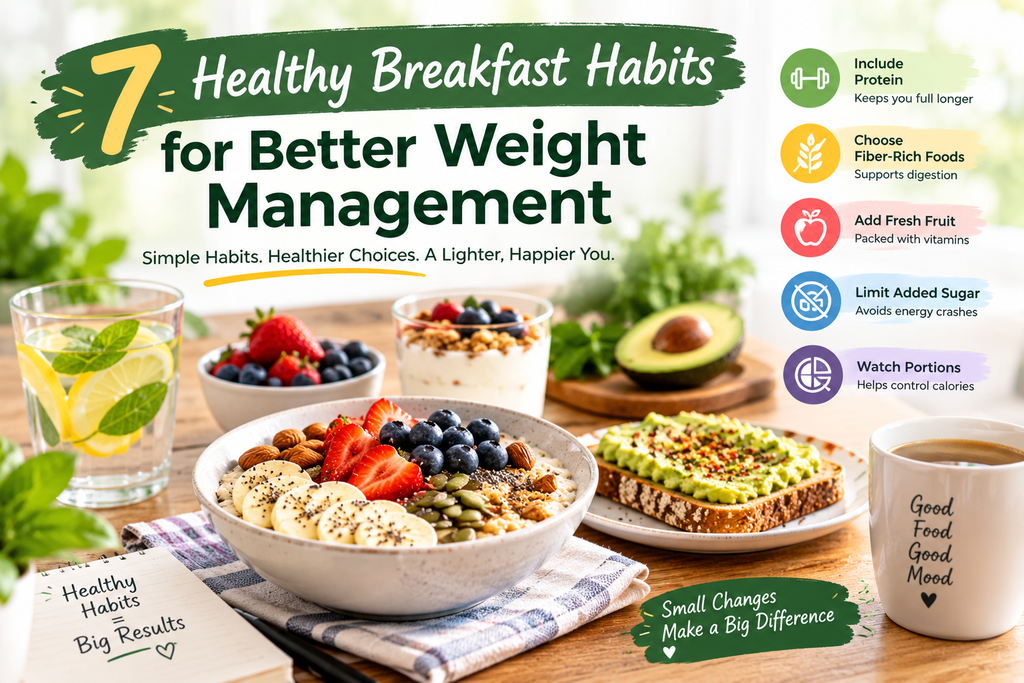
A Simple Formula for Healthy Breakfast Habits
If you want an easy way to build breakfast, combine:
- One protein source: eggs, yogurt, milk, beans, tofu, or nut butter.
- One higher-fiber carbohydrate: oats, whole-grain bread, or a higher-fiber cereal.
- Fruit or vegetables: fresh, frozen, or unsweetened options.
- Optional healthy fat: nuts, seeds, or nut butter.
This is not a strict formula. It is simply a practical way to create a more balanced meal using foods you already like.
Simple Breakfast Combinations
- Oatmeal with berries and a small handful of nuts.
- Eggs with whole-grain toast and tomatoes.
- Plain yogurt with fruit and oats.
- Whole-grain toast with peanut butter and banana.
- Beans with eggs and vegetables.
- A smoothie with fruit, plain yogurt or milk, and oats.
The USDA MyPlate approach encourages variety across fruits, vegetables, grains, protein foods, and dairy or fortified alternatives. See the USDA MyPlate guidance for general meal-building ideas.
How Healthy Breakfast Habits Fit Into Weight Management
No single breakfast food, meal time, or routine causes weight loss by itself. Healthy weight management is more likely to come from an overall pattern that includes nutritious foods, realistic portions, regular movement, adequate sleep, and habits you can maintain over time.
The CDC recommends an eating pattern that emphasizes fruits, vegetables, protein foods, whole grains, healthy fats, and dairy without added sugars while limiting added sugars and highly processed foods. Read the CDC healthy eating guidance for healthy weight.
For a broader approach to food choices, read our guide to simple healthy eating habits. You can also pair your eating routine with our guide on building a daily walking routine for healthy weight management.
Frequently Asked Questions
Is breakfast required for weight loss?
No. There is no single meal schedule that works for everyone. Weight management depends more on your overall eating pattern, activity, sleep, and other daily habits than on whether you eat breakfast at a specific time.
What is a simple healthy breakfast?
A practical breakfast can combine a protein source, a higher-fiber carbohydrate, and fruit or vegetables. The exact foods can vary according to your preferences, budget, culture, and schedule.
Are smoothies healthy for breakfast?
They can be. A balanced smoothie might include fruit, plain yogurt or milk, and oats or another source of fiber. Be mindful of large amounts of juice, syrups, or other added sugars.
Should I skip breakfast if I am not hungry?
You do not need to force yourself to eat immediately after waking. If you prefer to eat later, focus on making that first meal balanced and satisfying rather than following a rigid time rule.
Can healthy breakfast habits reduce cravings later?
A balanced breakfast may help some people feel more satisfied, especially when it includes protein and fiber. Hunger responses vary, so pay attention to what works for your own routine rather than expecting one breakfast pattern to work for everyone.
Final Thoughts
Healthy breakfast habits are about making mornings easier, not stricter. Include protein, fiber-rich foods, produce, and practical backup options when they fit your routine.
A breakfast you can repeat consistently is more useful than an elaborate plan you only follow for a few days. Focus on the quality of your overall eating pattern instead of expecting one meal to control your weight by itself.
This article is for general educational purposes and is not a substitute for personalized medical or nutrition advice.