
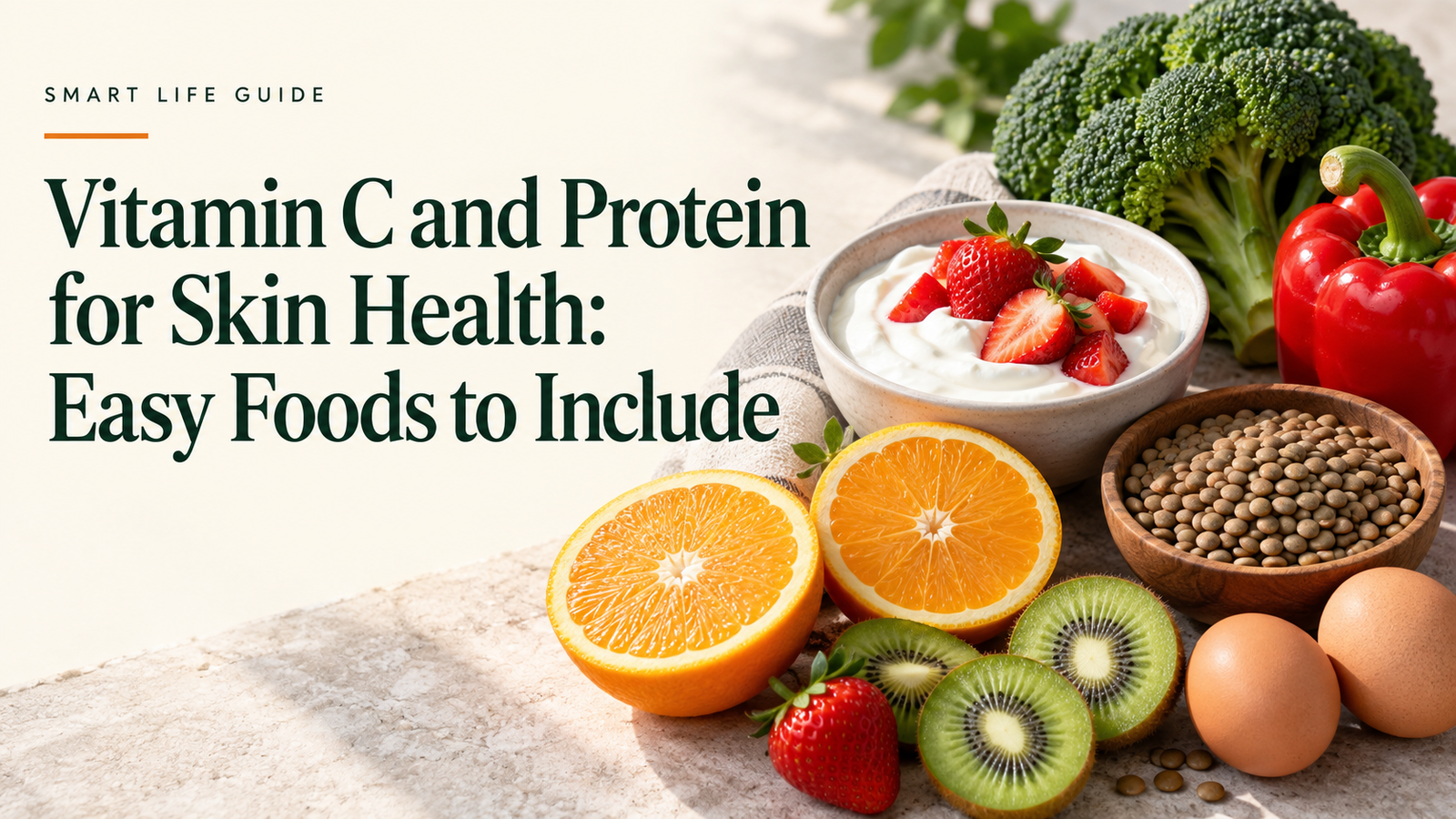
Vitamin C and protein for skin health can come from ordinary meals: eggs with bell peppers, yogurt with strawberries, or lentils with a side of colorful vegetables. You do not need an expensive “skin food” or a complicated meal plan to start.
This guide explains what these nutrients do and gives you eight practical food combinations, with serving ideas and simple swaps. These are everyday meal suggestions, not tested recipes or a treatment for acne, wrinkles, or other skin conditions.
Table of Contents
Vitamin C and Protein for Skin Health: Why They Matter
Your body breaks dietary protein into amino acids, which it uses to make and repair cells. Eggs, dairy, fish, poultry, beans, lentils, and soy foods can contribute. You can meet protein needs with a well-planned plant-based diet; animal foods are not essential. See MedlinePlus’s explanation of protein in the diet.
Vitamin C helps the body make collagen, a structural protein in skin and other tissues. Peppers, oranges, kiwi, strawberries, and broccoli are useful food sources. The NIH vitamin C fact sheet explains these functions and food sources.
Supporting normal skin function is different from promising a visible cosmetic change. This article does not claim that eating a particular meal will clear acne or reverse aging.
8 Easy Food Combinations to Try
Use these portions as starting points for assembling meals, not as a prescription. Adjust them to your appetite, overall diet, allergies, and any advice from your healthcare professional.
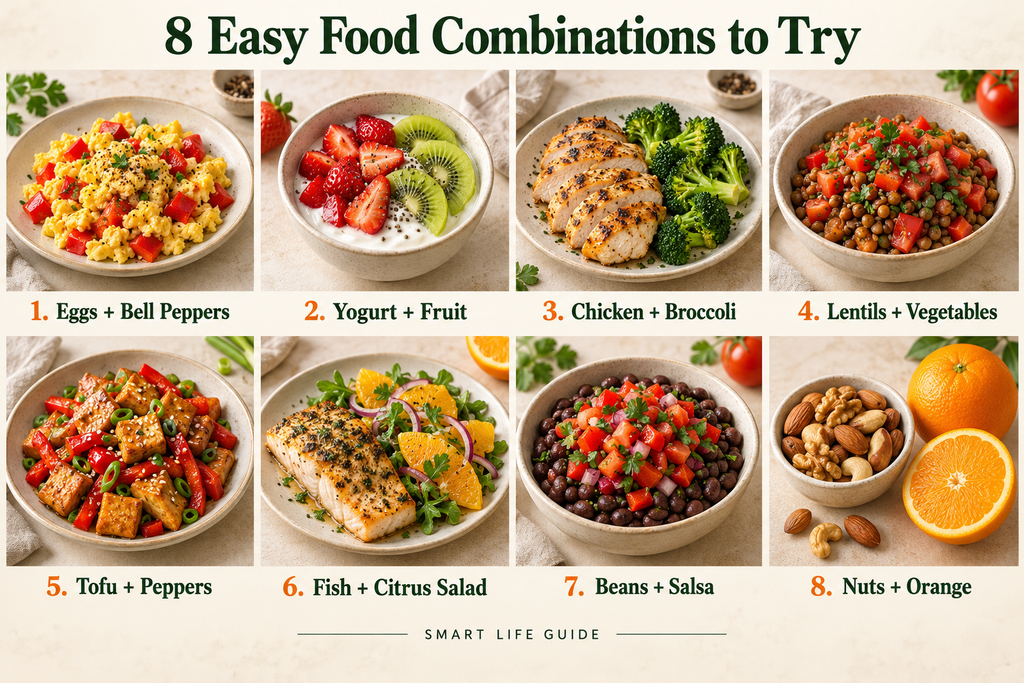
1. Eggs With Bell Peppers
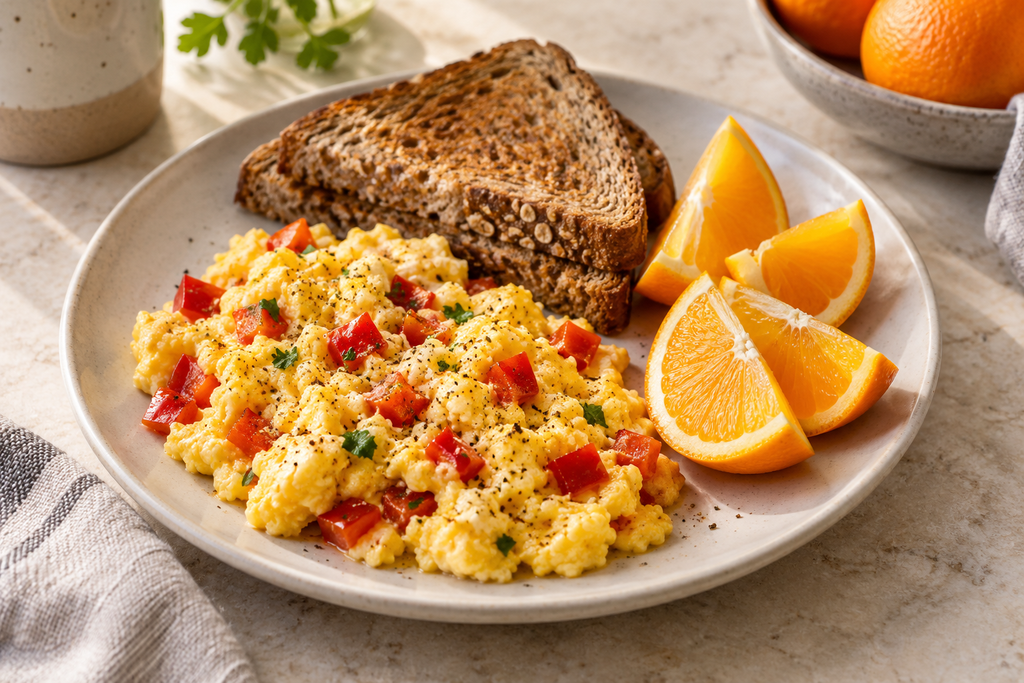
Start with two eggs and about half a cup of chopped red bell pepper. Cook the eggs thoroughly as a scramble or omelet, and serve with whole-grain toast. If you prefer a crunchy side, keep some washed pepper strips raw instead of putting all of them in the pan.
For a quicker morning, chop the pepper ahead of time and refrigerate it. If eggs are not suitable for you, use crumbled firm tofu with the same vegetables. Choose seasonings you already enjoy rather than buying a new spice mix for one meal.
2. Greek Yogurt With Strawberries or Kiwi
Spoon about three-quarters of a cup of plain Greek yogurt into a bowl, then add half a cup of sliced strawberries or a peeled kiwi. Add oats for texture if you want a more substantial breakfast. Keep the fruit and oats separate until serving when packing it to take away.
Regular plain yogurt is also an option; compare its protein content on the label. For a dairy-free version, check an unsweetened soy yogurt’s label rather than assuming every plant-based yogurt provides the same protein. Coconut-based alternatives can be quite different.
3. Chicken With Broccoli
Build a lunch bowl with a serving of thoroughly cooked chicken, broccoli, and rice or potatoes. Frozen broccoli keeps this practical when you do not have fresh produce. Steam or microwave the vegetables until tender instead of leaving them boiling while you prepare everything else.
For variety, use leftover cooked chicken in a wrap and put the broccoli on the side. This meal does not need a special sauce: olive oil, herbs, or a little of your usual dressing can be enough.
4. Lentils With Tomatoes and Red Pepper
Use three-quarters to one cup of cooked lentils as the base of a bowl, or serve a similar portion of dal with flatbread. Add chopped tomatoes and a generous side of red bell pepper. Finish with lemon for flavor if you like it.
A squeeze of lemon is a garnish, so do not rely on it as your only fruit or vegetable serving. If you are short on time, use ready-cooked lentils. If lentils are unfamiliar, start by adding a smaller amount to a meal you already eat.
5. Tofu Stir-Fry With Peppers
Cut roughly 100–150 grams of firm tofu into cubes and pat it dry before pan-cooking. Add sliced bell pepper and broccoli, and serve with rice or noodles. Keep the pieces a similar size so the dish is easier to cook evenly.
Use garlic, ginger, and a little soy sauce for a simple version. Tofu varies in firmness and protein content, so use the package label when comparing products. If soy is unsuitable, choose another protein food rather than treating tofu as essential.
6. Fish With Orange and Pepper Salad
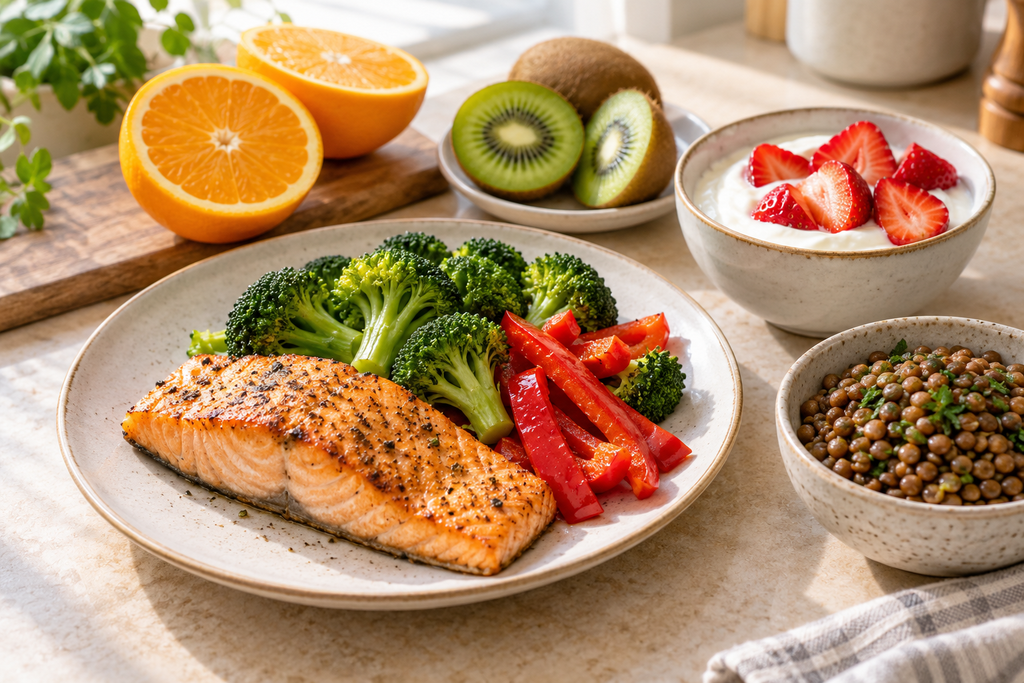
Serve baked fish with a salad of orange segments, sliced red pepper, cucumber, and leafy greens. Add potatoes or bread if you want a larger meal. Keep the orange pieces bite-sized and remove seeds so the salad is easy to eat.
For a no-cook alternative, use ready-to-eat canned fish according to its label. Keep the fish and salad separate until serving if you prefer the vegetables crisp.
7. Beans With Fresh Salsa
Combine three-quarters to one cup of cooked beans with chopped tomatoes, red pepper, onion, and a little lime. Serve in a tortilla, on rice, or as a bowl. Canned beans make this a realistic cupboard meal; drain and rinse them before using.
Fresh chopped pepper adds substance to the salsa. A small spoonful of bottled sauce can add flavor, but it is not the same thing as a serving of vegetables. Adjust chili to taste; a mild version works just as well.
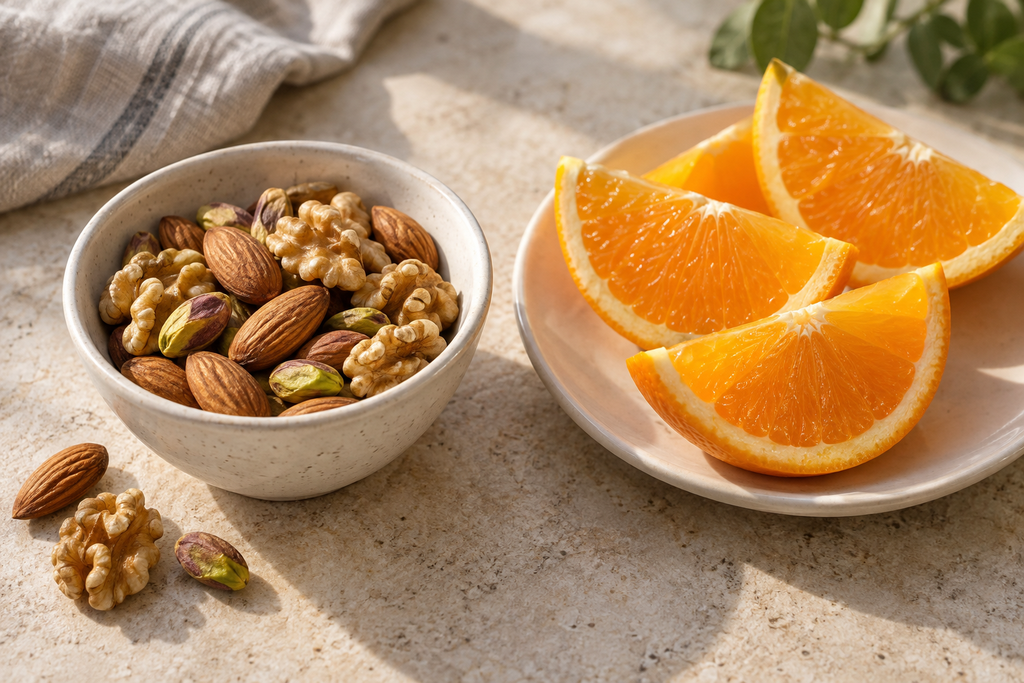
8. Nuts With an Orange
For a portable snack, pack a small handful of unsalted nuts and an orange or kiwi. Portion the nuts into a small container instead of eating directly from a large bag.
Think of this as a snack, not a direct replacement for every protein-rich main meal. If you avoid nuts, choose a suitable alternative such as yogurt or roasted chickpeas and check the product label for allergens.
How Much Do You Need?
For adults aged 19 and over, U.S. vitamin C recommendations are 75 mg daily for women and 90 mg for men; pregnancy and breastfeeding have different targets. NIH lists approximately 95 mg in half a cup of raw red pepper and 70 mg in a medium orange. These are reference estimates, not exact values for every piece of produce.
Protein needs depend on your body size, activity, life stage, and health. The sample portions here do not establish a personal daily target. If you need a specific target, ask a registered dietitian to assess your overall intake, especially if you have a medical condition affecting your diet.
A Simple Shopping and Meal-Prep Plan
Choose just two combinations for the coming week. For example, buy plain yogurt, strawberries, lentils, red peppers, and your usual bread or rice. That gives you one breakfast option and one main-meal option without buying ingredients for all eight ideas.
Make the preparation fit your routine: wash produce before use, portion yogurt into a container, and keep cooked lentils ready for a bowl or dal. Store perishable ingredients appropriately and follow package instructions. You do not have to cook every meal from scratch to use these ideas.
For help turning these options into a routine, read our guide to simple healthy eating habits.
Frequently Asked Questions
Do I need protein and vitamin C at the same meal?
There is no special pairing schedule to follow in this guide. Combining the foods is a convenient way to plan varied meals, not a claim that they must be eaten together for your skin to benefit.
Do I need a vitamin C supplement?
Many people can meet their needs through food. More is not automatically better: high vitamin C doses can cause diarrhea, nausea, and cramps. If you suspect a deficiency, take medicines, or have a medical condition, discuss supplements with your clinician.
Does cooking remove all the vitamin C?
No. Heat and cooking water can reduce vitamin C, but cooked vegetables still belong in a varied diet. Include some raw fruit or vegetables you enjoy, and avoid unnecessarily long cooking.
How soon will my skin improve?
There is no reliable timeline this article can promise. A food list cannot establish what is causing a skin concern. Persistent acne, a rash, or poor wound healing needs appropriate medical assessment rather than repeated changes to a “skin diet.”
Start with one meal: pick a protein food you already enjoy and add a fruit or vegetable from the combinations above. Repeat the option that fits your budget and routine before adding more.
This article provides general nutrition education, not personalized medical advice.