
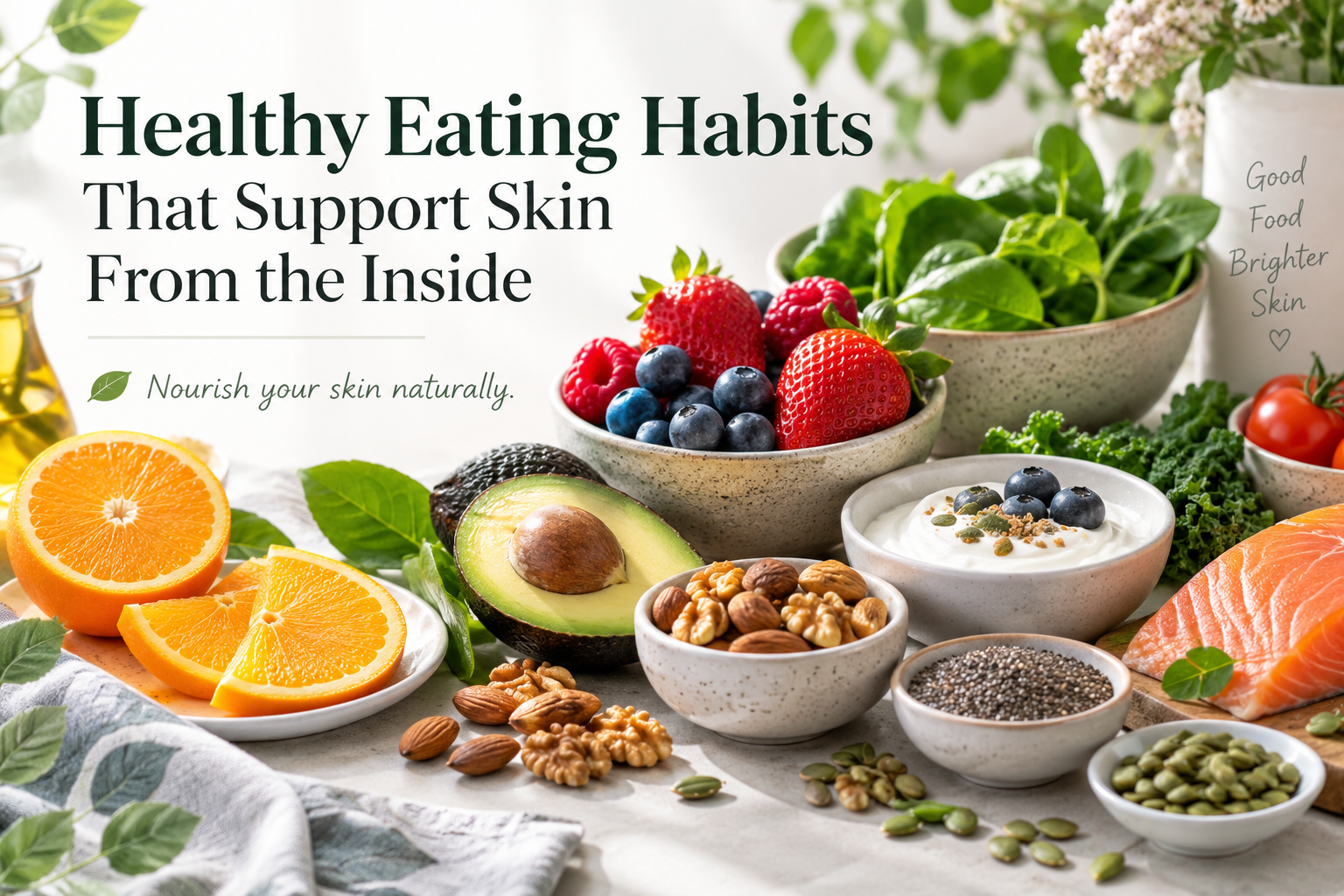
Healthy eating habits that support skin begin with ordinary, balanced meals—not miracle foods. Protein, vitamin C-rich produce, unsaturated fats, and adequate fluids all contribute to your overall nutritional needs. Sleep, sun protection, and appropriate skin care matter too, and no eating pattern guarantees clear or youthful-looking skin.
This guide explains seven practical habits, what to put on your plate, and how to adapt the ideas to a busy day or a limited grocery budget. Choose small changes that fit your dietary needs rather than trying to follow a restrictive beauty diet.
For an easy starting point, think about your usual meals: could you add a protein source to breakfast, a piece of fruit to lunch, or vegetables to dinner? These adjustments make the advice more useful than buying an expensive product marketed for skin.
Table of Contents
1. Include a Protein Source at Meals
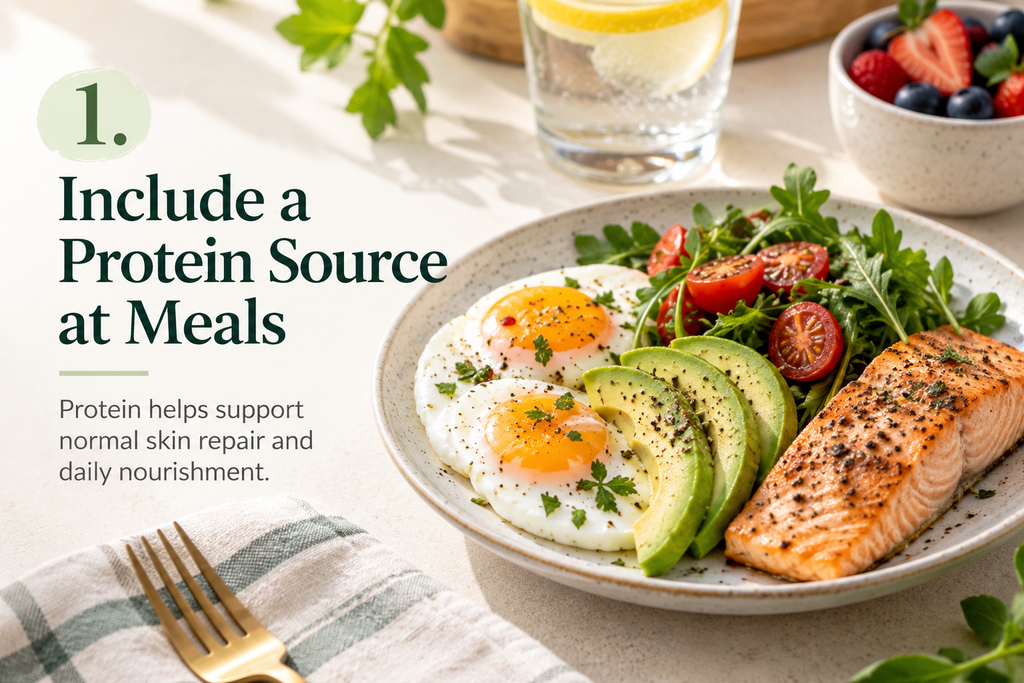
Protein supplies amino acids that the body uses to build and repair tissues. Eggs, fish, chicken, plain yogurt, beans, lentils, and tofu are everyday options. You do not need an unusually large portion or a protein powder: choose an amount suited to your appetite and dietary needs.
Try this: add an egg or yogurt to breakfast, beans to a lunch salad, or tofu or fish to dinner. If you do not eat animal products, combine a variety of plant protein sources throughout the day. People with medical conditions that affect protein needs should follow individualized professional advice.
A meal with a clear protein source is easier to repeat than a complicated recipe. The image below shows one possible combination; it is an example, not a required menu.
2. Eat Vitamin C-Rich Produce Regularly
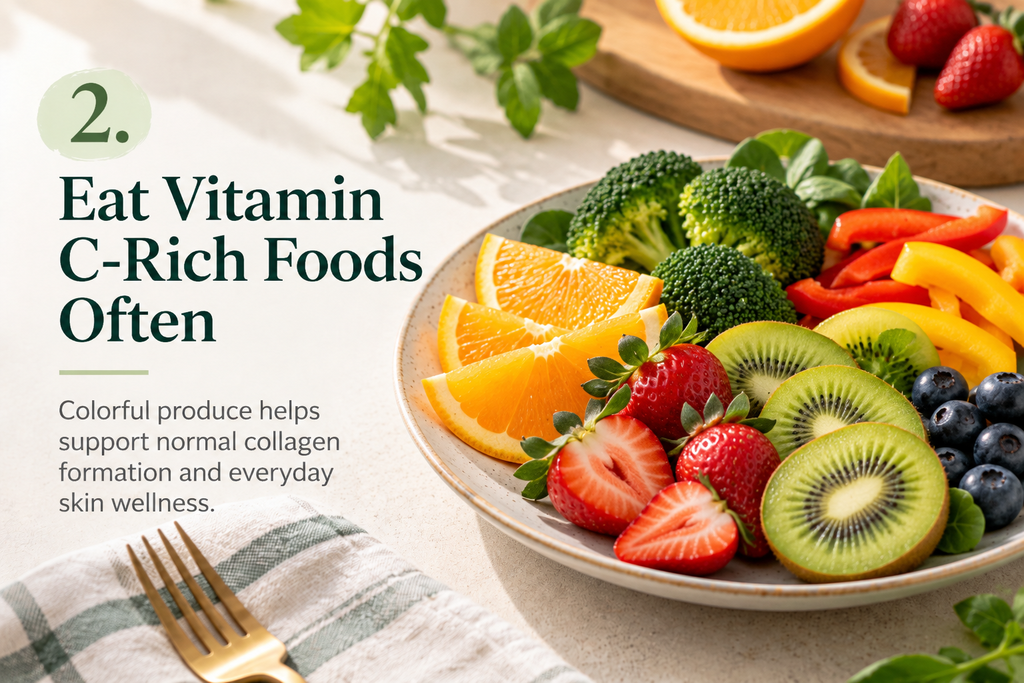
Vitamin C helps the body make collagen, a protein involved in normal tissue structure and wound healing. According to the National Institutes of Health vitamin C fact sheet, food sources include citrus fruit, kiwi, peppers, strawberries, broccoli, and tomatoes.
Try this: eat an orange with breakfast, add sliced bell pepper to a sandwich, or use broccoli as a dinner side. Frozen produce can be convenient when fresh options are expensive. Vitamin C-rich foods support normal nutrition, but they are not a treatment for acne or other skin conditions.
Mix and match these foods according to taste and availability rather than forcing yourself to buy every item shown.
3. Choose Colorful Fruits and Vegetables
Different fruits and vegetables provide different combinations of vitamins, minerals, fiber, and plant compounds. There is no need to select one fashionable “superfood.” Choose a variety of produce you actually enjoy, including seasonal and frozen options.
Try this: add spinach or tomatoes to an egg dish, carrots or cucumber to a packed lunch, and a vegetable side with dinner. If you already eat fruit every day, work on including vegetables more regularly instead of simply adding more of the same food. Use whatever is affordable and available in your area.
4. Add Healthy Fats
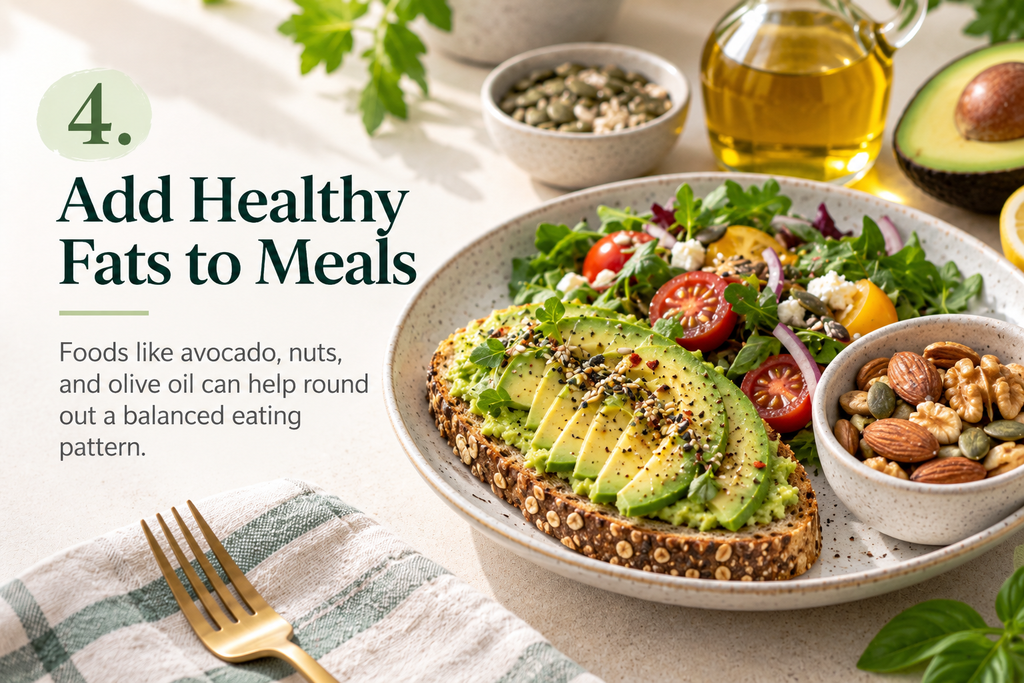
Avocado, nuts, seeds, olive oil, and oily fish can contribute unsaturated fats as part of a balanced eating pattern. You do not need all these foods, and expensive avocado is not essential: choose affordable options such as seeds, nuts, or suitable cooking oils when they fit your diet.
Try this: add a small amount of nuts to oatmeal, sprinkle seeds over yogurt, or use an unsaturated oil when preparing vegetables. If you have a nut allergy, choose a safe alternative. Pair these foods with protein and produce instead of assuming that fat alone changes skin appearance.
The image below offers several examples of foods containing unsaturated fats; select the ones that suit you.
5. Keep Highly Sugary Foods in Perspective
You do not need to ban desserts or declare a particular food “bad for your skin.” A manageable approach is to keep most meals varied and nutrient-rich while enjoying sweet foods in amounts that fit your health needs and preferences. One dessert cannot determine your overall skin health.
Try this: compare the drinks you regularly have. If you often choose a sweetened drink, swap it for water or an unsweetened option sometimes. Continue enjoying foods you like without turning eating into an extreme set of rules. If you have diabetes or another condition requiring dietary planning, follow your care team’s advice.
6. Stay Consistent With Fluids
Fluid needs vary with climate, activity, diet, and health. Water, milk, unsweetened beverages, soups, and water-rich foods can contribute to daily intake. Keeping a drink close by can help you remember to drink during busy days, but forcing excessive water will not create perfect skin.
Try this: have water available at your desk and with meals. If plain water seems boring, add fruit or cucumber for flavor. People with a medical fluid restriction should follow their clinician’s instructions rather than general hydration advice.
7. Build a Routine You Can Maintain
Healthy eating habits that support skin are easier to maintain when they fit your schedule. A useful weekly plan does not require preparing seven elaborate recipes. Start with two or three basic meals and change one ingredient at a time.
A simple day might look like this: eggs or yogurt with fruit at breakfast; a lentil or chicken wrap with vegetables for lunch; and fish, tofu, or beans with rice and vegetables at dinner. Choose substitutions that fit your budget, culture, allergies, and health needs. Leftovers and frozen ingredients can save time and reduce waste.
Check whether the change is practical after a week. If making a complex breakfast adds stress, choose an easier option. Consistency is more realistic when food remains enjoyable and flexible.
What Nutrition Can—and Cannot—Do for Skin
Eating a varied diet helps provide nutrients needed for normal body functions. However, diet alone cannot replace sun protection, medication, or professional care. A persistent rash, severe acne, a changing mole, or a wound that is not healing needs appropriate medical assessment rather than a new food trend.
For more meal combinations, see Vitamin C and Protein for Skin Health: 8 Easy Foods to Include. For broader everyday guidance, read our simple healthy eating habits article. These guides complement this article rather than replace personalized advice.
Frequently Asked Questions
What should I eat every day for healthy skin?
No exact food list is mandatory. Aim for a varied pattern with adequate protein, fruits, vegetables, suitable fat sources, whole grains or other carbohydrates, and enough fluids for your circumstances. The details depend on your needs and food preferences.
Can cutting out sugar cure skin problems?
There is no guarantee that removing one food will cure a skin condition. If you notice a possible dietary trigger or have ongoing symptoms, ask a qualified healthcare professional before beginning major restrictions.
Do I need expensive superfoods?
No. Affordable foods including beans, lentils, eggs, seasonal produce, yogurt, nuts, and seeds can form the basis of nutritious meals. Choose ingredients you can access and prepare regularly.
Final Thoughts
Pick one realistic habit to start this week: include protein with breakfast, add a vegetable to dinner, keep water handy, or plan a simple lunch. Nutrition supports general health, but visible skin changes are not promised. A useful eating routine is varied, affordable, and flexible enough to maintain.
This article provides general educational information and is not a substitute for individualized medical advice.