
An all-in-one workout machine sounds like a tidy solution for an apartment: one purchase, several exercises, and fewer loose pieces of equipment. The catch is that “all-in-one” has no single standardized meaning. One product combines pulleys and weights; another depends on a wall-mounted digital resistance system; a third may be a compact cardio machine marketed as a full-body workout. These products do not perform the same job.
This buying guide focuses on multi-exercise strength systems. If you primarily want aerobic equipment such as a rower, evaluate that separately. Choosing based on your intended training, rather than a feature count on the box, is the first step.
What counts as an all-in-one workout machine?
In-home strength training, the label commonly describes a station designed to accommodate several exercise patterns: a squat or other leg movement, pulling for the back, pushing for the chest or shoulders, and optional arm or core work. The equipment may use a cable stack, resistance rods, digital motors, or free-weight attachments. An exercise menu should be checked against the actual accessories included in the price.
A marketing claim of “hundreds of exercises” tells you little unless the machine provides suitable resistance, setup positions, and room for movements you intend to perform. Ask the seller for a manual, a complete included-accessory list, and an unedited demonstration of the exercises that matter to you.
Table of Contents
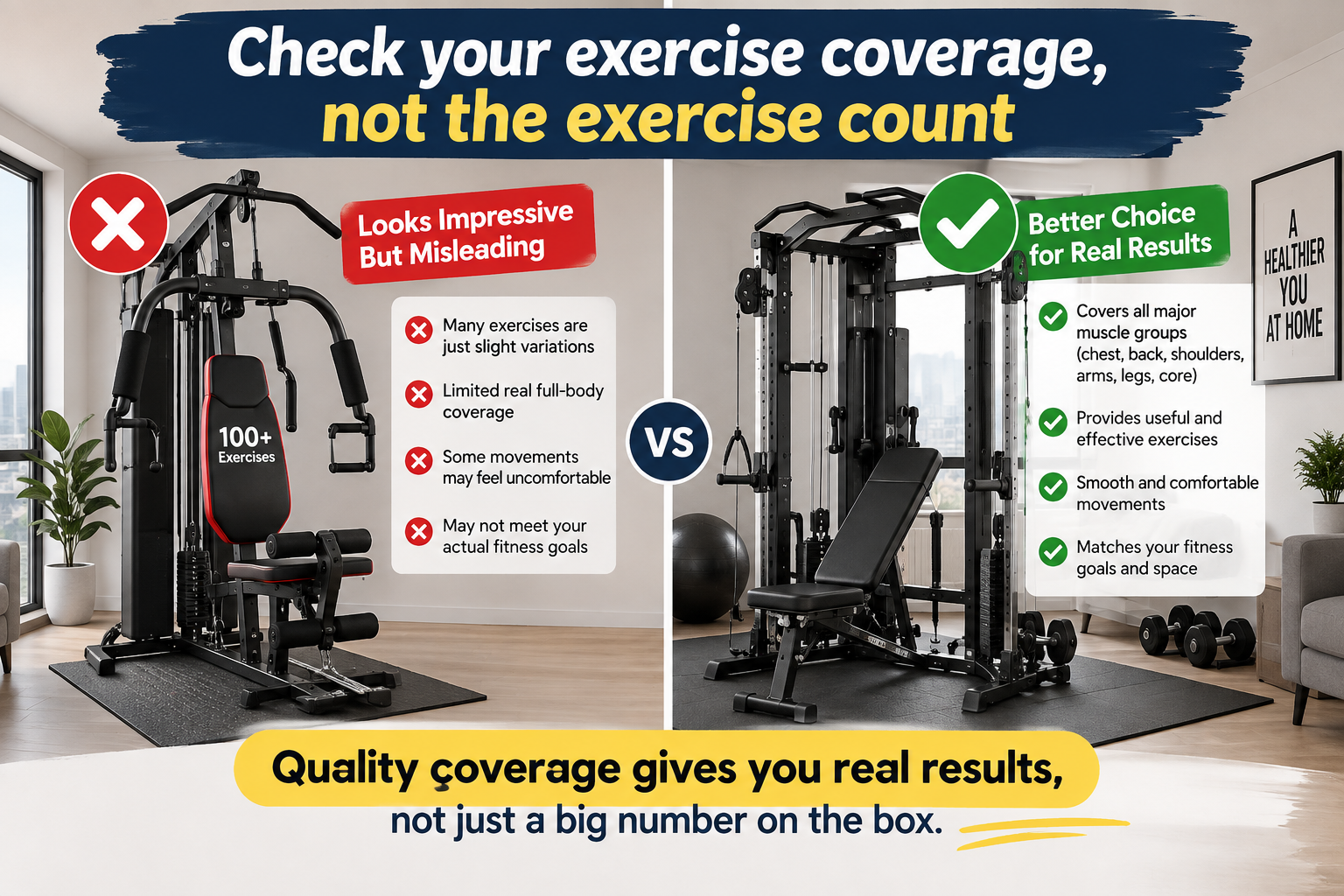
1. Check your exercise coverage, not the exercise count
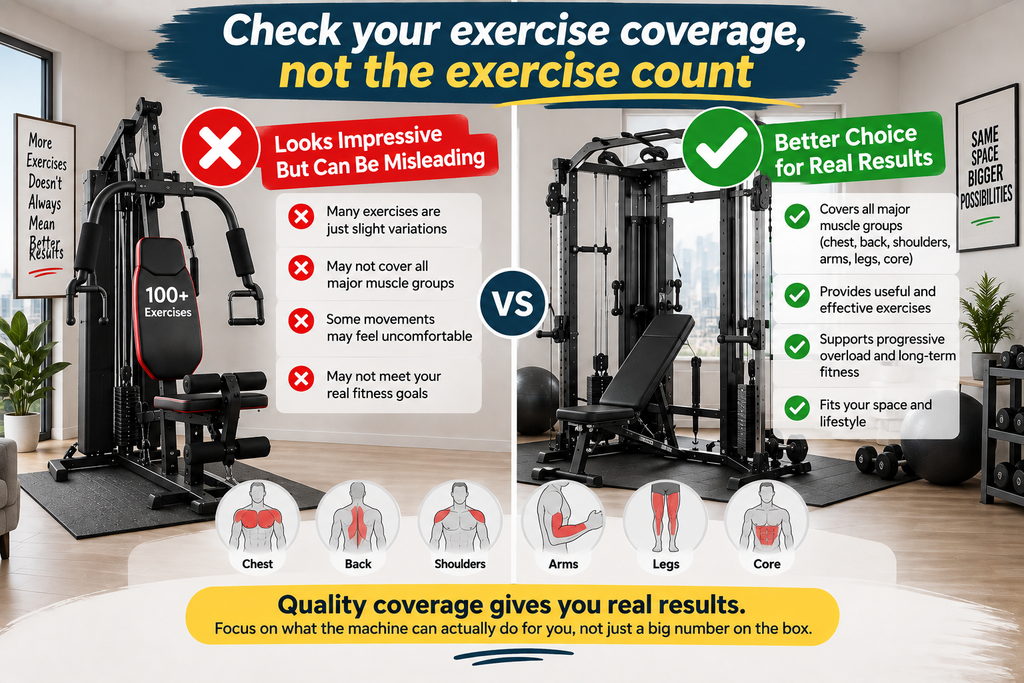
Write down six movement patterns before shopping: knee-dominant legs, hip-dominant legs, horizontal push, horizontal pull, vertical push or pull, and core stabilization. You do not need a unique machine setting for every variation, but you do need a reasonable way to train the major muscle groups in your program.
For example, a cable station may offer rows and presses but have a short resistance range for lower-body work. A system with a bench may add exercises yet require a larger area for safe access. If you cannot perform a required movement comfortably, do not count it as a usable feature.
2. Measure workout space separately from storage space
Record three measurements: where the system sits, how far you step or extend during the largest exercise, and where any bench or accessory goes afterward. Ceiling and door clearances matter too.
Manufacturer figures make the distinction clear. Tonal 2 is mounted to a wall, but its current setup information specifies an unobstructed wall area of 7 feet, a 7-by-7-foot exercise area and an ideal ceiling height of 7 feet 10 inches. The company also specifies a compatible wall, power and reliable Wi-Fi. These are Tonal-specific requirements; other products differ. Check Tonal’s official specifications before purchasing.
Try a simple floor test: mark the manufacturer’s exercise rectangle with removable tape. Simulate a lunge and outstretched arms without equipment. If a table, ceiling fan, door, or light fixture creates an obstruction, the setup is not ready.
3. Check the resistance range and progression
An all-in-one workout machine should let you adjust resistance in meaningful increments. Check the minimum and maximum loads, whether the published resistance applies per arm or in total, and whether accessories change the usable load.
For beginners, starting too heavy makes learning technique harder. For someone already strong, insufficient load may limit progression. Neither issue is visible from the number of exercise modes. Confirm available settings in the current manual rather than trusting an advertisement.
4. Decide whether installation is realistic
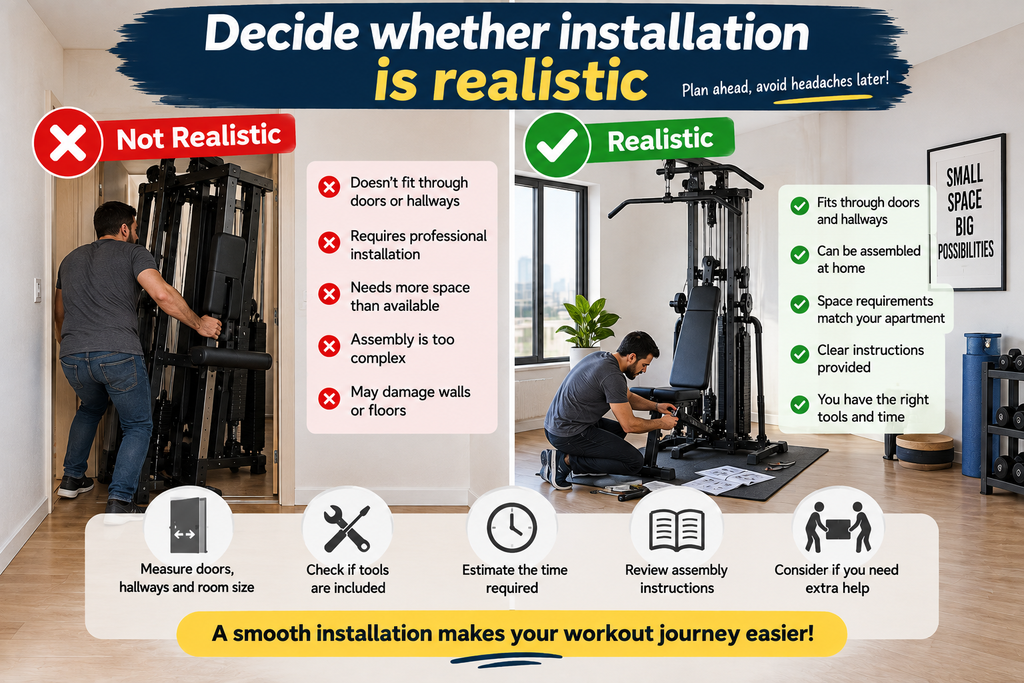
Traditional freestanding systems may be heavy and need assembly. Wall-mounted systems may require a compatible stud arrangement and professional fitting. Apartment renters should obtain explicit permission where necessary. Do not improvise a mount or attach weight-bearing equipment to plasterboard, furniture or an unverified fixture.
Check delivery dimensions, stair access, minimum doorway width, available outlets and who pays if the product must be disassembled for moving. A compact-looking unit can still be difficult to get into an upstairs apartment.
5. Calculate the total ownership cost
Compare costs across the intended period of ownership instead of looking only at the advertised purchase price. Use this formula:
Total ownership cost = machine price + shipping + installation + required accessories + subscription payments + expected maintenance.
As an illustration only, a hypothetical $1,500 machine with $200 delivery, $150 accessories and a required $40 monthly plan would cost $2,330 over the first 12 months, before tax, maintenance or financing charges. This is not a quote for any particular product; replace every figure with actual current checkout terms.
Ask whether the machine still provides core functions if you cancel the membership, how software support works and whether replacement parts are available. The Federal Trade Commission’s guidance on fitness-product advertising recommends checking true costs and being skeptical of easy-results claims.
6. Evaluate noise, maintenance and moving
Check for moving weights, pulley noise and impact through the floor. Rubber flooring can protect a surface but may not eliminate sound transmission to a downstairs neighbor. Ask about apartment policies before placing heavy equipment.
Look up the warranty exclusions, servicing location and whether the manufacturer still supports the exact model. Think ahead: how will you move the machine if you change homes, and can you sell it without expensive removal?
7. Know what the machine cannot do
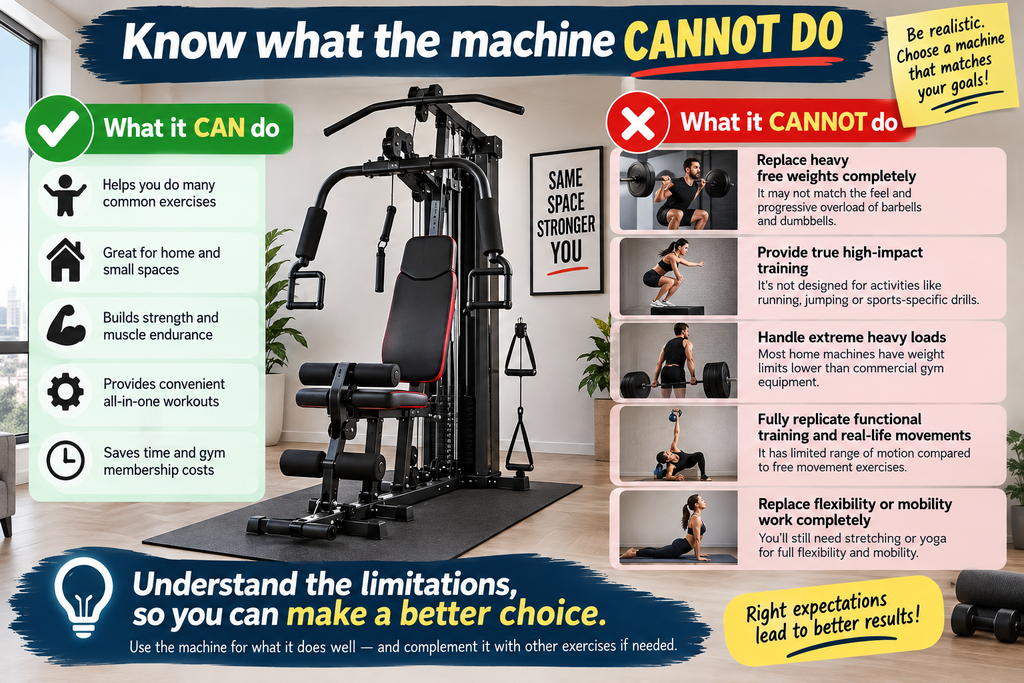
Even a versatile strength system does not automatically fulfill aerobic activity recommendations. According to the CDC, adults generally need at least 150 minutes of moderate-intensity aerobic activity weekly plus strength work on at least two days. A realistic home plan might pair resistance sessions with brisk walking. See our beginner walking routine for an accessible companion activity.
Conversely, a device that makes you sweat during a single repeated movement is not necessarily a versatile strength station. Ask which outcomes the product is designed to support rather than assuming “full-body” means everything.
Apartment buyer checklist
- My room fits the full operating clearance, not just the stored product.
- The machine covers the strength exercises I actually intend to do.
- The resistance suits my starting point and allows gradual progression.
- I know whether wall mounting, professional setup or landlord approval is required.
- I have checked the total cost, including mandatory memberships and accessories.
- I have checked the warranty, return policy, service and moving requirements.
- I can still maintain a balanced exercise routine without relying on one machine for everything.
Frequently asked questions
Does “all-in-one” mean the machine trains every muscle?
No. It is a product description rather than a standardized performance certification. Inspect the exercises, movement ranges and included attachments.
Can a wall-mounted machine work in a studio apartment?
Possibly, but you must check the exact manufacturer’s wall and movement clearances, installation requirements and rental restrictions.
Are smart gym subscriptions always optional?
No single rule applies. Read the specific model’s current membership terms and clarify what still works without an active plan.
Is an expensive machine necessary for strength?
No. Appropriate bodyweight and portable resistance exercises can be part of strength training. Match purchases to your goals and available space rather than assuming price determines effectiveness.
Conclusion
An all-in-one workout machine makes sense only if it simplifies your actual strength routine. Check exercise coverage, safe operating space, adjustable resistance, installation and ownership costs before choosing a model. If several requirements remain unresolved, postpone the purchase and try a simpler routine first.
Editorial note: This is an independent shopping checklist, not a hands-on review or endorsement. Recheck specifications, prices and membership terms on the manufacturer’s website before publishing or buying. Seek personalized guidance for exercise affected by medical conditions or injury.